•
•
•
•
•
•
•

What the Stanford economist’s research says about household spending, unemployment and economic policy.
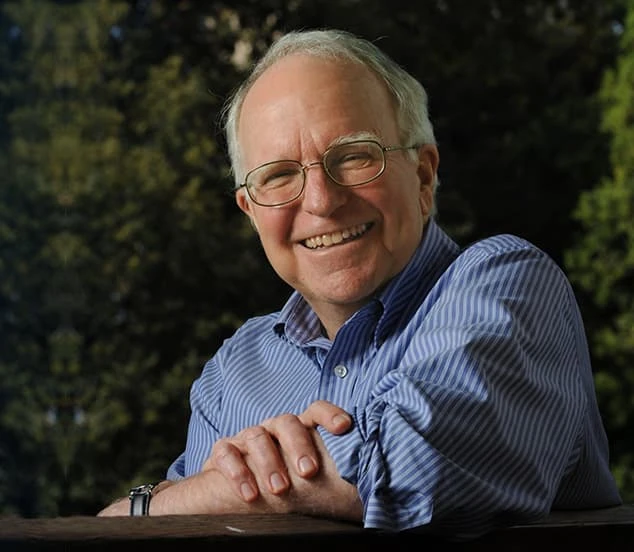
Robert E. Hall is an American economist associated with Stanford University and research on macroeconomics, labour markets and economic fluctuations. His work has influenced discussions of how households make spending decisions and how economists measure recessions and unemployment.
In a widely cited 1978 paper, Hall examined the implication of forward-looking consumption decisions: if households use available information efficiently and can smooth consumption, predictable changes in income may already be reflected in their spending plans. Under the model’s assumptions, changes in consumption are therefore difficult to predict using information that was already available.
This is a theoretical result, not a claim that real-world spending is literally random. Credit constraints, uncertainty, household differences and unexpected shocks can cause observed behaviour to depart from the simplest model.
Hall has studied how labour-market institutions, job finding and job separation relate to unemployment. Unemployment is not determined by one variable alone: business cycles, matching between workers and vacancies, wages, policy and structural changes can all matter.
Hall has been associated with the National Bureau of Economic Research’s Business Cycle Dating Committee. The committee identifies turning points in US economic activity using a range of indicators rather than a single rule such as two consecutive quarters of falling GDP. Always consult the NBER for official dates and explanations.
Hall has also contributed to proposals and debate about tax-system design, including work with Alvin Rabushka on flat-tax ideas. A flat tax is a policy proposal, not a universally accepted solution. Its effects depend on the rate, tax base, exemptions, credits, distributional consequences and public services financed by revenue.
This article does not identify Hall as a Nobel laureate. For current prize status, use the official Nobel Prize website and its published list of Economic Sciences laureates rather than unverified claims in secondary or automatically generated articles.
It suggests that, under particular assumptions, only new information should systematically change a household’s consumption plan.
No. Income and expectations matter; the result concerns the response to information that was already predictable versus genuinely new information.
Labour demand, job matching, economic activity, wages, institutions and policy all play roles.
A tax system applying one main rate to a defined tax base, although real proposals differ in deductions, exemptions and credits.
This article is educational, not personal financial or tax advice. Verify biographical details and any current policy claims with primary sources.
This article was authored and reviewed by Wipidia's technical editorial desk in Jalandhar, Punjab. Every code snippet, algorithm breakdown, and strategic framework is independently tested against live production standards before publication.
