•
•
•
•
•
•
•

Lionel Messi ended his legendary Argentina international career with a goal and two assists as Argentina defeated Benin 3–0 in an emotional farewell at the Monumental Stadium.
The end of an era arrived at the Estadio Monumental in Buenos Aires on Tuesday night, October 6, as Lionel Messi made his final appearance for the Argentina national team.
Rather than simply being a farewell match, the occasion became a celebration of one of the greatest international careers in football history. In front of more than 85,000 supporters, Argentina defeated Benin 3–0, with Messi involved in every goal. He provided two assists before scoring from the penalty spot in the 71st minute.
Messi's final performance perfectly reflected the qualities that have defined his career: creativity, composure, playmaking and an extraordinary ability to influence the biggest moments.
The result also gave Argentine supporters the farewell they had hoped for as their captain walked onto the pitch for the final time in the famous blue-and-white shirt.
Argentina started the second half with greater attacking intensity after the teams went into halftime without a goal.
Messi soon produced the first decisive moment of the match. In the 48th minute, his delivery from a corner found Nicolás Otamendi, who converted to put Argentina ahead 1–0.
The connection between Messi and Otamendi carried additional emotional significance. The veteran defender had shared more than a decade of international football with Messi and was also bringing his Argentina career to a close.
Thirteen minutes later, Messi was involved again.
The Argentine captain created the opportunity for Nico Paz, who scored Argentina's second goal in the 61st minute. Paz is among the younger players being viewed as part of Argentina's next generation, making Messi's assist particularly symbolic on a night focused on the transition from one era to another.
Then came the moment everyone inside the Monumental was waiting for.
In the 71st minute, Argentina were awarded a penalty and Messi stepped forward.
The 39-year-old calmly converted from the spot to make it Argentina 3–0 Benin, scoring what would become the final goal of his international career. It was also his 126th goal for Argentina.
The goal triggered another huge celebration from the crowd.
For a player whose career has produced countless memorable goals, the final one carried a different kind of significance. It was not simply another entry in the record books. It was the closing goal of Messi's Argentina story.
He finished his final international appearance with one goal and two assists, directly contributing to all three goals in Argentina's victory.
Messi's final match brought his Argentina statistics to remarkable levels.
He finished with 208 international appearances and 126 goals, both national-team records. He also ended his career as Argentina's leading international scorer and most-capped player.
His Argentina journey began in 2005 and lasted more than two decades.
During that period, Messi experienced almost every possible emotion in international football. Early defeats and criticism were followed by historic success, eventually transforming his relationship with Argentine supporters.
The greatest chapter came with the 2022 FIFA World Cup, when Messi captained Argentina to the world title in Qatar.
He also helped Argentina win the 2021 Copa América, the 2022 Finalissima and the 2024 Copa América, completing a remarkable collection of international honours.
Messi's international career was not always the success story it became.
For years, Argentina supporters expected their superstar to reproduce his club form on the international stage. Messi reached major finals but experienced painful defeats, including losses in the 2014 World Cup final and the 2015 and 2016 Copa América finals.
Those setbacks created enormous pressure around his relationship with the national team.
Everything changed with the 2021 Copa América triumph.
That victory gave Messi his first major senior international trophy with Argentina and helped establish a new relationship between the player and his country.
The 2022 FIFA World Cup then completed the transformation.
Messi scored seven goals in Qatar and won the Golden Ball as Argentina defeated France in one of the most dramatic World Cup finals ever played. The triumph cemented his status as an Argentine sporting icon.
His international legacy now extends far beyond statistics.
The atmosphere inside the Monumental reflected the importance of the night.
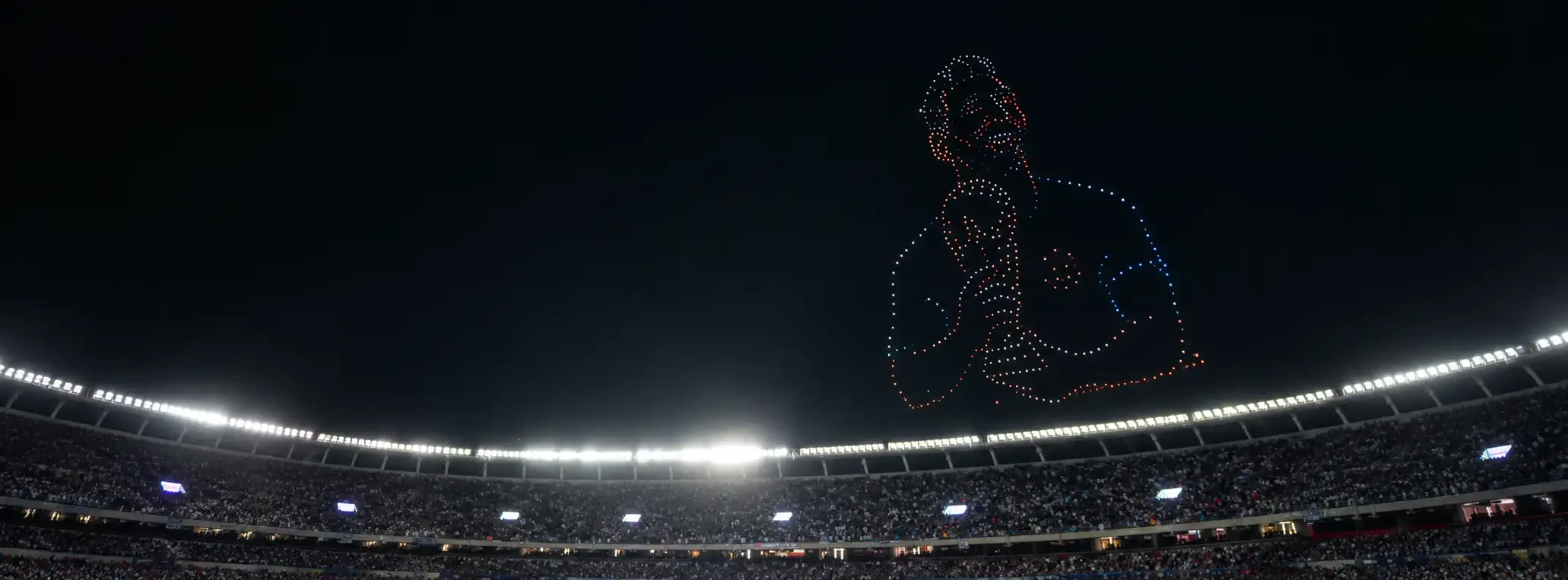
Thousands of supporters gathered to celebrate Messi's final Argentina appearance, with the stadium filled with chants for the captain. Landmarks around Buenos Aires were illuminated in Argentina's colours, while fireworks and a drone display formed part of the farewell celebrations.
Messi was visibly emotional throughout the occasion.
Before the match, thousands of fans lined the route as the team travelled toward the stadium. During the farewell ceremony, teammates, opponents and officials gathered around the Argentine captain following the final whistle.
The celebrations continued after the match, with a drone show lighting up the Buenos Aires sky and Argentine singer Soledad Pastorutti performing as part of the tribute.
The evening was ultimately less about the result and more about saying goodbye to a player who had represented Argentina for 21 years.
After the match, Messi spoke directly to the supporters inside the stadium.
He reflected on what representing Argentina had meant to him and acknowledged that not playing for the national team again would be difficult.
The emotional farewell captured the importance of the Argentina shirt in Messi's career. Despite achieving extraordinary success at club level, his connection with his country remained one of the defining elements of his sporting story.
For Argentine fans, the final image was therefore not simply Messi lifting another trophy or scoring another goal.
It was Messi standing in the middle of the Monumental, surrounded by teammates and supporters, acknowledging the end of a journey that had lasted more than two decades.
Although Lionel Messi has retired from international football, his professional club career is continuing.
Messi remains the captain of Inter Miami CF in Major League Soccer. The club previously extended his contract through the 2028 MLS season, meaning his Argentina retirement does not mark the end of his playing career.
In fact, Messi has continued to produce at an elite level for Inter Miami.
MLS reported that after his international retirement, Messi immediately added another milestone, reaching 30 goal contributions in a season for the third time in league history after providing two assists against Atlanta United.
He also reached 100 goals for Inter Miami in September 2026, becoming the first player in the club's history to reach that mark.
That means football fans will still have the opportunity to watch Messi compete at club level even though the iconic No. 10 shirt will no longer appear for Argentina.
Lionel Messi's final Argentina match could hardly have been scripted better.
A 3–0 victory, a goal, two assists, a packed Monumental and an emotional farewell gave the Argentine captain the perfect ending to his international career.
His final numbers tell only part of the story: 208 appearances, 126 goals, multiple major trophies and a World Cup title.
But Messi's greatest achievement with Argentina may be the transformation of his national-team legacy.
The player who once faced questions about whether he could win with Argentina eventually became the captain who delivered the country's greatest prize.
On October 6, 2026, Messi did not simply play his final game for Argentina.
He closed one of the most extraordinary chapters in football history.
Lionel Messi's international career is over. His legacy with Argentina is eternal.
