•
•
•
•
•
•
•

India face New Zealand in the first T20I at Christchurch on October 22, 2026. Explore team news, probable playing XIs, pitch conditions, key players and series details.
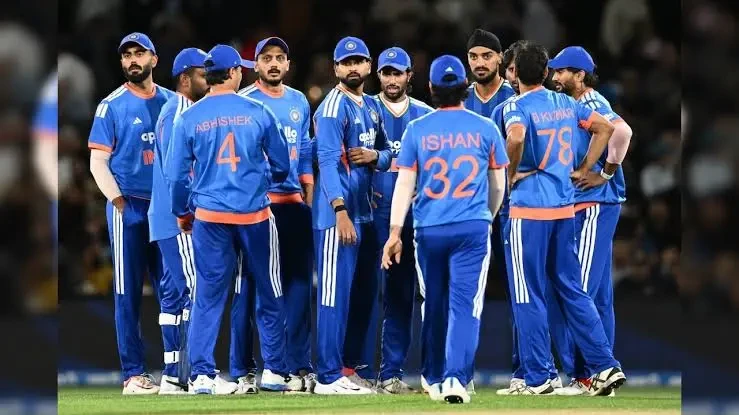
India and New Zealand begin their five-match T20 International series at Hagley Oval in Christchurch on October 22, with both teams facing an important early test of their adaptability. India's explosive batting lineup will encounter unfamiliar early-season conditions, while the hosts will look to use home advantage, disciplined seam bowling, and smart captaincy to put pressure on the visitors.
The opening match comes at a demanding time for India. After competing in the Asian Games and completing a five-match T20I series against the West Indies, the team has had little time to recover from its packed schedule before traveling to New Zealand. The short turnaround makes acclimatization, player workload, and team balance crucial talking points.
Captain Shreyas Iyer will be responsible for guiding India's batting resources and deciding how best to structure the bowling attack. On the other side, New Zealand skipper Mitchell Santner has emphasized that adapting quickly to changing pitches and ground dimensions could determine the outcome of the series.
With India's power-packed batting and New Zealand's experienced pace bowlers set to meet at Christchurch, the first T20I provides an early indication of how both sides intend to approach the contest.
| Match information | Details |
|---|---|
| Match | New Zealand vs India, 1st T20I |
| Date | Thursday, October 22, 2026 |
| Venue | Hagley Oval, Christchurch, New Zealand |
| Scheduled start | 12:30 PM IST |
| Local start time | 8:00 PM in Christchurch |
| Series format | Five-match T20I series |
The opening match is part of India's tour of New Zealand in 2026. The teams will play five T20 internationals across Christchurch, Wellington, Auckland, and Hamilton.
The series offers India an opportunity to test combinations in overseas conditions, while New Zealand will aim to make the most of familiar pitches and home support.
India arrive in Christchurch after a busy period of international cricket. The team competed in the Asian Games in Japan before moving straight into a T20I series against the West Indies at home.
The final match of that series was washed out by rain in Bengaluru, leaving the contest drawn 2–2. The result means India enter the New Zealand series looking to establish greater consistency rather than carry a winning series result into the opening game.
The tight turnaround presents challenges beyond match preparation. Players must adjust to travel fatigue, changing time zones, cooler evening temperatures, and conditions that may differ considerably from those encountered in India.
New Zealand's pitches can provide extra bounce and movement for fast bowlers, particularly early in the season. Such conditions can make shot selection more demanding for batters accustomed to playing on flatter surfaces.
India's challenge will be to avoid losing early wickets while maintaining the aggressive scoring approach that has become a defining feature of modern T20 cricket.
Captain Shreyas Iyer has highlighted the importance of acclimatization, noting that the team must assess the conditions and make effective use of its preparation time.
The opening game will therefore test not only India's batting ability but also the team's capacity to make tactical adjustments quickly.
Shreyas Iyer leads an Indian side with several attacking options across the top and middle order. His role will involve balancing aggressive batting with the need to manage the innings when New Zealand's bowlers find movement.
India's probable batting resources include Abhishek Sharma, Sanju Samson, Ishan Kishan, Tilak Varma, and Shivam Dube. Each offers a different approach, giving the team flexibility when building an innings or accelerating during the middle and death overs.
Abhishek Sharma has established himself as an attacking T20 batter who looks to score quickly during the powerplay. His ability to find boundaries early can help India put pressure on the opposition before fielding restrictions end.
However, Christchurch may demand a slightly different approach. Early movement from the seamers could reward patience, particularly if the ball swings or moves off the surface.
Abhishek's challenge will be to identify which deliveries can be attacked without exposing himself to unnecessary risk.
Ishan Kishan offers another aggressive batting option and can influence the pace of the innings with his ability to score boundaries.
He is also approaching a notable individual milestone in T20 internationals. Kishan needs seven more runs to surpass Suryakumar Yadav's Indian calendar-year T20I record of 1,164 runs, according to the pre-match figures.
Achieving the milestone would add an individual storyline to an important team contest, although India's broader priority will remain establishing a strong start to the series.
Tilak Varma provides batting flexibility, while Shivam Dube offers powerful hitting that can be particularly valuable against spin and during the closing overs.
The middle order will need to respond effectively if India lose early wickets. Rather than relying exclusively on boundary hitting, the batters may need to rotate the strike and preserve wickets before accelerating later in the innings.
That balance could prove important on a ground where the pitch and boundary dimensions may influence scoring patterns.
New Zealand enter the opening match with the advantage of playing at home and having a bowling attack equipped to exploit conditions in Christchurch.
Mitchell Santner has stressed that conditions across the five-match series will not remain identical. The pitches and boundary dimensions in Wellington, Auckland, and Hamilton will require adjustments in bowling plans and field placements.
Santner expects bowlers to focus on controlling the scoring rate, building pressure through dot balls, and using the ground's larger boundaries intelligently.
The New Zealand captain also recognizes the threat posed by India's batting lineup. When the surface is flat and boundaries are shorter, India's hitters can score rapidly, making it important for the hosts to avoid predictable bowling.
Santner's left-arm spin can play an important role during the middle overs, especially if the pitch offers grip or if New Zealand can force Indian batters to attack against the field.
His task will be to balance wicket-taking opportunities with economical bowling. Against a side capable of accelerating quickly, even a short period of expensive overs can change the momentum of a T20 match.
Santner will also need to identify favorable matchups and decide when to use his pace bowlers to disrupt India's rhythm.
New Zealand's batting lineup includes attacking options such as Finn Allen and Tim Seifert, who can give the hosts a rapid start.
Allen's powerplay hitting can place immediate pressure on India's bowlers, while Seifert brings experience against Indian opposition in the shortest format.
Devon Conway, Glenn Phillips, and Daryl Mitchell provide further batting depth. Their ability to stabilize the innings or accelerate when required gives New Zealand several potential routes to a competitive total.
The hosts will want to make full use of the powerplay without exposing their middle order too early.
The Hagley Oval pitch report is one of the most important factors heading into the first India vs New Zealand T20I.
Christchurch is known for conditions that can assist fast bowlers, and early-season surfaces may offer more movement than pitches encountered later in the New Zealand summer.
The fresh surface could provide seamers with bounce and lateral movement, especially during the opening overs. Batters may therefore need to judge the line carefully and avoid forcing shots before they have settled.
However, the pitch should not automatically be considered a low-scoring surface. If the ball comes onto the bat consistently, both teams have enough attacking talent to produce a competitive total.
The pitch assessment remains an expectation rather than a guarantee. Actual conditions can change depending on preparation, weather, and the amount of assistance available to bowlers on match day.
The following are projected combinations based on pre-match team information, not confirmed final lineups.
India's final selection may depend on whether the management prioritizes an additional frontline fast bowler or the mystery spin of Varun Chakaravarthy.
Naman Dhir is another option after making an impression in the West Indies series, but his inclusion would depend on the balance India want between batting depth and specialist bowling.
New Zealand have several pace options available, giving the team flexibility when selecting its attack for Christchurch.
The final playing XI may differ from these projections because of fitness, match conditions, and tactical decisions made after the toss.
Bhuvneshwar Kumar's return to India's T20I plans is one of the major talking points ahead of the series.
The experienced seamer was named for the final T20I against the West Indies but did not get an opportunity to bowl after rain prevented the match from proceeding as planned.
His experience with swing and control could be particularly useful in New Zealand. If the new ball moves, Bhuvneshwar may be able to challenge the opening batters and create opportunities during the powerplay.
Santner has also acknowledged the potential threat posed by the Indian bowler in local conditions.
India will nevertheless need contributions from the entire attack. Arshdeep Singh's left-arm angle, the pace options available to the team, and the possibility of using spin strategically could all influence the bowling plan.
Jasprit Bumrah has been rested with the upcoming Test series in mind, while Hardik Pandya has not returned to international action since the T20 World Cup final in March. Their absence makes it particularly important for India to find the right combination of specialist bowlers and all-rounders.
Several individual contests could influence the outcome of the opening T20I.
Finn Allen vs Bhuvneshwar Kumar: Allen's aggressive approach against Bhuvneshwar's swing and accuracy could be crucial during the powerplay.
Abhishek Sharma vs Lockie Ferguson: Ferguson's pace may challenge Abhishek's attacking style, particularly if the pitch offers extra bounce.
Shreyas Iyer vs Mitchell Santner: Iyer's ability to handle spin will be tested by Santner's control and tactical variations through the middle overs.
Ishan Kishan vs New Zealand's pace attack: Kishan's scoring speed could determine whether India build momentum early or are forced to rebuild after losing wickets.
These matchups will not decide the match on their own, but they illustrate how conditions, player strengths, and captaincy decisions can shape a T20 contest.
India have enjoyed a strong record against New Zealand in completed T20 internationals since January 2020.
Before this series, India had won 16 of the 20 completed matches between the teams during that period, including two victories in Super Overs. One additional match ended in a tie.
However, historical results offer context rather than a guarantee of future success. New Zealand's home advantage and the conditions in Christchurch provide a different challenge from matches played in India.
The teams also have recent history at the highest level, having met in the 2026 T20 World Cup final in Ahmedabad. India scored 255 in that final, demonstrating the scoring potential of their batting lineup when conditions favor aggressive stroke play.
The new series begins with different circumstances, a different venue, and a fresh contest between the two sides.
Three broad factors could prove decisive at Hagley Oval.
First, the powerplay battle will be important. India need to score quickly without losing too many wickets, while New Zealand will want early breakthroughs to disrupt the visitors' batting plans.
Second, India's bowling attack must adapt to local conditions without relying entirely on swing or pace. The ability to maintain pressure through the middle overs will matter if New Zealand make a strong start.
Third, the toss and evening conditions may influence the match strategy. If dew develops, chasing could become more attractive, although the final decision should depend on the actual surface and weather.
Neither side can assume that conditions will remain constant throughout the innings. The team that responds more effectively to what the pitch offers may gain a meaningful advantage.
The India vs New Zealand 1st T20I in Christchurch presents a compelling opening to the five-match series. India arrive with an explosive batting lineup but face the challenge of adjusting quickly after a demanding international schedule.
New Zealand, led by Mitchell Santner, will look to exploit the conditions at Hagley Oval through disciplined seam bowling, intelligent use of the boundaries, and pressure during the powerplay.
Shreyas Iyer's leadership, the form of Abhishek Sharma and Ishan Kishan, and Bhuvneshwar Kumar's potential impact with the new ball are among the major talking points for India. For the hosts, Finn Allen, Tim Seifert, Lockie Ferguson, and Santner could play influential roles.
The opening contest is likely to highlight the importance of adaptability in T20 cricket. With five matches scheduled across different New Zealand venues, the first game offers both teams an opportunity to establish their approach and build momentum for the series.
