•
•
•
•
•
•
•

Stop reading everything. Start reading what the exam actually asks.
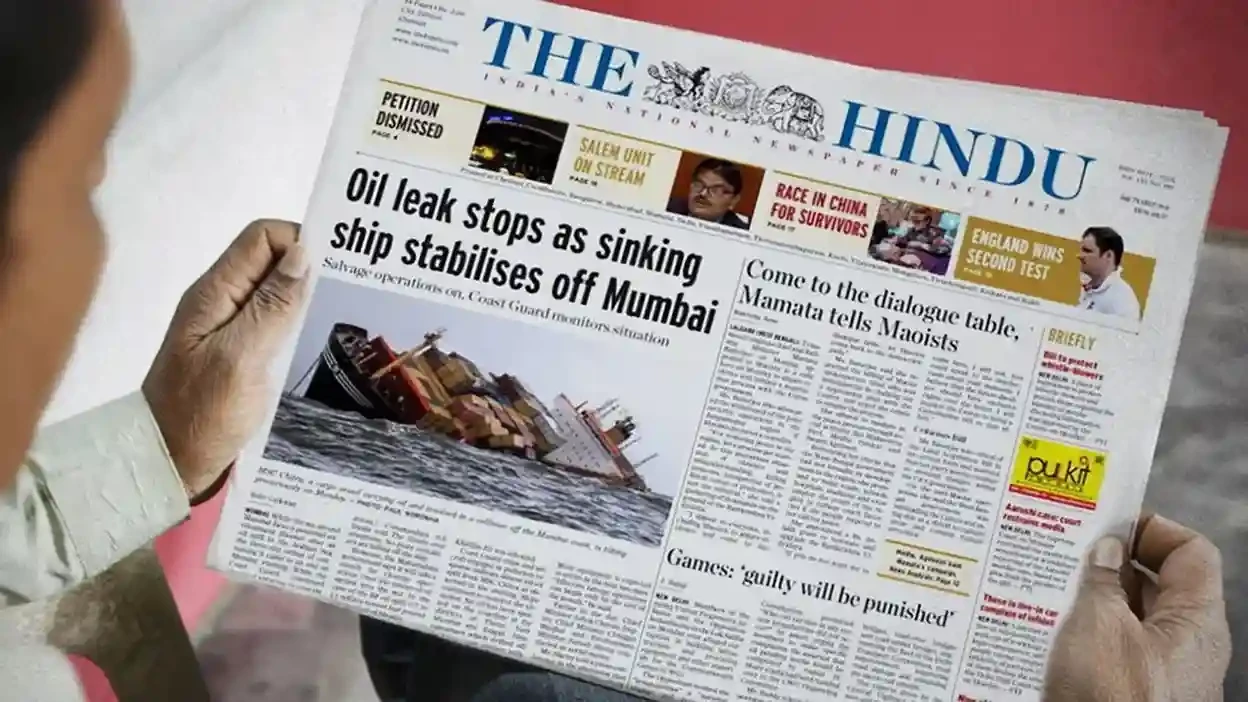
Almost every serious exam in India — UPSC Civil Services, state PSCs, SSC, banking, CLAT, CAT's reading comprehension — rewards candidates who read the news well. Yet many aspirants spend two to three hours a day on the newspaper and still feel unprepared.
The problem is rarely the newspaper. It is the method. Reading for an exam is different from reading for general interest. You are not trying to know everything that happened; you are trying to understand the issues an examiner is likely to ask about.
This guide gives you a repeatable method you can start tomorrow.
Reading three newspapers rarely gives three times the value. It mostly gives the same story three times.
| Need | Common choices |
|---|---|
| UPSC / state PSC | The Hindu or The Indian Express |
| Hindi-medium aspirants | Dainik Jagran, Jansatta or regional equivalents |
| Banking / economy focus | Add the business pages of your main paper, or a business daily on weekends |
| Official facts | Press Information Bureau (pib.gov.in) for government announcements |
Pick one main newspaper and use PIB to confirm facts about government schemes and decisions.
This is the step that saves the most time. In most cases you can skip:
A useful filter: Could this become a question about a law, a policy, an institution, a report, the economy, the environment, science, or India's relations with another country? If not, move on.
Target time: 60–75 minutes. If you regularly cross 90 minutes, you are probably reading too much detail or making notes while reading instead of after.
For every important story, ask:
This is exactly the structure of most UPSC Mains answers — and it trains you to read actively instead of passively.
Writing notes while reading slows you down and produces copies of articles rather than useful summaries.
| Field | Example of what to write |
|---|---|
| Topic | Broad subject (Economy / Polity / Environment) |
| Issue | One line on what happened |
| Key facts | Numbers, names, dates, institutions |
| Analysis | Two or three points from the editorial |
| Syllabus link | Which paper or section it belongs to |
Organise notes by topic, not by date. Notes arranged by date are almost impossible to revise. Notes arranged under headings such as Monetary Policy or Climate Agreements grow into a ready-made revision file.
Reading without revision is the biggest leak in current-affairs preparation.
| Exam | What to emphasise |
|---|---|
| UPSC / State PSC | Editorials, policy background, multiple perspectives |
| SSC CGL / CHSL | Facts: appointments, awards, schemes, sports, important days |
| Banking (IBPS, SBI, RBI) | RBI policy, banking terms, financial inclusion, economic data |
| CLAT | Editorial reading for comprehension, plus major legal and current events |
| CAT | Editorials and long-form opinion for reading speed and argument analysis |
The Hindu and The Indian Express are the most widely used. The best choice is the one you will read consistently every day.
About 60–75 minutes is enough for most aspirants. Notes and revision should be counted separately.
Ideally both, for different purposes. The newspaper builds understanding day by day; monthly compilations are useful for revision and filling gaps.
Yes. These exams ask factual current-affairs questions, and banking exams in particular test economic and banking awareness drawn directly from the news.
Both exams test comprehension of long passages. Daily editorial reading builds the speed and focus needed for these sections.
Good newspaper reading for exams is selective, structured and revised. Choose one paper, filter ruthlessly, read editorials carefully, write topic-wise notes and test yourself every week. Done consistently for a few months, this habit becomes one of the highest-return investments in your preparation.
