•
•
•
•
•
•
•

Deepinder Goyal’s Temple wearable uses optical sensing near the temple to track BrainFlow and a proprietary Entropy metric, but how scientifically validated are its ambitious health claims?
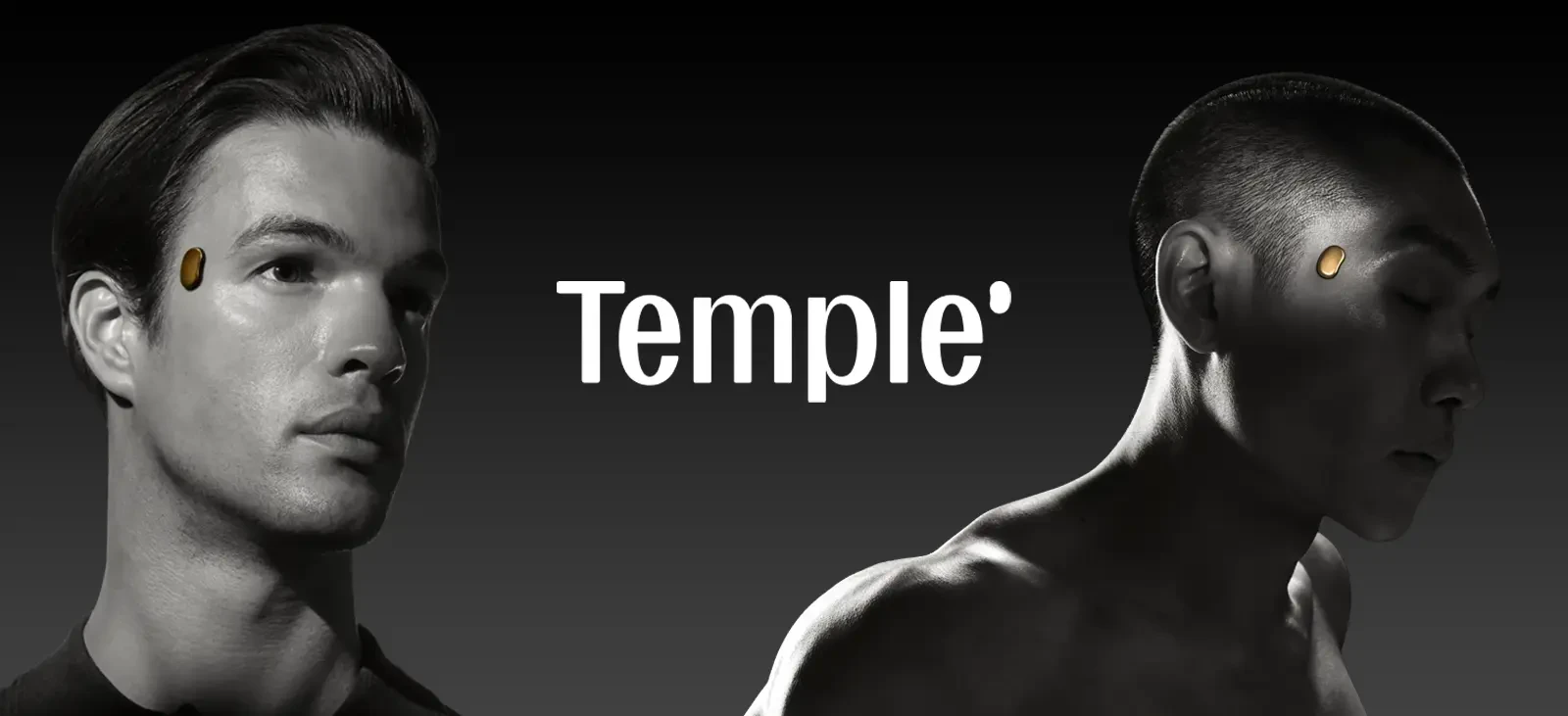
The wearable technology industry has traditionally focused on devices worn around the wrist, chest or finger. Temple takes a very different approach.
Developed by Deepinder Goyal, founder of Eternal and Zomato, Temple is a small wearable designed to sit against the skin near the temple of the head.
According to Temple, the device uses optical sensing technology to collect physiological signals from the tissues and blood vessels around the temple. The company says these signals can be used to derive BrainFlow, which it describes as a proxy for cerebral blood flow.
The company's official website positions Temple as a tool for understanding how activities such as exercise, sleep, cold exposure and meditation affect BrainFlow.
That makes Temple considerably more ambitious than a conventional fitness tracker.
Instead of simply recording steps, heart rate or calories, the device is being developed around the idea of continuously observing physiological changes associated with the brain and body.
A smartwatch typically measures signals from the wrist using sensors such as photoplethysmography, or PPG.
Temple moves the sensing location closer to the head.
This is significant because the temple contains a dense network of blood vessels and other tissues that can provide optical signals. Temple's research page argues that the location can contain useful information that may not be captured as effectively at conventional wearable sites.
The device is therefore part of a broader movement toward continuous health monitoring, where wearable technology attempts to collect physiological information throughout everyday life rather than only during a hospital examination.
The potential advantage is simple: instead of taking an occasional measurement, a wearable could potentially show how the body responds to different activities over time.
But collecting a signal is only the first step. The more difficult question is what that signal actually represents.
Temple's technology revolves around two major concepts:
The two should not be confused.
Temple's primary technology is called BrainFlow.
The company describes BrainFlow as a proxy for cerebral blood flow, meaning changes in the circulation of blood associated with the brain.
Temple uses optical sensing at the temple to collect physiological signals. Optical wearable sensors work by shining light into tissue and analysing how that light interacts with blood and surrounding structures.
The company says BrainFlow is designed to continuously monitor changes that would otherwise require specialised measurement techniques.
Its research page currently highlights validation work comparing Temple BrainFlow against established scientific reference methods. One study compared BrainFlow with depth-resolved time-domain near-infrared spectroscopy (TD-NIRS), a technique capable of separating signals associated with superficial scalp tissue from deeper tissue.
The reported study analysed 60 sessions from 44 healthy young men across several controlled physiological challenges.
Temple reported that BrainFlow showed stronger correlations with the model-derived brain-layer signals than with scalp-layer signals in the tested conditions.
That is potentially important because one of the central scientific questions surrounding a temple-worn sensor is whether it is actually detecting information related to the brain or simply picking up signals from tissues closer to the skin.
However, there is an important qualification.
The study is a preprint, and the researchers themselves state that establishing cerebral specificity and ruling out remaining systemic and superficial contributions will require additional work and more flow-sensitive reference measurements. The study also disclosed funding and other relationships involving Temple Private Limited.
So the findings are interesting, but they should not be interpreted as the final scientific validation of Temple.
The second major concept is Entropy.
Deepinder Goyal has described Entropy as a real-time measure of the body's physiological or metabolic demand — essentially an attempt to quantify the changing "cost" of keeping the body functioning.
According to information shared by Goyal and reported by NDTV, the number changes with factors such as:
The idea is that the metric could provide users with a continuously changing picture of how their body responds to different situations.
This is arguably one of Temple's most ambitious claims.
Heart rate, sleep duration and exercise tracking are already common features of consumer wearables. Entropy attempts to move beyond these familiar measurements toward a broader physiological score.
But there is a crucial distinction between a proprietary wearable metric and a medically validated biomarker.
This is where the conversation around Temple becomes more complicated.
Earlier in 2026, Goyal described Entropy as a newly discovered biomarker capable of measuring the body's real-time physiological demand.
Medical experts subsequently questioned whether enough evidence had been presented to support that description.
Neurologist Dr Sudhir Kumar, speaking to India Today, said the idea was interesting but that the publicly available evidence at the time was not sufficient to establish Entropy as a validated biomarker for metabolism, health, longevity or biological ageing. He pointed to the need for methodology, validation studies, peer-reviewed evidence and independent replication.
That distinction is important.
A number can change consistently when someone exercises or becomes stressed without necessarily proving that the number accurately measures a specific biological process.
For a new biomarker to become widely accepted, researchers generally need to demonstrate that:
Temple's research programme is moving in that direction, but Entropy remains a developing concept rather than an established clinical biomarker.
Temple sits against the skin near the temple and uses light-based sensing to collect physiological signals.
This approach is related to optical sensing technologies already used in other wearable devices.
The basic principle is that light interacts differently with tissue and blood depending on physiological conditions. By analysing these changes, sensors can extract information from the optical signal.
The challenge becomes much greater when the objective is to infer what is happening deeper inside the head.
Between an external sensor and the brain are multiple layers of tissue, including:
This creates an important scientific challenge: how much of the detected signal originates from the brain, and how much comes from tissues closer to the surface?
This question has been one of the major areas of debate around Temple.
Temple's own research suggests that BrainFlow can track changes associated with cerebral haemodynamics.
Its latest research page cites a study comparing BrainFlow with TD-NIRS, reporting stronger correlations with brain-layer signals than scalp-layer signals in the tested physiological challenges. It also cites another validation study comparing BrainFlow with Transcranial Doppler, reporting a within-person correlation of approximately 0.8 in 23 healthy adults during exercise and postural changes.
These findings are notable because they attempt to compare a consumer wearable with established scientific measurement techniques.
However, validation should not be confused with proving that Temple can replace those clinical systems.
An experimental wearable may successfully track relative changes in a physiological signal without being capable of providing the same complete diagnostic information as a hospital-grade examination.
That distinction matters enormously when talking about brain health.
Medical experts have raised concerns about interpreting measurements from a single external location as a complete picture of brain circulation.
AIIMS-trained neurosurgeon Dr Arun L. Naik has argued that Temple should not replace established clinical investigation. His concerns include the difficulty of distinguishing signals from superficial tissues and deeper brain structures.
Other neurologists have also argued that measuring blood flow at one location cannot by itself explain complex neurological conditions, cognitive decline or neurodegenerative disease.
This criticism does not necessarily mean Temple's technology is useless.
Instead, it highlights a fundamental principle of medical science:
Detecting a physiological signal is not the same as proving that the signal can diagnose disease or predict health outcomes.
Established clinical tools such as MRI-based techniques, CT angiography, Doppler-based measurements and other neurological investigations exist for specific medical purposes.
Temple is attempting something different — continuous, everyday monitoring.
The scientific question is whether the information generated by that monitoring can eventually be translated into clinically meaningful insights.
While the science remains the biggest story, Temple is also being prepared as a consumer product.
Deepinder Goyal recently revealed that the launch edition will be available in six colours:
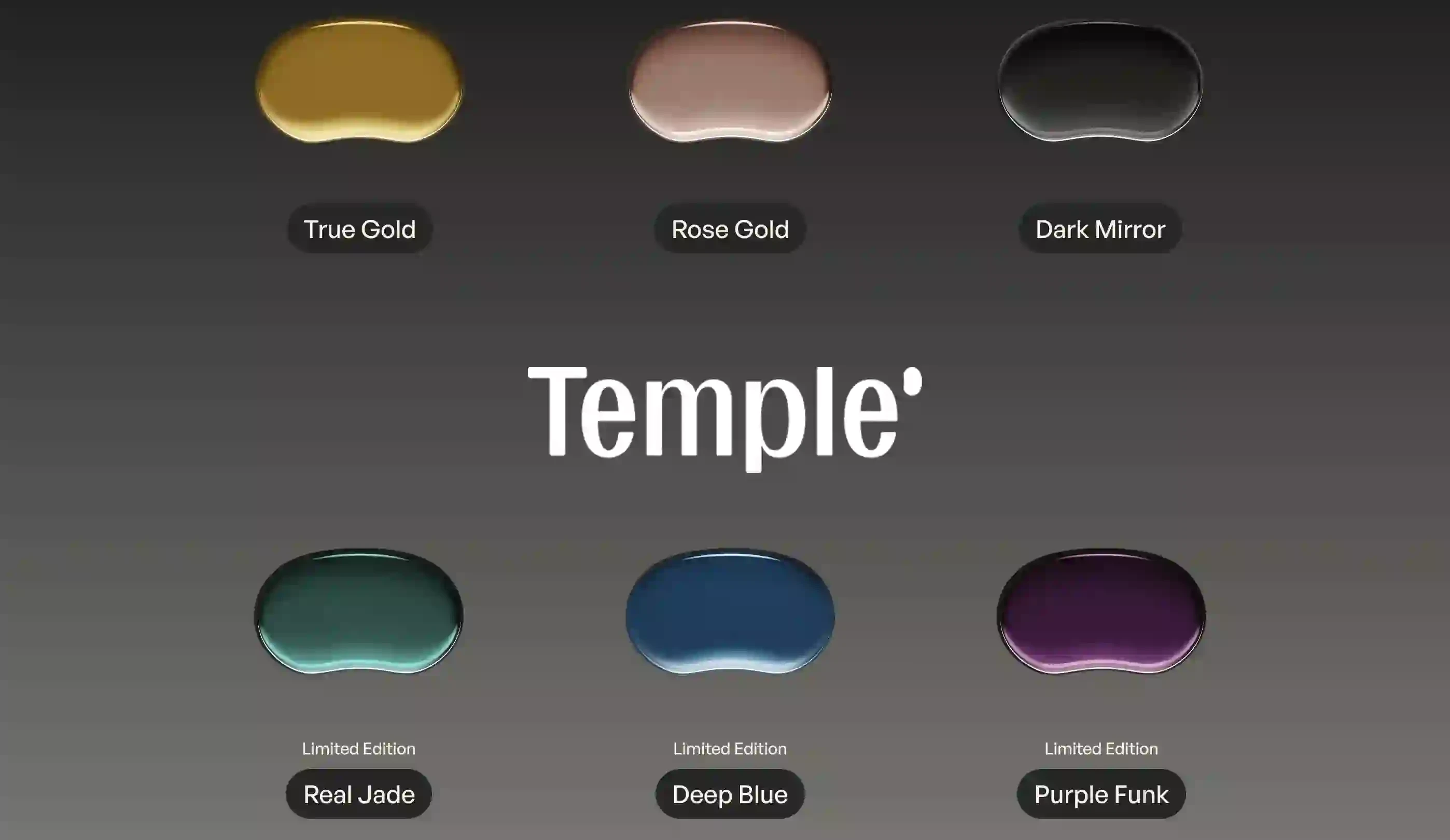
Goyal has also indicated that pre-orders could open soon, with people who joined the early-access waitlist receiving priority.
The latest version has also been described by Goyal as significantly smaller than earlier prototypes.
That matters because wearability could determine whether consumers actually use a brain-focused wearable continuously.
A device can have sophisticated sensors, but if it is uncomfortable, difficult to attach or inconvenient to wear, long-term health tracking becomes much less useful.
The bigger vision behind Temple is not simply measuring one number.
It is the idea of continuous physiological feedback.
Imagine being able to compare your BrainFlow-related signals after:
This could potentially create a personal physiological dataset that becomes more useful over time.
Temple's website specifically presents the device around understanding whether lifestyle practices are influencing BrainFlow.
That could make the product particularly interesting for athletes, longevity enthusiasts, researchers and technology-focused consumers.
But the usefulness of such information ultimately depends on how accurately the measurements reflect the underlying biology.
Temple sits at an interesting intersection of consumer technology, wearable health monitoring, neuroscience and longevity research.
Its biggest opportunity is that it could make continuous physiological monitoring more accessible outside traditional laboratories.
Its biggest challenge is scientific validation.
The company has already begun publishing validation work, including studies involving TD-NIRS and Transcranial Doppler. Those studies provide a more substantive scientific foundation than simply making product claims.
At the same time, some of the most ambitious claims — particularly around Entropy, longevity, ageing and broader health interpretation — require substantially more evidence.
Independent studies will be especially important.
If researchers who are not directly involved with the company can reproduce Temple's findings under different conditions and populations, confidence in the technology would increase significantly.
For now, consumers should be careful about making that assumption.
Temple's technology is better understood as an emerging health and wellness wearable with an active research programme, rather than a replacement for neurological diagnosis.
A reading from Temple should not be used on its own to diagnose a brain condition, assess a medical emergency or replace advice from a qualified healthcare professional.
The distinction is particularly important because the device's marketing and terminology can make highly complex physiological concepts appear deceptively simple.
A continuously changing number can be fascinating.
But the real value comes from knowing exactly what that number measures, how accurately it measures it, and what decisions can safely be made from it.
Temple is now moving closer to its transition from an experimental wearable to a consumer-facing product.
The company has an early-access programme, six launch colours have been announced and pre-orders are expected soon.
But the commercial launch may ultimately be only the beginning.
The more important development will be what happens to Temple's scientific evidence over the next few years.
If independent researchers validate BrainFlow, and if future research establishes meaningful applications for the data generated by the device, Temple could become an important example of how wearable technology can move beyond fitness tracking into continuous brain and physiological monitoring.
If those broader claims fail to survive independent testing, Temple may instead remain an intriguing example of the challenges involved in turning promising sensor technology into reliable health information.
Either way, Deepinder Goyal's Temple has already opened an important conversation about the future of brain monitoring wearables, consumer health technology and personalised physiological data.
The real breakthrough will not simply be making a device small enough to sit on the temple.
It will be proving, through rigorous and independent science, what the device can actually tell us about the human brain and body.
Medical note: Temple is an emerging wearable technology. Its measurements should not be treated as a diagnosis or as a substitute for professional medical evaluation.
