
World Polio Day 2026: India’s Polio-Free Status and Vaccine Awareness

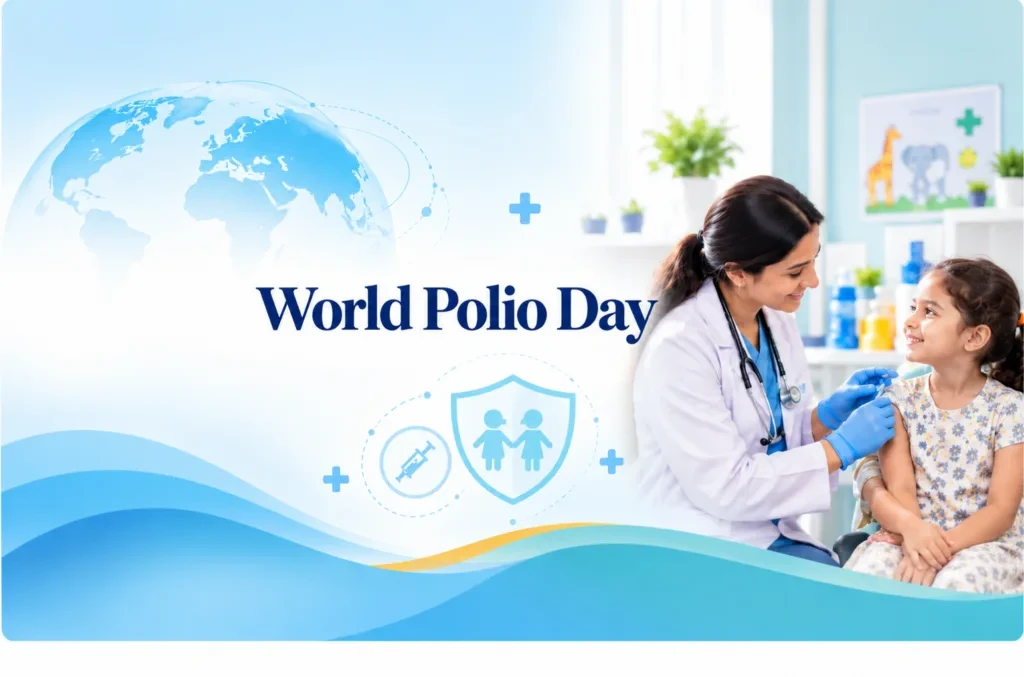
World Polio Day 2026 Highlights the Need for Continued Vaccination
NEW DELHI — World Polio Day is being observed worldwide with renewed calls to protect every child through vaccination and strengthen efforts to eliminate poliomyelitis, a highly contagious viral disease that can cause permanent paralysis and, in severe cases, death.
The annual observance on October 24 recognises the contribution of healthcare workers, volunteers, governments and families to the global polio eradication campaign. This year’s message focuses on maintaining progress and reaching children who remain unprotected because of missed vaccinations or limited access to healthcare.
Although many countries have eliminated the transmission of wild poliovirus, the global eradication effort is not yet complete. Health authorities continue to stress that international travel and population movement mean countries must remain alert to the possibility of the virus being reintroduced.
India’s Polio-Free Achievement and the Challenge Ahead
India’s elimination of wild poliovirus transmission remains a major public health achievement. The country’s last reported case of wild poliovirus was recorded in January 2011, and the World Health Organization’s South-East Asia Region, including India, was certified polio-free in March 2014.
The achievement followed years of nationwide immunisation campaigns, routine vaccination, community engagement and intensive disease surveillance. The Pulse Polio programme helped deliver oral vaccine drops to children across cities, villages and hard-to-reach communities.
However, being certified polio-free does not mean that vaccination can stop. Wild poliovirus continues to circulate in parts of the world, and gaps in immunity can leave communities vulnerable if the virus is introduced again.
India’s public health strategy therefore continues to focus on routine immunisation, supplementary vaccination campaigns and monitoring for any signs of poliovirus transmission. Reaching children in remote areas and ensuring that no child misses a recommended dose remain important priorities.
Polio Vaccine: Why Both Drops and Injections Matter
Polio is preventable through vaccination, but there is no cure once the disease causes paralysis. Completing the recommended vaccination schedule is therefore essential for protecting children.
Two types of polio vaccine play complementary roles:
- Oral polio vaccine (OPV): Administered as drops, it helps build intestinal immunity, which is important in reducing the spread of the virus.
- Inactivated polio vaccine (IPV): Given by injection, it stimulates protection against paralytic disease.
India’s immunisation programme uses both vaccines according to the national schedule. Parents and caregivers should follow the guidance provided by healthcare professionals and maintain their children’s vaccination records.
Additional oral vaccine doses offered during Pulse Polio campaigns are part of the public health strategy, including for eligible children who have already received routine vaccinations. Families should follow official campaign instructions rather than assume that previous doses make participation unnecessary.
Why High Vaccination Coverage Protects Entire Communities
Polio can spread before an infected person develops recognisable symptoms. While many infections do not cause obvious illness, the virus can invade the nervous system and lead to irreversible paralysis.
High vaccination coverage helps reduce opportunities for the virus to circulate. It also contributes to community protection for newborns and people who cannot receive certain vaccines for medical reasons.
Missed vaccinations create gaps that can undermine years of progress. Health authorities therefore encourage parents to check their children’s immunisation records and consult healthcare providers if a dose has been missed or the schedule is unclear.
Surveillance is equally important. Monitoring suspected cases of acute flaccid paralysis and testing environmental samples can help public health teams identify potential poliovirus circulation and respond quickly.
World Polio Day Campaigns Bring Communities Together
World Polio Day also recognises the people behind vaccination efforts, from frontline health workers travelling to remote settlements to volunteers helping families understand the importance of immunisation.
Public awareness activities are taking place in communities around the world. In Forres, Scotland, local landmarks including the Tolbooth and tower were illuminated in purple as part of the worldwide campaign, using a visible symbol to draw attention to the continuing effort to end polio.
Such initiatives complement vaccination drives by keeping the issue in public view and reminding communities that eradication depends on sustained participation.
Global Polio Eradication Requires Sustained Action
Since the global eradication initiative began in 1988, polio cases have fallen dramatically. Yet the final stage remains challenging because vaccination gaps, conflict, population displacement and difficulties reaching some communities can allow the virus to persist.
For India, the priority is to protect the gains achieved through decades of public health work. For the international community, the goal remains to stop transmission everywhere so that no child is left at risk.
On World Polio Day 2026, the message is clear: vaccination, surveillance and public awareness must continue until polio is eradicated worldwide. India’s progress shows what sustained commitment can achieve, but keeping the country protected requires every eligible child to receive the recommended vaccines.