•
•
•
•
•
•
•

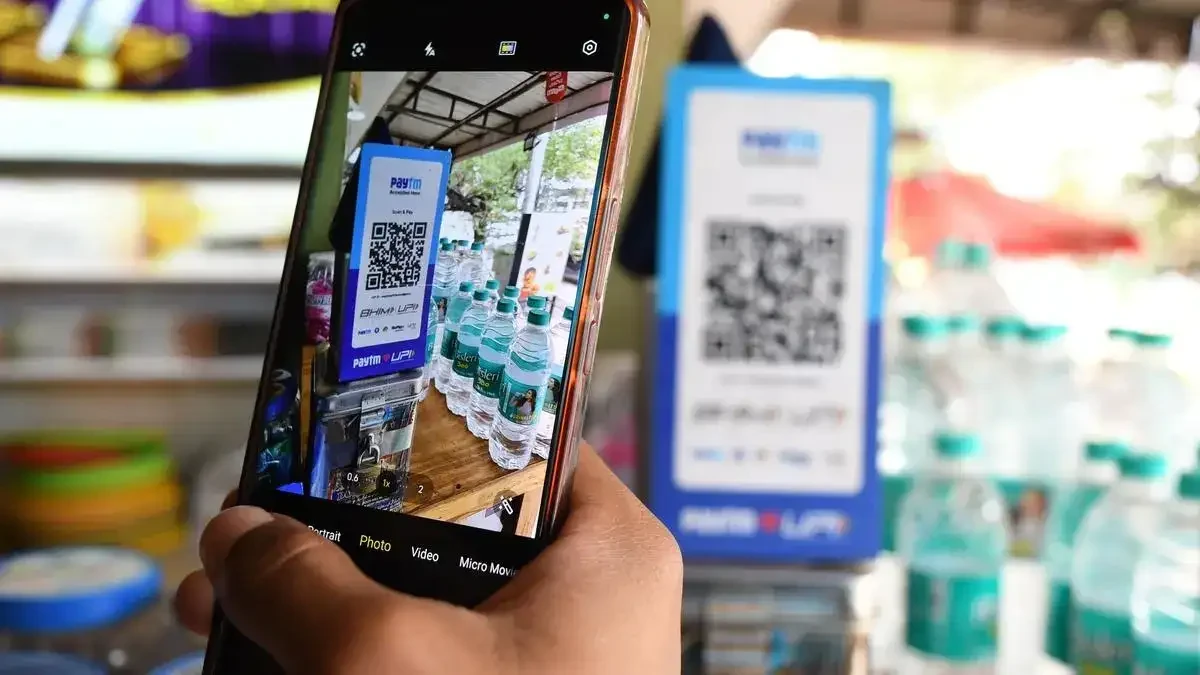
India's widely used Unified Payments Interface (UPI) is moving toward a threshold-based merchant fee model for certain transactions.
According to the Ministry of Finance's official FAQ, a 0.4% Merchant Discount Rate will apply to eligible UPI Person-to-Merchant transactions above ₹2,000, beginning October 15, 2026. Transactions of ₹75,000 and above will have a maximum MDR of ₹300.
The policy does not mean consumers will start paying a UPI transaction fee. The government says UPI payments will remain free for consumers, and merchants are not permitted to pass the MDR directly to customers as a separate UPI charge.
The new system is particularly relevant for businesses that frequently process high-value UPI payments.
Mobile phone, electronics, clothing and other retailers can have a large share of transactions above the ₹2,000 threshold. Industry associations have raised concerns that even a relatively small payment-processing cost could put additional pressure on businesses operating with narrow margins.
For example, at the standard rate, a ₹3,000 transaction would generate an MDR of ₹12, while a ₹50,000 transaction would result in ₹200. A ₹1 lakh transaction would be subject to the ₹300 maximum rather than a 0.4% charge of ₹400.
The All India Mobile Retailers Association has separately sought an exemption for small and medium mobile retailers, saying the additional cost could affect businesses already dealing with thin margins.
The new UPI MDR framework includes specific protection for micro and small merchants.
Merchants classified under the P2PM framework and receiving up to ₹1 lakh per month through UPI QR payments will continue to receive zero-MDR treatment. The government says the arrangement is intended to protect small vendors and support digital-payment adoption among the unorganised retail sector.
Importantly, a small merchant does not automatically become liable for MDR simply because an individual customer makes a payment above ₹2,000. Eligibility depends on the merchant's classification and applicable monthly collection threshold.
For consumers, the major takeaway is that routine UPI payments remain free.
The official framework states that P2P transfers between individuals will continue without charges. Merchant payments up to ₹2,000 also remain outside the standard 0.4% MDR structure.
The government says payments below ₹2,000 account for more than 95% of total P2M UPI transaction volume, limiting the direct impact of the new MDR on everyday low-value purchases.
Under the official framework, merchants cannot add the MDR as a separate charge to customers paying through UPI.
The Ministry of Finance states that onboarded merchants cannot pass the MDR to buyers and that customers should continue paying the posted price.
However, retailer associations and industry observers have raised a different concern: businesses facing higher payment-processing costs could reconsider their preferred payment methods for large purchases.
Some industry reports have suggested that merchants handling high-value transactions may encourage cash or bank transfers to reduce MDR exposure.
Whether this becomes widespread will depend on merchant margins, customer preferences and the proportion of transactions affected.
Not every transaction above ₹2,000 will necessarily attract the standard 0.4% rate.
The official FAQ specifies a ₹5 flat MDR for certain categories, including railways, telecom, insurance and fuel transactions above ₹2,000. Capital-market transactions such as mutual funds and securities have a separate 0.02% MDR, capped at ₹300.
This means businesses should examine the classification of their UPI transactions rather than assuming that every payment above ₹2,000 will be charged at 0.4%.
The impact will vary considerably by business.
High-value retailers and e-commerce businesses that receive significant UPI collections above ₹2,000 could see their payment-processing expenses increase. By contrast, small vendors and businesses dominated by low-value transactions may see little or no direct impact because of the exemptions and thresholds.
For merchants, the immediate priorities will include understanding their classification, monitoring UPI transaction volumes and incorporating the applicable MDR into payment-cost calculations.
The policy also aims to create a revenue stream for maintaining and developing UPI infrastructure, with the government citing spending needs related to infrastructure resilience, cybersecurity, fraud prevention and customer support.
The introduction of UPI MDR represents a significant change in the economics of India's digital-payment ecosystem.
UPI has expanded to an enormous scale. The Finance Ministry reported that the system processed 2,451 crore transactions worth ₹29.9 lakh crore in August 2026 alone, highlighting the infrastructure required to operate the network at national scale.
The new framework therefore attempts to balance two objectives: keeping UPI free and accessible for consumers and small-value transactions while creating a commercial funding mechanism for parts of the merchant-payment ecosystem.
For businesses, however, the key issue will be how the new cost affects payment choices and already-tight operating margins once the framework takes effect on October 15.