
Trump Rallies Ohio Republicans Ahead of 2026 Midterms, Vows GOP Will Win Big

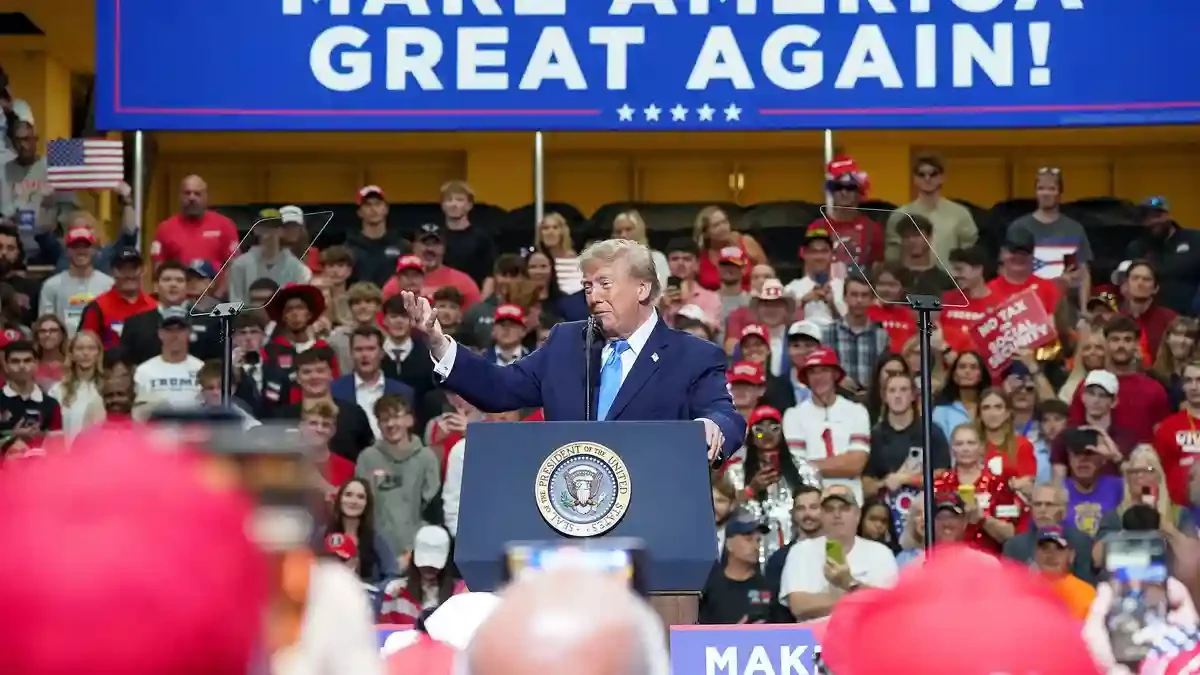
Trump Takes Midterm Campaign to Ohio
US President Donald Trump has stepped up his campaign efforts for Republican candidates ahead of the November 3, 2026, US midterm elections, holding a rally in Vandalia, Ohio, near Dayton.
The appearance was part of what Trump has described as a 32-day campaign blitz across the United States. His Ohio visit focused on supporting Republican candidates in several competitive races, including US Senator Jon Husted and gubernatorial candidate Vivek Ramaswamy.
Trump told supporters that Republicans could achieve a major victory if voters turned out in sufficient numbers. He urged the crowd to treat the election as though his own name were on the ballot.
"If you don't mind, please pretend that I'm on the ballot," Trump told supporters.
He also predicted a major Republican victory, saying voters should turn out and that the party would "win big."
Ohio Becomes a Key Midterm Battleground
Ohio is particularly important to Republicans and Democrats because several high-profile races are being contested in the state.
Trump campaigned alongside Jon Husted, who is defending a Republican-held Senate seat, and Vivek Ramaswamy, the Republican candidate for governor.
The Ohio Senate contest has attracted national attention, with Democrat Sherrod Brown seeking to return to the Senate after previously representing the state for decades. The race is among those being closely watched as parties compete for control of Congress.
Trump's decision to campaign personally for Republican candidates demonstrates the importance his political operation places on turnout in competitive states.
Trump Rejects Concerns About Republican Prospects
The rally came at a difficult political moment for the Republican Party.
Recent polling has shown declining approval for Trump, while inflation, higher consumer prices and the US-Israel war with Iran have become important political issues. Al Jazeera reported that a Reuters/Ipsos poll in September put Trump's overall approval at 32 percent, although approval among Republicans remained substantially higher.
Trump has dismissed negative polling and continued to publicly express confidence about the Republican Party's prospects.
At the Ohio rally, his message was focused heavily on turnout. Rather than treating the midterms as a conventional election centred solely on individual congressional candidates, Trump encouraged his supporters to view the vote as a referendum on his political movement.
That approach reflects Trump's continuing role as the central figure in Republican campaign messaging.
Why Trump's Role Matters
The 2026 midterms will determine control of the US House of Representatives and Senate and could significantly affect the final years of Trump's presidency.
A change in congressional control would influence the administration's ability to advance legislation, approve priorities and conduct oversight.
Trump therefore has a direct political interest in helping Republican candidates retain seats and win competitive races.
His campaign strategy has involved travelling to Republican-friendly states as well as more closely contested areas. The Ohio rally marked an important step into a state where Republicans face competitive statewide contests.
Immigration, Economy and Iran War Dominate Political Debate
Trump used the Ohio rally to reinforce several themes that have remained central to his political messaging, including immigration, economic policy, tariffs and national security.
He has also promoted the idea that his tariff policies are generating significant government revenue and has linked those revenues to proposed financial payments to Americans.
Meanwhile, Democrats have sought to make cost-of-living pressures and Trump's handling of the Iran conflict central issues in the midterm campaign.
The competing messages reflect a broader debate over whether voters will focus primarily on Trump's policy agenda or on economic concerns and dissatisfaction with the administration.
Trump Plans Wider Republican Campaign Push
Ohio is only one stop in Trump's broader midterm campaign effort.
According to AP reporting, the president has embarked on a planned 32-day campaign tour, with stops across states including Texas, Oklahoma and Alabama.
The strategy is designed to energise Republican voters and encourage turnout in congressional and state-level races.
Trump's influence within the Republican Party means his campaign appearances can generate significant attention for candidates who share his political agenda. At the same time, the races remain contests between individual candidates, and the eventual results will depend on voter turnout and the issues that matter most to voters in each state and district.
What Happens Next?
With the November 3 midterm elections approaching, both parties are expected to intensify campaigning, fundraising and voter mobilisation.
Trump's Ohio appearance shows that he intends to remain highly involved in Republican campaigning rather than leaving individual candidates to run their own races.
For Republicans, the central challenge is turning Trump's strong support among his core voters into broader turnout across competitive states. Democrats, meanwhile, are seeking to capitalise on concerns over the economy, the administration's policies and Trump's approval ratings.
The coming weeks will reveal how effectively each party converts its campaign message into voter participation before Americans head to the polls.
The 2026 US midterm elections will ultimately determine the balance of power in Congress, making Trump's increasingly active campaign role one of the defining features of the race.