•
•
•
•
•
•
•

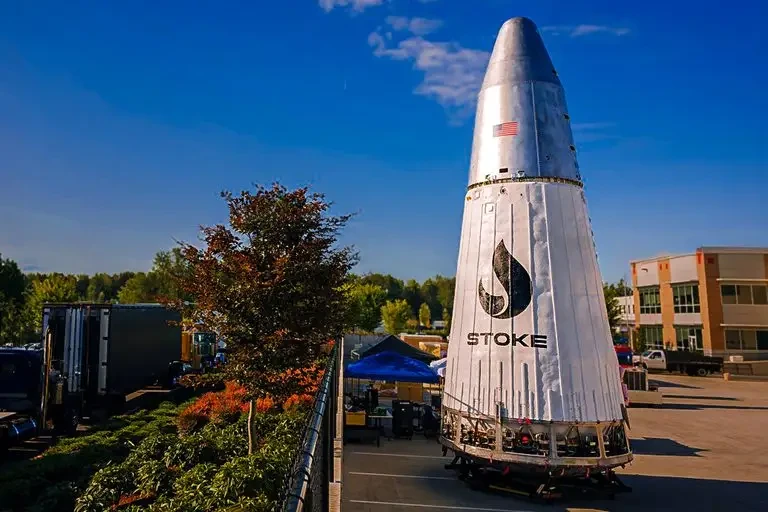
Stoke Space, a Kent, Washington-based launch startup, has raised approximately $1 billion in a Series E funding round to accelerate development of its fully reusable Nova rocket, the company announced in early September 2026. The raise reportedly pushes Stoke Space's valuation to around $10 billion, making it one of the most heavily capitalised private launch companies outside of SpaceX and Blue Origin.
Stoke Space said the new funding will be used to expand its manufacturing footprint and upsize elements of the Nova rocket design, as the company works toward its stated goal of a first orbital launch in early 2027. Nova is designed as a fully reusable two-stage rocket — notably including a reusable second stage, a capability that has proven far harder to engineer than reusable first-stage boosters, which SpaceX has already demonstrated commercially for years with its Falcon 9.
The company has been testing hardware at its Moses Lake, Washington facility and has previously flown short "hop" tests of its second-stage prototype, part of an incremental testing programme building toward a full orbital attempt.
| Detail | Information |
|---|---|
| Company | Stoke Space |
| Headquarters | Kent, Washington, United States |
| Funding round | Series E, approximately $1 billion |
| Reported valuation | Around $10 billion |
| Rocket | Nova — fully reusable two-stage launch vehicle |
| Target first launch | Early 2027 |
Stoke Space was founded in 2019 by former Blue Origin and SpaceX engineers with the specific goal of building a rocket that is fully and rapidly reusable, including the second stage — a segment of the vehicle that most reusable-rocket efforts, including SpaceX's Falcon 9, still expend or have not yet reused operationally at scale. The company has previously raised capital from investors including Y Combinator, Industrious Ventures, and other venture backers focused on the space and deep-tech sectors, and has secured government interest, including work tied to U.S. national security space launch programmes.
The scale of this raise reflects continued strong investor appetite for the launch sector, even as SpaceX's Starship programme and established players compete for market share. A genuinely reusable second stage, if Stoke Space can demonstrate it reliably, would represent a meaningful cost and turnaround-time improvement over current commercial launch options, potentially intensifying competition in the market for both commercial and government payload launches.
Stoke Space's near-term roadmap centres on completing Nova's development and reaching its targeted early-2027 debut launch from Cape Canaveral, Florida, where the company has secured a launch site. Continued ground and flight testing of both stages, along with regulatory launch licensing, will be the key milestones to watch before that first orbital attempt.
What makes Nova different from other reusable rockets?
Nova is designed to be fully reusable, including its second stage — a capability that reduces per-launch costs further than first-stage-only reusability, which is what most current commercial reusable rockets, including SpaceX's Falcon 9, have achieved to date.
Has Stoke Space launched a rocket into orbit yet?
Not as of this funding announcement. The company has conducted incremental hardware and short hop tests and is targeting an early 2027 date for its first full orbital launch attempt.
Who are Stoke Space's main competitors?
Stoke Space competes in a crowded field of commercial launch providers, most notably SpaceX (whose Starship is also pursuing full reusability), Blue Origin, and other emerging launch startups targeting the medium-lift commercial and government launch market.
Stoke Space's $1 billion raise is among the largest private funding events in the launch industry this year, underscoring investor confidence in fully reusable rocket architecture as the next competitive frontier in commercial spaceflight. Whether the company can convert that capital into a successful early-2027 orbital debut will be the real test of its ambitions.