
Neeta Dadwe Leads India to Asian Games Kabaddi Gold: From Player to Record-Breaking Coach

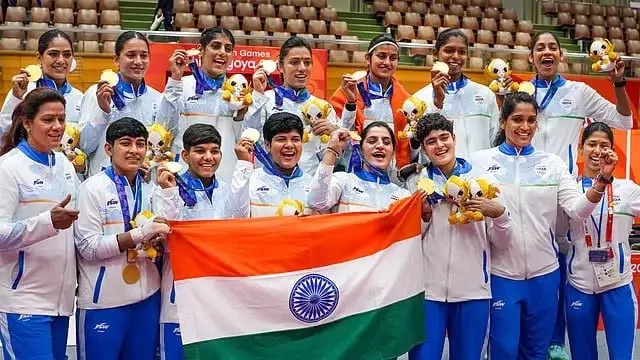
Neeta Dadwe: The Kabaddi Coach Who Turned Grit Into Asian Games Gold
From the Kabaddi Mat to the Coaching Bench
Neeta Dadwe’s connection with kabaddi began long before the Asian Games spotlight. A former Indian player and captain, the Nagpur-born sportsperson built her career representing Indian Railways and went on to become one of the prominent figures in Indian women’s kabaddi.
Her playing experience eventually became the foundation for a successful coaching career.
Dadwe first guided India’s women’s team to Asian Games gold at Incheon 2014. Two years later, she coached the side to gold at the 2016 South Asian Games. Her success continued at Aichi-Nagoya 2026, where India once again finished on top.
The latest victory therefore gave Dadwe a unique record: gold-medal success as India's women's kabaddi coach across three major international campaigns.
India Defend Asian Games Kabaddi Crown
India entered the 2026 Asian Games as defending champions after winning women’s kabaddi gold at Hangzhou in 2022.
The women's team had a strong tournament in Japan, navigating the group stage and knockout rounds before meeting familiar rivals Iran in the gold-medal match.
The final proved to be India's toughest challenge of the tournament.
India eventually prevailed 37-34, overcoming Iran's late fightback to retain the Asian Games women's kabaddi title. The victory also extended India's remarkable record in the event: the women's team has won gold in 2010, 2014 and 2022, with a silver medal in 2018.
Preparation Made the Difference
Dadwe credited detailed preparation and strong support around the team for the success.
The squad went through extensive training camps, where coaches worked on combinations, fitness, tactics and weaknesses in the players' games. Video analysis was also used to study opponents, particularly Iran.
According to Dadwe, the preparation camps were better equipped than those she experienced during her earlier coaching campaigns. The players had access to fitness trainers, physiotherapy and recovery facilities, helping the squad manage workload and injuries more effectively.
The coaching staff also introduced a no-mobile-phone policy during parts of the training camps to help players remain focused and improve their recovery and sleep routines.
A Final Built on Experience and Nerves
The final against Iran tested India's composure.
Dadwe later recalled the pressure surrounding the match, particularly with senior Indian sporting officials watching from the stands. India had already defeated Iran convincingly in the group stage, but the coaching staff knew the final would be a different contest.
The team prepared specifically for Iran's defensive weaknesses and adjusted its strategy accordingly. Young players also stepped up when the pressure was at its highest.
The result was a narrow but significant 37-34 victory—and another Asian Games gold medal for India.
The House That Kabaddi Built
Dadwe's success is particularly striking because she sees kabaddi not simply as a profession but as the force that transformed her life.
Her Hyderabad home is filled with medals, trophies and memorabilia collected throughout her career. She has described her home and achievements as something kabaddi itself gave her, reflecting the journey of an athlete who built her life around a sport that has historically offered fewer financial opportunities than cricket.
Her story also highlights the changing landscape of Indian kabaddi.
While the Pro Kabaddi League has created a professional pathway and greater visibility for male players, Dadwe believes a comparable professional structure for women could further transform women's kabaddi in India.
She has argued that a dedicated women's professional league could bring more girls into the sport while improving access to better training, nutrition, facilities and international competition.
A Legacy Bigger Than One Gold Medal
Neeta Dadwe's latest Asian Games triumph is therefore about more than the medal around her neck.
It represents the journey of an athlete who successfully reinvented herself as a coach and passed her experience to a new generation of Indian players.
At Aichi-Nagoya, a relatively young Indian squad handled the pressure of defending its title and overcame Iran in one of the tournament's most closely fought finals.
For Dadwe, the victory completed a rare chapter in her coaching career. For Indian women's kabaddi, it was another reminder that its continental dominance is being sustained by a new generation.
And for the coach whose trophy cabinet was built through decades of kabaddi, the latest gold is another piece of evidence that the sport truly helped build the life she has today.