•
•
•
•
•
•
•

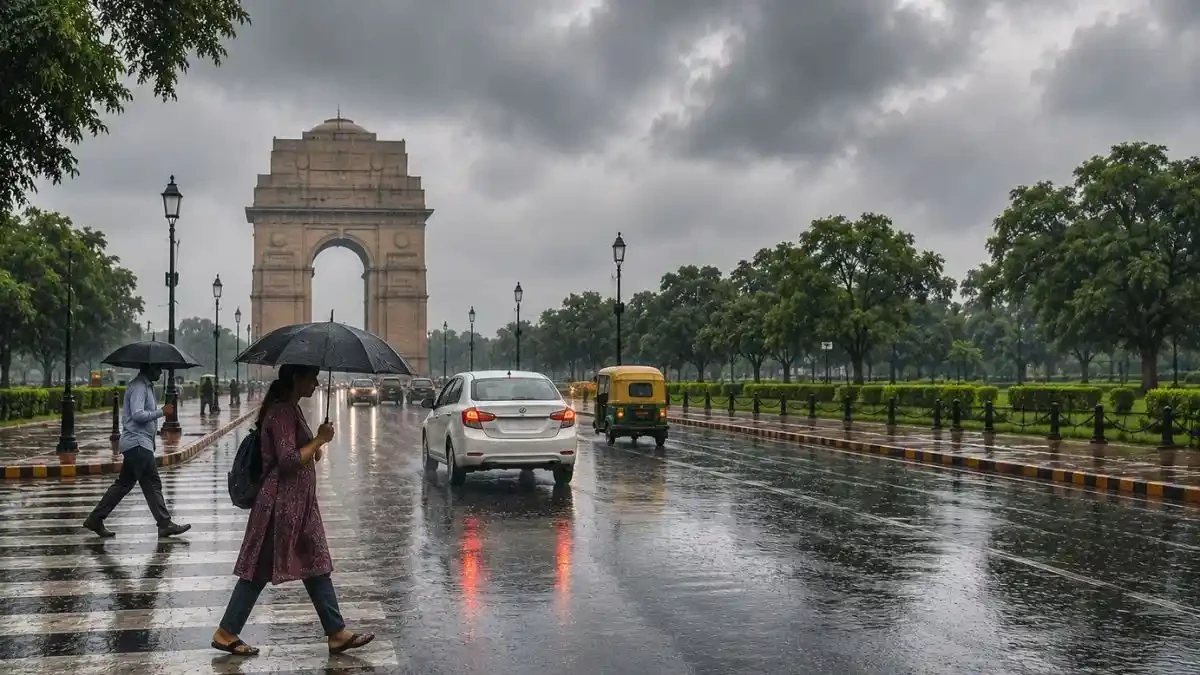
The India Meteorological Department (IMD) issued fresh heavy rainfall warnings in the second week of September 2026, covering Gujarat, Odisha, Kerala, Arunachal Pradesh, Assam, Meghalaya, eastern Rajasthan, Haryana, Punjab, Tamil Nadu, Madhya Pradesh, and Maharashtra. Gujarat was flagged for "isolated very heavy rainfall" on September 14, while Haryana, Chandigarh, Delhi, and Punjab were placed under an "isolated heavy rainfall" watch running from September 14 to 17.
Delhi itself saw a mixed pattern — light rain and thunderstorms with occasional heavy spells, a minimum temperature of 26.2°C (0.1 degrees above the seasonal average), and gusty winds of 30–40 kmph. The alerts follow an earlier spell at the start of the month, when the IMD had already flagged flash-flood risk across Jammu & Kashmir, Ladakh, Himachal Pradesh, Uttarakhand, and several eastern states amid a well-marked low-pressure area over West Bengal and Odisha, with rainfall exceeding 200 mm in isolated pockets of Chhattisgarh.
This burst of late-monsoon activity comes soon after the Centre for Science and Environment (CSE) and its publication Down To Earth released the State of India's Environment 2026 report in June, which assessed states on environmental, agricultural, public-health, and infrastructure metrics. That report found that India's five most populous states — Uttar Pradesh, Maharashtra, Bihar, Madhya Pradesh, and West Bengal — performed poorly across most of these categories, while Goa, Assam, Punjab, Haryana, and Himachal Pradesh ranked among the better performers overall. The report specifically flagged waste management and air-pollution-linked health risk as India's most pressing environmental challenges.
Several of the states now under heavy-rain alert — Maharashtra, Madhya Pradesh, and West Bengal among them — were also named in the CSE report as lagging on environmental and infrastructure indicators, underscoring the gap between climate exposure and on-ground preparedness that the report's authors warned about.
Late-season heavy rainfall spread across a dozen states simultaneously strains drainage, agriculture, and disaster-response systems that are typically winding down for the season. For states already flagged as under-resourced on environmental and infrastructure metrics, a compressed, intense monsoon tail raises the practical risk of flash flooding, crop damage during harvest windows, and disruption to transport in hill states such as Himachal Pradesh and Uttarakhand.
The IMD's extended outlook points to continued rain spells through the third week of September before monsoon withdrawal typically begins over northwest India. Meteorologists will be watching whether the low-pressure systems driving this activity weaken on schedule or produce a delayed, more erratic withdrawal — a pattern several other recent monsoon years have shown.
Is this considered a "breaking" weather emergency?
No. These are standard IMD heavy-to-very-heavy rainfall advisories, not confirmed disaster declarations. Conditions can change quickly, so readers in affected states should follow official IMD and state disaster-management bulletins directly.
Which states are most affected right now?
Gujarat and the northeastern states (Assam, Meghalaya, Arunachal Pradesh) have the strongest alerts, alongside Kerala, Odisha, and the Haryana-Punjab-Delhi belt.
How does this connect to the CSE environment report?
The report didn't predict this rainfall, but it independently assessed several of the same states as under-prepared on environmental and infrastructure indicators — a relevant backdrop for how well these regions can absorb an intense, late monsoon spell.
Mid-September 2026 has brought a wide, overlapping band of heavy rainfall alerts across India, arriving as several of the affected states are already flagged in independent research as comparatively under-resourced on environmental and infrastructure readiness. The coming week's monsoon behavior — whether it recedes on the usual schedule or lingers — will determine how much practical strain this places on drainage, farming, and hill-state connectivity.
Sources: Business Standard, The Week, Down To Earth, IMD.