•
•
•
•
•
•
•

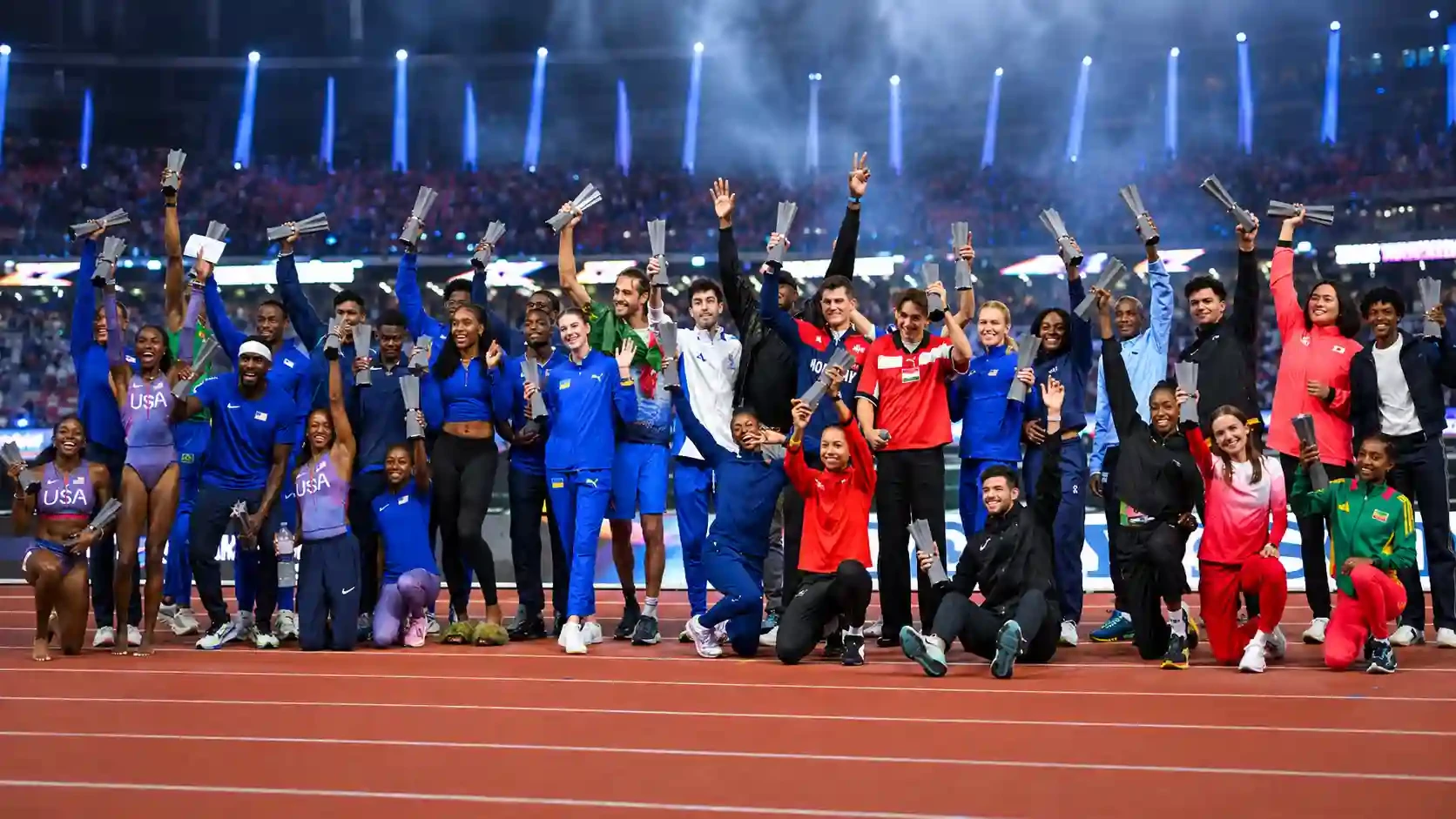
The first-ever World Athletics Ultimate Championship has concluded in Budapest with organisers describing the event as a successful debut for a new high-stakes format in athletics.
The three-day competition brought many of the world's leading track and field athletes together in direct head-to-head contests, with 28 Ultimate champions eventually crowned.
The championship was designed to go beyond traditional athletics competitions by combining elite sport with new competition formats, technology, entertainment and greater athlete involvement.
The response from athletes, spectators, broadcasters and media was described as strongly positive by World Athletics.
One of the clearest signs of the event's appeal was the attendance.
All three competition sessions at Budapest's Gyula Zsivotzky National Athletics Centre were sold out, with a combined 61,671 spectators attending across the three evenings.
The championship also attracted a significant global television audience. Forty-eight rights-holding broadcasters carried the event to more than 170 countries.
World Athletics said more than half a million visitors accessed its website during the three evening sessions, while its mobile app was used as a second-screen companion offering video, stories, games and interactive features.
The competition featured 352 athletes representing 65 member federations, bringing together Olympic champions, world champions, Diamond League winners, world record-holders and leading performers from the 2026 season.
Athletes from 18 countries won Ultimate titles, underlining the global spread of the competition.
Among the major winners were:
Jefferson-Wooden's 21.47-second run in the women's 200m was among the standout performances of the championship, while Bednarek's 19.52 in the men's 200m also highlighted the quality of the competition.
The championship also produced strong performances on home soil.
World Athletics reported 15 Hungarian all-comers' records during the three-day event, along with four world-leading marks.
The competition's concentrated format meant that many of the world's best athletes faced each other directly, creating high-profile matchups across track and field.
The men's 5000m was one of the major distance highlights, with Norway's Jakob Ingebrigtsen winning in 12:59.24, ahead of American runners Cole Hocker and Parker Wolfe.
The Ultimate Championship was also intended as a testing ground for the future of the sport.
World Athletics introduced several new ideas, including an athlete-led 200m lane draft, redesigned competition presentation, enhanced broadcast and data features, and interactive predictions and games through the World Athletics app.
One of the most notable technological experiments was Sony's virtual finish line, which was presented as a new way for audiences to appreciate the extremely small margins separating elite athletes at the finish.
The organisation said feedback and data from athletes, fans, broadcasters and other stakeholders will now be assessed to determine which innovations could be used in future editions or elsewhere in athletics.
Athlete involvement was not limited to competition.
World Athletics introduced a programme called The Day Before, bringing athletes and media together ahead of the championship through red-carpet appearances, content sessions and other activities.
Around 200 athletes and ambassadors took part in the programme.
Several major athletes were also given prominent roles in shaping the event. Duplantis recorded the official championship anthem, Noah Lyles served as Ultimate MC and creative adviser, while Jefferson-Wooden and Letsile Tebogo acted as team captains for the Kids' Athletics Ultimate Challenge.
Another major feature of the Ultimate Championship was its prize structure.
The event offered a US$10 million prize pool, with every participating athlete receiving a share and individual champions earning US$150,000.
The approach represents an attempt to make elite athletics more commercially attractive while putting greater financial rewards directly in the hands of competitors.
The successful Budapest debut gives World Athletics a foundation on which to develop the new championship.
World Athletics President Sebastian Coe said the event demonstrated the potential of the concept and emphasised the importance of putting athletes at the centre of the competition.
The organisation will now examine feedback from athletes, fans, broadcasters and other stakeholders before deciding how the format and its innovations should evolve.
With sold-out sessions, strong global media exposure, major performances and new technology all forming part of the first edition, the Budapest championship has provided World Athletics with a significant test of how athletics could be presented to a new generation of fans.
The next challenge will be turning the successful debut into a sustainable global event while preserving the competitive quality that made the first Ultimate Championship a standout fixture of the 2026 athletics calendar.