•
•
•
•
•
•
•

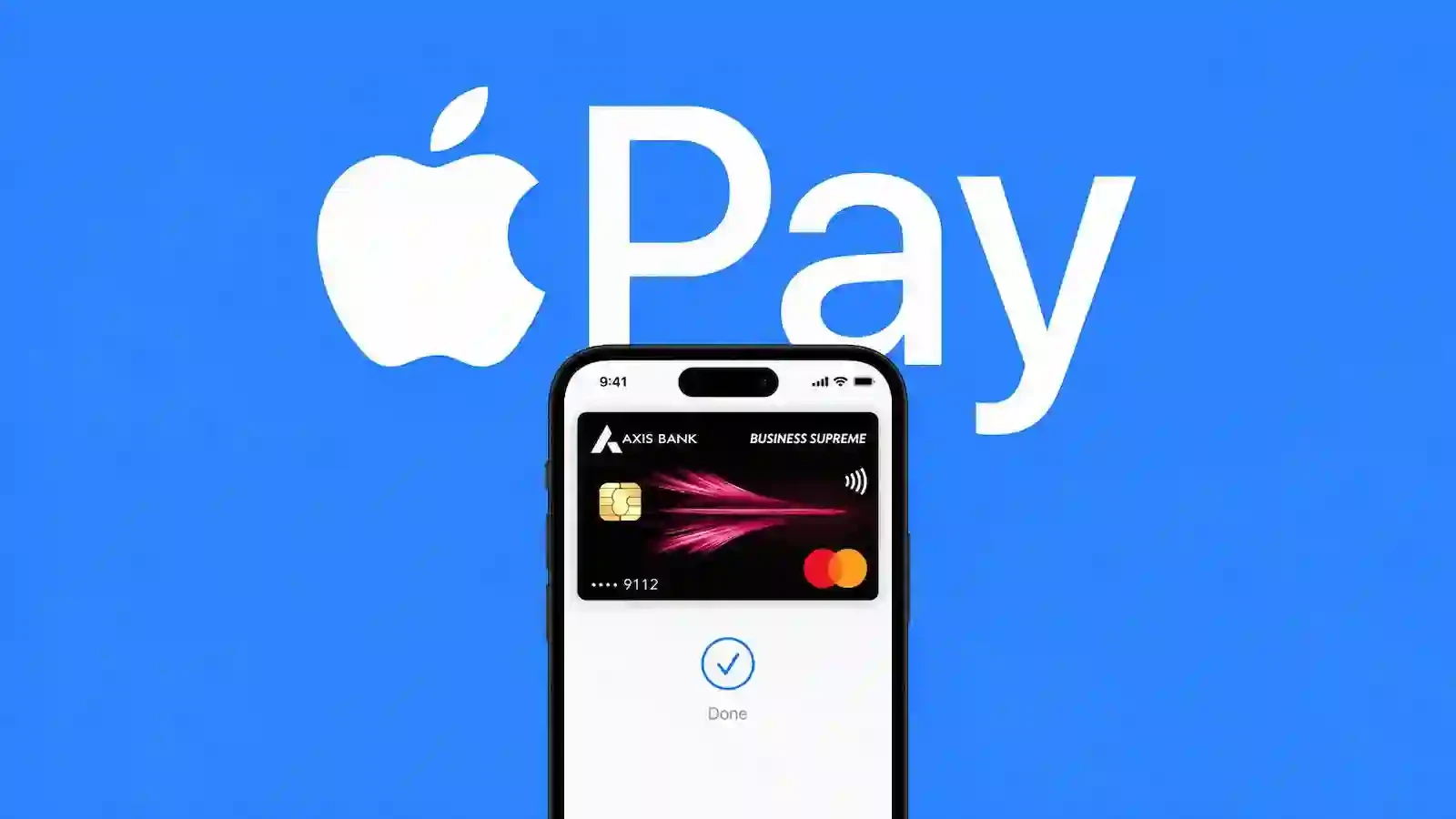
Apple has officially launched Apple Pay in India, giving users a new way to make card payments through compatible Apple devices. The service went live on September 30, 2026, with Axis Bank becoming Apple’s first banking partner in the country.
At launch, customers with eligible Axis Bank-issued Visa and Mastercard credit cards can add their cards to Apple Wallet and use Apple Pay for contactless purchases at participating merchants. Apple says the service is available across thousands of in-store and online merchants, with acceptance wherever compatible NFC payments are supported.
The launch marks Apple's entry into one of the world's largest digital payments markets, where UPI already dominates everyday digital transactions.
Apple Pay's initial availability is relatively limited.
Currently, eligible Axis Bank Visa and Mastercard credit cards can be added to Apple Wallet. Not every Axis Bank card is necessarily eligible, so customers need to check their individual card's compatibility.
RuPay cards are not supported at launch, while Apple Pay also does not currently support UPI payments. Apple is expected to expand issuer support over time, although no specific timeline for additional banks such as HDFC Bank or ICICI Bank has been announced.
Apple Pay therefore enters India's payment ecosystem as a card-based contactless payment option rather than a replacement for UPI. Apple Pay executive Jennifer Bailey has described Apple Pay and UPI as complementary services serving different payment use cases.
Apple Pay is initially available on:
Apple has also confirmed that Mac support is coming soon. For iPhone users, Apple Pay requires an iPhone XR or later running the required software, while supported Apple Watch models can also be used for contactless payments.
Setting up Apple Pay can be done through the Axis Bank app or Apple Wallet.
Users can:
Once verification is completed, the card will appear in Apple Wallet and can be used with Apple Pay.
For an in-store purchase, iPhone users can double-click the side button, authenticate using Face ID, Touch ID or their device passcode when required, and hold the top of the iPhone near a compatible contactless payment terminal.
Apple Watch users can similarly double-click the side button and hold the watch near the payment reader.
Apple Pay can also be used for supported online shopping and in-app purchases, reducing the need to repeatedly enter card numbers, billing details and shipping information.
Apple is positioning security and privacy as major features of its India payments launch.
Instead of storing the actual card number on the device or sharing it with merchants, Apple Pay uses tokenised payment credentials and device-level security. Transactions can be authenticated using biometric security such as Face ID or Touch ID.
Apple also says users continue to receive the rewards and benefits associated with their eligible cards when making purchases through Apple Pay.
One of the biggest questions surrounding the launch is whether Apple Pay could challenge India's established UPI ecosystem.
For now, the two services operate differently. UPI directly facilitates bank-account payments, while Apple Pay's Indian launch is built around eligible payment cards and NFC-based transactions.
That means Apple Pay is primarily aimed at customers who already use compatible credit cards and want a faster contactless payment experience through their Apple devices.
Apple's India launch begins with a single banking partner, but the company has indicated that issuer coverage will expand over time.
Reports before the launch had indicated discussions with major private-sector banks including HDFC Bank and ICICI Bank. However, neither bank was part of Apple's confirmed launch lineup on September 30.
For now, the Apple Pay experience in India starts with a simple proposition: add an eligible Axis Bank credit card to an Apple device and tap to pay. As Apple expands its banking and merchant partnerships, the service could become available to a much wider section of Indian card users.