•
•
•
•
•
•
•

US mortgage refinance rates remain above 7% for 30-year loans, prompting homeowners to compare monthly savings, closing costs and shorter-term options before refinancing.
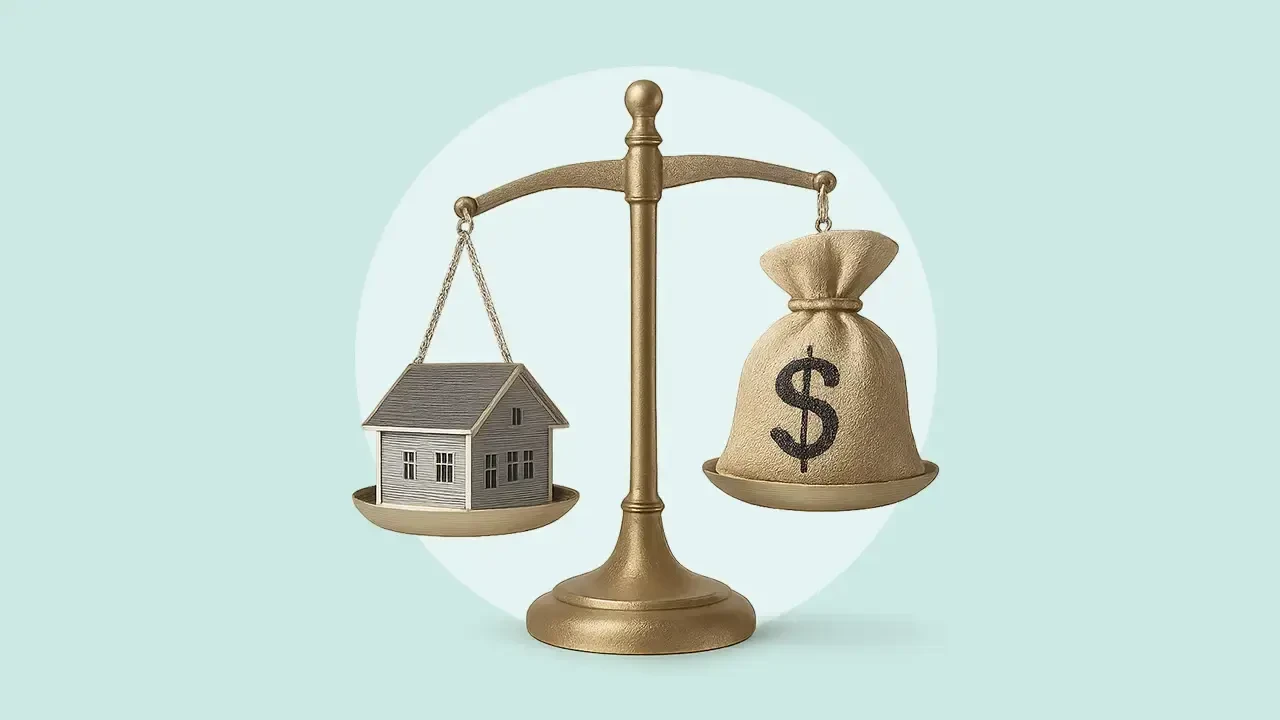
Homeowners considering a mortgage refinance are facing a market where rates remain relatively high compared with the ultra-low borrowing costs seen earlier in the decade.
According to Bankrate's September 23 data, the national average 30-year fixed refinance interest rate is 7.07%, while the average APR is 7.15%. The 15-year fixed refinance rate stands at 6.42%, with an APR of 6.53%.
Other refinance options are also available across different loan terms. Bankrate lists the 20-year fixed refinance rate at 6.88%, the 10-year rate at 6.19%, and the 30-year FHA and VA refinance rates at 6.84% and 6.72%, respectively, based on its September 23 national averages.
| Refinance Loan | Average Interest Rate | Approx. APR |
|---|---|---|
| 30-Year Fixed | 7.07% | 7.15% |
| 20-Year Fixed | 6.88% | 7.02% |
| 15-Year Fixed | 6.42% | 6.53% |
| 10-Year Fixed | 6.19% | 6.29% |
| 30-Year FHA | 6.84% | 6.88% |
| 30-Year VA | 6.72% | 6.80% |
| 30-Year Jumbo | 7.15% | 7.19% |
National averages as reported by Bankrate on September 23, 2026; individual lender offers can differ substantially.
Mortgage refinancing means replacing an existing mortgage with a new loan that has different terms. Homeowners commonly refinance to obtain a lower interest rate, reduce their monthly payment, change the loan term or alter other borrowing conditions.
The new mortgage is used to pay off the existing mortgage, after which the borrower makes payments under the new loan agreement.
Refinancing therefore isn't automatically beneficial simply because a new interest rate looks lower. Borrowers need to compare the total cost of the new mortgage, including fees and interest, with the cost of keeping their existing loan.
The 30-year fixed mortgage remains one of the most widely used loan structures because it spreads repayment over a longer period and can keep monthly principal-and-interest payments lower than a comparable shorter-term loan.
However, a longer repayment period can also mean paying more interest over the life of the mortgage.
For homeowners currently paying substantially more than today's refinance rates, refinancing could potentially reduce borrowing costs. But borrowers with an existing mortgage rate well below today's market may find that replacing the loan could increase their interest rate rather than reduce it.
This makes the current mortgage rate versus the new refinance rate one of the most important comparisons.
The 15-year fixed refinance rate is currently considerably below the 30-year average, at 6.42%, according to Bankrate's September 23 figures.
A shorter loan term can allow homeowners to repay their mortgage faster and potentially reduce the amount of interest paid over the entire loan.
However, the monthly payment can be significantly higher because the remaining balance must be repaid over a shorter period.
For someone considering a 15-year refinance, the key question isn't simply whether the rate is lower. The homeowner should also determine whether the new monthly payment comfortably fits within their budget.
One of the most useful calculations for homeowners is the refinance break-even point.
The basic calculation is:
Break-even period = Total refinancing costs ÷ Monthly savings
For example, suppose refinancing costs $8,000 and the new mortgage reduces monthly principal-and-interest payments by $400.
$8,000 ÷ $400 = 20 months
In this simplified example, the homeowner would need to keep the new mortgage for about 20 months before the monthly savings offset the upfront refinancing costs.
This calculation is only a starting point. Borrowers should also consider changes in loan term, taxes, insurance, points, prepayment costs and other fees.
Refinancing involves costs, which can include lender fees, appraisal expenses, title-related charges, underwriting fees and other closing expenses.
That means a refinance with a lower interest rate isn't necessarily cheaper from day one.
For example, a homeowner might reduce their monthly payment but spend thousands of dollars upfront. If the homeowner expects to sell the property or refinance again before reaching the break-even point, the expected savings may not materialize.
This is why calculating the refinance break-even period is an important step before making a decision.
There is no single refinance rate that makes sense for every homeowner.
The right comparison depends on the rate currently attached to the existing mortgage.
Consider two hypothetical homeowners:
Homeowner A:
Current mortgage rate: 8.25%
Potential new rate: around 7.07%
There is a substantial rate difference, but the borrower would still need to calculate closing costs and monthly savings.
Homeowner B:
Current mortgage rate: 4.25%
Potential new rate: around 7.07%
In this scenario, the new rate is substantially higher, so refinancing for the purpose of obtaining a lower interest rate would not accomplish that objective.
These examples demonstrate why national refinance averages should be treated as a market reference rather than a personalized recommendation.
The rate advertised nationally isn't necessarily the rate every borrower will receive.
Lenders can consider factors such as:
Bankrate also notes that its national averages are market averages and that individual lender offers can differ. Its rate tables provide personalized comparisons based on borrower and property information.
This means homeowners should compare multiple refinance offers instead of relying on one advertised rate.
Homeowners generally have different reasons for refinancing.
A rate-and-term refinance replaces the existing mortgage primarily to change the interest rate, monthly payment or repayment period.
The objective is generally to improve the structure of the existing mortgage.
A cash-out refinance replaces the existing mortgage with a larger loan, with the difference provided to the homeowner as cash, subject to lender requirements and available home equity.
This can provide access to funds, but it also increases the mortgage balance and potentially the total borrowing cost.
Investopedia notes that refinancing can be used to change the interest rate, loan duration or other terms, but the benefits and drawbacks depend on the specific refinancing structure. ([Investopedia][2])
Monthly payment is only one part of the refinancing equation.
A homeowner could obtain a lower monthly payment by extending the repayment period, but that doesn't necessarily mean the new mortgage will cost less overall.
For example, moving from a mortgage with a relatively short remaining term into a new 30-year mortgage could reduce the monthly payment while extending the period over which interest is charged.
Therefore, borrowers should compare:
Current loan remaining balance + remaining interest
against
New loan balance + new interest + refinancing costs
Looking at the total cost can provide a clearer picture than comparing monthly payments alone.
For homeowners who can comfortably manage a higher monthly payment, a 15-year refinance may be worth investigating because the current average rate is lower than the 30-year refinance rate.
The trade-off is straightforward:
15-year loan: potentially higher monthly payment, shorter repayment period and lower rate.
30-year loan: potentially lower monthly payment, longer repayment period and higher rate.
The better fit depends on the homeowner's cash flow, remaining mortgage term, financial goals and tolerance for a higher monthly obligation.
Mortgage rates can move in either direction as economic conditions, inflation expectations, Treasury yields and lender pricing change.
Waiting for a lower rate could result in a better refinancing opportunity, but there is no guarantee that rates will fall to a particular level or remain there.
Conversely, refinancing today doesn't necessarily mean a homeowner can never refinance again. Some borrowers may refinance later if market conditions change, although doing so would involve another set of costs.
The more useful approach is to evaluate whether the economics of the refinance work at the rate currently available, rather than relying solely on predictions about where mortgage rates might go.
A refinance calculator can help homeowners estimate potential monthly savings, interest costs and break-even periods using their own loan information.
Tools such as the 1 Finance Loan Refinance Calculator are designed to compare existing loan terms with potential refinancing scenarios.
Before applying, homeowners should have information such as:
With these figures, borrowers can build a more realistic comparison.
US refinance rates remain around the 7% level for 30-year loans in September 2026, while shorter-term options are priced lower. Bankrate's latest figures put the 30-year fixed refinance rate at 7.07% and the 15-year rate at 6.42% on September 23.
For homeowners considering refinancing, the most important question isn't simply whether rates are "high" or "low." It is whether a new mortgage would improve their individual financial position after accounting for interest rates, closing costs, monthly savings, loan term and the expected time they will keep the property.
A refinance calculator and multiple lender quotes can help provide a clearer comparison before committing to a new mortgage.
Financial note: Mortgage rates and lender offers change frequently. National averages are not guaranteed rates for individual borrowers. Consider comparing personalized offers and, where appropriate, consulting a qualified mortgage or financial professional before making a refinancing decision.