•
•
•
•
•
•
•

The end of a military presence that began with the 2003 invasion, explained with background, reactions, risks and what comes next
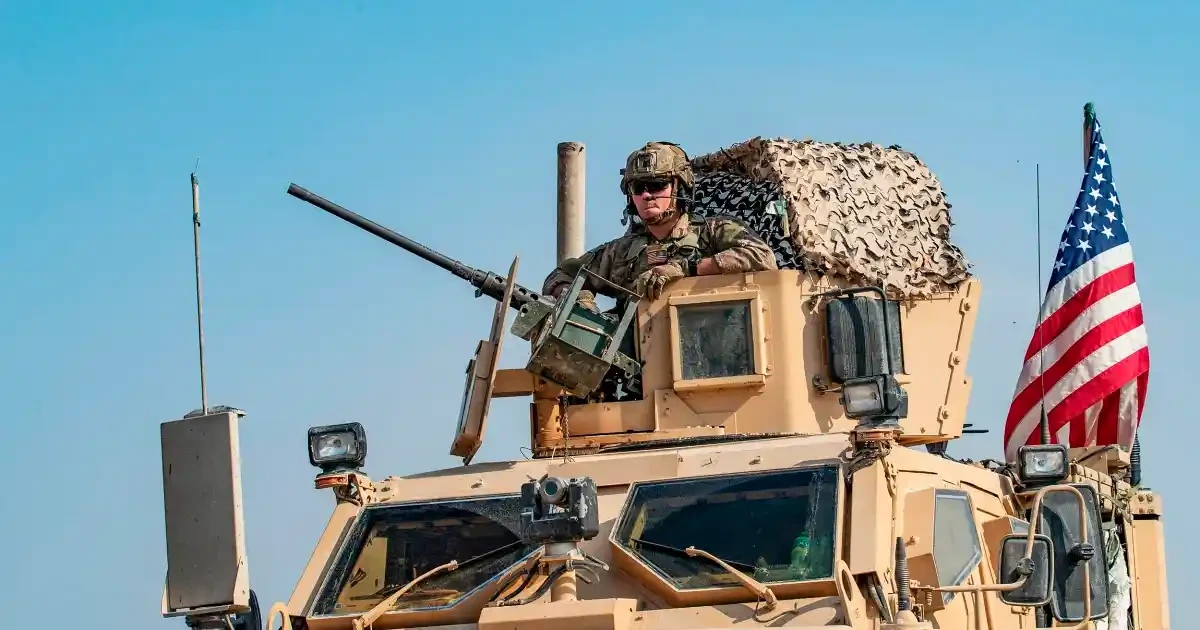
The United States is completing its withdrawal from its last military bases in Iraq by Wednesday, 30 September 2026, Reuters reported, ending a base presence that began with the 2003 invasion and resumed in 2014 to fight the Islamic State (ISIS). Iraq's Prime Minister's Office has described 1 October as a new day for the Iraqi state, and Baghdad has said there will be no foreign combat troops in the country after 30 September.
The timeline was agreed in 2024 under President Joe Biden and has been carried out under President Donald Trump, even as the US is engaged in a war with Iran.
This is a developing story. Details may change as official confirmations are issued.
| Year | Event |
|---|---|
| 2003 | US-led invasion topples Saddam Hussein |
| 2007 | US troop numbers peak at more than 170,000 |
| 2011 | US forces withdraw from Iraq |
| 2014 | US troops return at Baghdad's request as ISIS seizes large parts of Iraq and Syria |
| 2017 | Iraq declares victory over ISIS territorial control |
| September 2024 | US and Iraq agree a two-phase end to the coalition military mission |
| September 2025 | Phase one: coalition mission in federal Iraq ends |
| 30 September 2026 | Phase two: final withdrawal from remaining bases |
Roughly 4,500 Americans died in the conflict after 2003. By the final weeks, the US footprint at Iraqi bases had fallen to a few hundred troops or fewer.
After months of talks through a joint Higher Military Commission, the US and Iraq announced a two-stage transition in September 2024:
Washington described the change as a shift toward an enduring bilateral security relationship, rather than a complete break.
Iranian lawmaker Amir Hayat Moqaddam, deputy chairman of the national security commission in Iran's parliament, welcomed the withdrawal.
Some Iraqi security officials have warned that the departure could leave a security vacuum, arguing that Iraq's forces are not yet fully ready to operate independently in every area.
The withdrawal closes the chapter of US bases in Iraq that shaped two decades of American foreign policy, from the 2003 invasion to the campaign against ISIS.
The exit comes during an active conflict between the US and Iran. According to US officials cited by Reuters, President Trump is willing to offer Iran sanctions relief and access to frozen funds in exchange for concrete steps on its nuclear programme, while mediators are working toward a new US–Iran agreement.
Analysts and officials have long warned that ISIS cells could exploit any drop in intelligence, air support or training once foreign forces leave.
The balance between the Iraqi state and powerful Iran-aligned militias will be tested, particularly on questions such as control of airspace and weapons outside state authority.
Yemen's conflict has also flared again. The World Health Organization said this week that more than 800 people have been killed since fighting resumed between the Houthis and the Saudi-backed government, underlining how volatile the wider region remains.
US forces are leaving their last military bases in Iraq by 30 September 2026. Some diplomatic security personnel and cooperation arrangements may continue, and details will depend on official US and Iraqi statements.
The timing follows a 2024 agreement between Washington and Baghdad to end the US-led coalition's military mission in two phases, concluding in September 2026.
In March 2003, during the US-led invasion that toppled Saddam Hussein.
Yes. US forces withdrew at the end of 2011 and returned in 2014 at the Iraqi government's request to fight ISIS.
Main concerns include a possible ISIS resurgence, greater influence for Iran-aligned militias, and instability linked to the ongoing US–Iran conflict.
The departure of US forces from Iraq's last bases marks the formal end of a military presence that defined a generation of Middle East policy. It fulfils a negotiated timeline, but it arrives at a tense moment, with an active US–Iran war, assertive armed groups and a lingering ISIS threat. How Iraq manages its own security in the coming months will show whether this exit brings stability or a new period of uncertainty.