•
•
•
•
•
•
•

Exercise Tarang Shakti 2026 brings nearly 40 countries, 80 aircraft and 1,500 personnel to Jodhpur, with US F-35 stealth fighters making their first operational exercise appearance with the IAF in India.
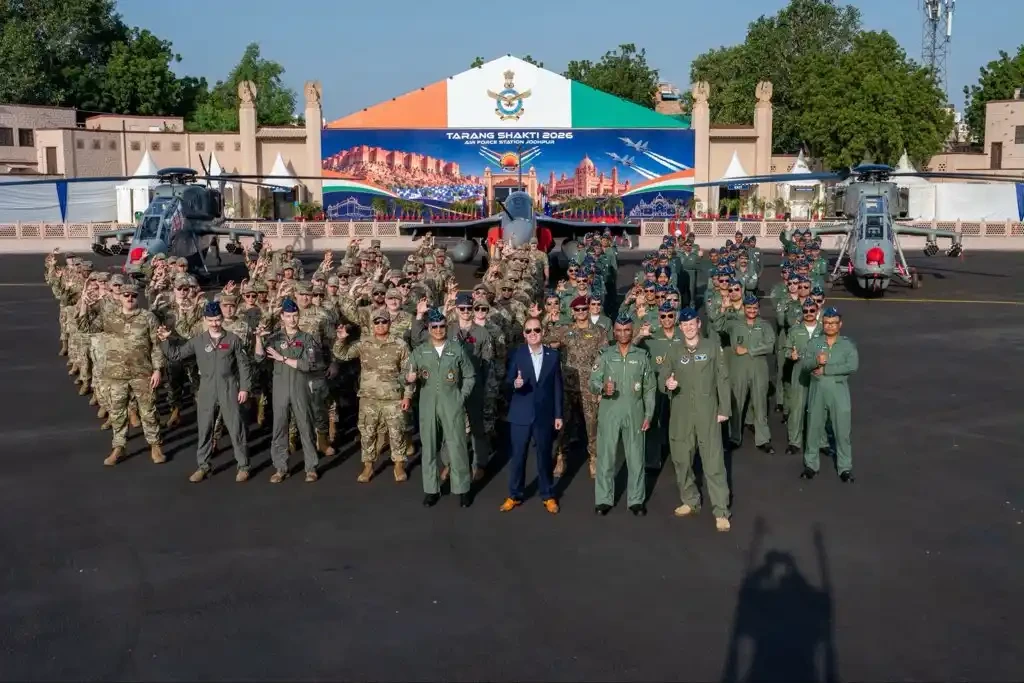
Exercise Tarang Shakti is a multinational air combat and training exercise hosted by the Indian Air Force. Its first edition was held in 2024, and the 2026 edition is the second iteration of the exercise.
The 2026 exercise is being conducted at Jodhpur Air Force Station in Rajasthan from September 26 to October 12.
According to the Ministry of Defence, the exercise is designed to promote operational interoperability, information exchange, professional interaction and mutual learning among participating air forces.
The exercise is therefore more than a display of fighter aircraft. It provides participating air forces with an opportunity to train together and understand different operational procedures and capabilities.
One of the defining features of Tarang Shakti 2026 is its international scale.
The Times of India reported that nearly 40 countries, around 80 aircraft and approximately 1,500 military personnel are involved in the exercise. About 30 of the aircraft are foreign fighter jets and transport aircraft.
Seven countries are participating directly with aircraft and other military assets:
Other participating countries are attending as observers.
This combination of participating and observer nations gives the exercise a broad multinational character.
The biggest attraction of Tarang Shakti 2026 is arguably the arrival of the American F-35 Lightning II.
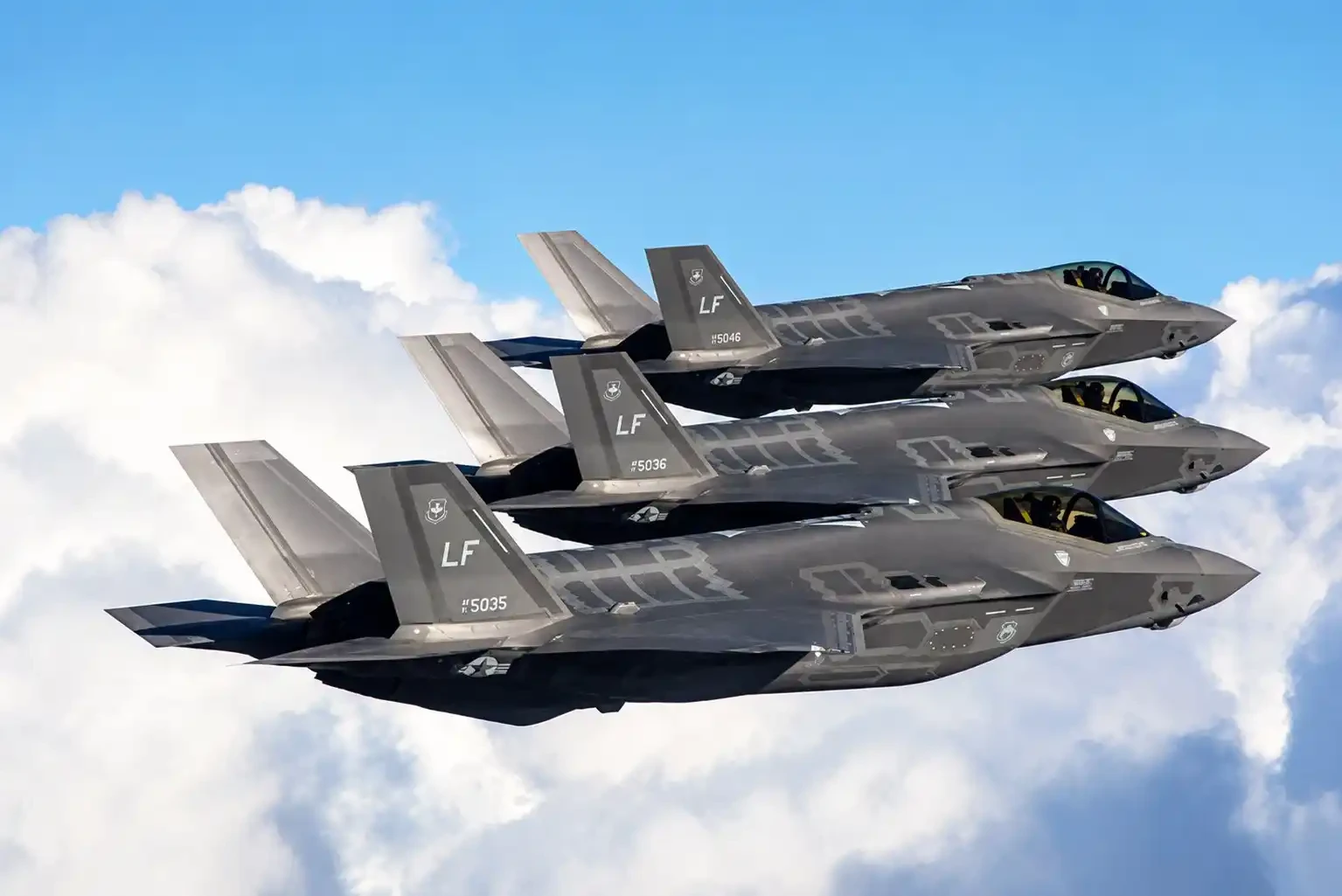
Six F-35 aircraft have arrived in Jodhpur along with more than 200 US Air Force personnel. The aircraft are participating in the exercise for the first time alongside the Indian Air Force.
The F-35 is a fifth-generation stealth fighter designed for air combat, precision strike and intelligence-related missions.
Although an F-35 had previously appeared in India during Aero India, Tarang Shakti 2026 marks the first time the aircraft is participating in an operational multinational exercise with the IAF on Indian soil.
This makes the F-35's participation one of the most closely watched elements of the exercise.
The F-35 is not the only advanced aircraft participating.
Foreign aircraft involved in the exercise include:
The Indian Air Force is also participating with several of its frontline platforms and support aircraft.
The combination creates an environment in which different aircraft, aircrew and support teams can train in complex multinational scenarios.
Tarang Shakti 2026 covers a wide range of air operations.
According to reporting on the exercise, the training includes:
The exercise also focuses on communication, mission planning and coordination between aircrew and operational personnel.
Such training is important because modern air operations often require different aircraft and units to work together rather than operate independently.
A major objective of Tarang Shakti is interoperability — the ability of different military forces and systems to work together effectively.
Each air force has its own aircraft, communication procedures, mission-planning methods and operational practices.
Multinational exercises allow participating forces to understand these differences while practising coordinated missions.
The Ministry of Defence says the exercise will encourage professional interaction and exchange of expertise while improving understanding of different systems and operational procedures.
This makes Tarang Shakti useful not only as a flying exercise but also as a platform for professional military cooperation.
While foreign aircraft are attracting considerable attention, the exercise also provides an opportunity for India to showcase its own aerospace capabilities.
The IAF's participation includes aircraft such as the Su-30MKI, Rafale, Tejas and Mirage-2000, along with other combat and support platforms, according to reporting ahead of the exercise.
The exercise therefore combines international platforms with India's growing indigenous aviation ecosystem.
For India, multinational exercises also provide opportunities to demonstrate operational capabilities and gain experience working alongside different air forces.
The official theme of the exercise is “Power in Partnership.”
The Ministry of Defence says the theme reflects the collective strength created through cooperation, information sharing, experience exchange and interoperability among participating air forces.
The exercise also includes activities beyond flying operations, including professional seminars, industrial visits, heritage activities and other interactions between participating contingents.
These activities are intended to strengthen professional relationships and familiarity between the participating forces.
The first edition of Tarang Shakti was held in 2024.
It was conducted in two phases and involved multiple foreign air forces, including participants from countries such as France, Germany, the United Kingdom, Australia, Greece, Japan, Singapore, Spain and the UAE.
The 2026 edition builds on that experience but is being conducted as a larger multinational exercise at Jodhpur.
The scale of participation and the inclusion of aircraft such as the US F-35 make the second edition a significant expansion of the exercise's international profile.
The exercise comes at a time when air warfare is becoming increasingly dependent on networked operations, precision weapons, unmanned systems, integrated air defence and information sharing.
Training with different foreign air forces gives the IAF opportunities to practise in scenarios involving multiple aircraft types and operational approaches.
It also allows Indian personnel to learn from foreign partners while giving participating countries an opportunity to operate alongside the IAF.
The exercise is therefore relevant to both military interoperability and India's broader defence cooperation.
The arrival of the American F-35 has given Tarang Shakti 2026 additional international attention.
For the IAF, exercising alongside a fifth-generation stealth aircraft provides an opportunity to train in an environment involving a platform with different operational characteristics from India's current fighter fleet.
However, the exercise should not be viewed simply as a comparison between individual fighter jets.
Modern air combat depends on an entire network of aircraft, sensors, communications, weapons, support systems and personnel. Tarang Shakti's multinational format allows these broader operational elements to be explored.
Exercise Tarang Shakti 2026 is scheduled to continue at Jodhpur until October 12.
Over the course of the exercise, participating air forces will conduct flying and operational activities while personnel engage in professional exchanges and other events.
The outcome will provide another opportunity for the IAF and its international partners to assess how effectively they can operate together across different mission types.
For India, the exercise also highlights the country's role as a host for increasingly complex multinational military exercises.