•
•
•
•
•
•
•

A status check on India's landmark education policy reform
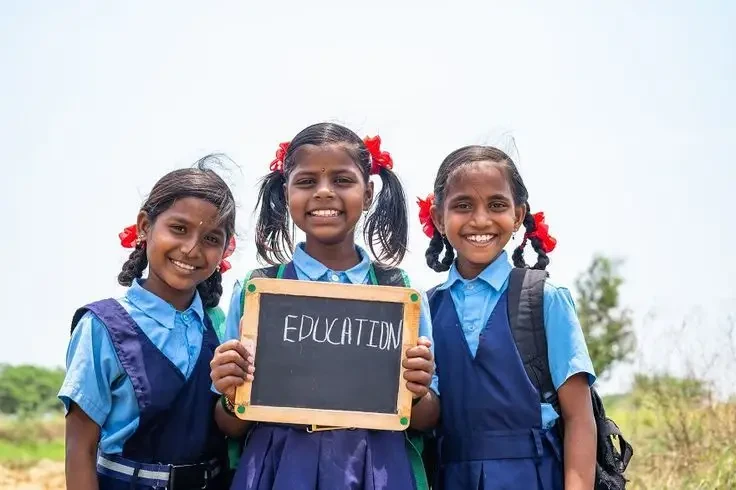
The National Education Policy (NEP) 2020 is India's comprehensive framework for reforming education from the foundational years through higher education and vocational training. Approved by the Union Cabinet in 2020, it replaced the previous education policy that had guided the system for over three decades, aiming to make Indian education more flexible, multidisciplinary and aligned with 21st-century skill needs.
NEP 2020 replaced the traditional 10+2 schooling structure with a 5+3+3+4 model, covering foundational, preparatory, middle and secondary stages, with a stronger emphasis on early childhood care and education.
The policy introduced four-year multidisciplinary undergraduate degrees with multiple entry and exit points, allowing students to receive a certificate, diploma or degree depending on how many years they complete — a significant departure from India's traditionally rigid degree structures.
An Academic Bank of Credits system was proposed to let students accumulate and transfer academic credits across institutions, supporting more flexible educational pathways.
The policy places strong emphasis on ensuring foundational literacy and numeracy by Grade 3, responding to long-standing concerns highlighted in national learning assessment surveys.
Many universities have adopted four-year undergraduate programs with multiple entry-exit options, and the University Grants Commission has issued supporting regulatory frameworks. Adoption speed, however, varies significantly by state and institution type.
States have taken varied approaches to implementing the new curricular structure, with some further along in revising curricula, textbooks and teacher training programs than others.
NEP's push for mother-tongue or regional-language instruction in early grades has seen mixed implementation, with logistical and resource challenges in states with diverse linguistic populations.
Students entering higher education now have more flexibility in choosing subject combinations across disciplines rather than being locked into a single stream, and can exit degree programs early with a formal certification if circumstances change. School students in states with full implementation may notice curriculum changes emphasizing conceptual understanding and skill-based learning over rote memorization.
Does NEP 2020 apply to all states equally?
Since education is a concurrent subject, implementation timelines and specifics vary by state, with some adopting the framework more comprehensively than others.
What is the Academic Bank of Credits?
It is a digital system designed to store and transfer academic credits earned across different institutions, supporting flexible, multi-entry higher education pathways.
Will the four-year degree become mandatory everywhere?
Many universities have adopted the four-year format, but implementation timelines and options continue to vary by institution and state.
NEP 2020 represents one of India's most ambitious education reforms in decades, with the potential to reshape how students learn and move through the education system. While implementation remains uneven across states and institutions, the policy's core principles — flexibility, multidisciplinary learning and stronger foundational education — continue to guide ongoing reform efforts nationwide.