•
•
•
•
•
•
•

From a young cadet in Jammu and Kashmir to an officer who stood beside President Droupadi Murmu, Major Rishabh Singh Sambyal’s journey reflects years of discipline, sacrifice and service—and a remarkable decision to begin a new chapter at 30.
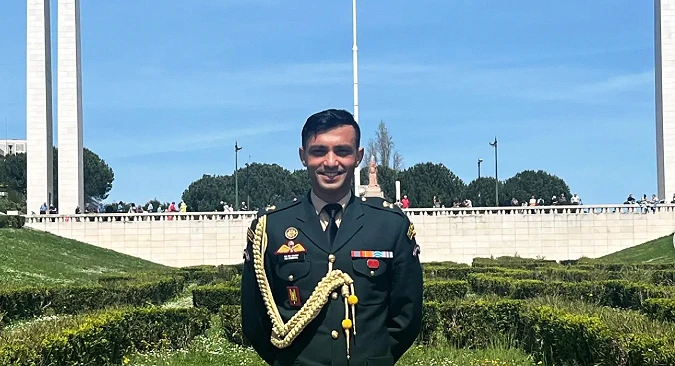
For several years, Major Rishabh Singh Sambyal was accustomed to being in the background.
As an officer of the Indian Army and later as the Aide-de-Camp (ADC) to President Droupadi Murmu, his responsibility was to remain composed, attentive and ready at all times. He stood beside the President during official ceremonies, national events and public engagements, rarely becoming the focus himself.
But the public began noticing.
Photographs and videos of the young officer accompanying President Murmu circulated widely on social media. His military bearing and calm presence attracted considerable attention, eventually making him an unexpected internet personality.
Behind that public attention, however, was a military career built over years of training, discipline and service.
And in 2026, that career reached an unexpected turning point.
At the age of 30, Major Rishabh Singh Sambyal decided to retire from the Indian Army.
His decision has prompted widespread curiosity, particularly because it came after one of the most prestigious assignments of his career.
His story, however, is not simply about an officer leaving the Army. It is about a young man who spent years placing duty ahead of personal life and eventually decided that it was time to consider what he wanted from the next chapter.
Sambyal's journey began in Samba district of Jammu and Kashmir.
His early education at Sainik School Kapurthala introduced him to an environment built around discipline, leadership and service. For a young student aspiring to join the armed forces, it provided an early foundation for the demanding career that followed.
In 2013, he cleared the UPSC National Defence Academy examination and subsequently joined the 133rd NDA course at Khadakwasla.
The transition from school to military training brought a completely different routine. Physical endurance, academic preparation, leadership exercises and military discipline became central to his life.
After completing his NDA training and studies, Sambyal proceeded to the Indian Military Academy in Dehradun for pre-commission training.
In 2018, he was commissioned into the Indian Army as a Lieutenant.
The first major chapter of his professional life had begun.
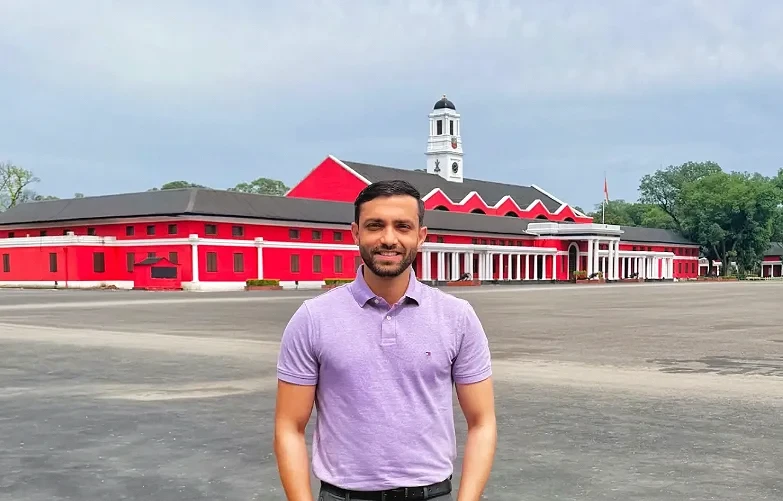
One of Sambyal's most notable early public appearances came in 2021, when he led the Jat Regiment contingent at the Republic Day Parade.
For a young Army officer, leading a marching contingent on Republic Day is a significant responsibility. The event is watched across the country, and every movement on the parade ground reflects months of preparation and discipline.
The Jat Regiment contingent went on to receive the Best Marching Contingent Trophy.
The achievement established Sambyal as an officer capable of performing under intense public and institutional scrutiny.
But his career was about to take him into an even more demanding environment.
Sambyal later served with 4 Para Special Forces, one of the Indian Army's elite units.
Service in the Para Special Forces involves rigorous physical and mental training. Officers are expected to operate in difficult environments while maintaining high levels of endurance, discipline and decision-making ability.
Sambyal completed the demanding training associated with the unit and earned the Balidaan Badge, associated with India's Para Special Forces.
By this stage, his career had already included conventional military service, ceremonial leadership and specialised operations training.
Then came an appointment that would make him recognisable far beyond military circles.
In 2023, Sambyal was selected as an Aide-de-Camp to President Droupadi Murmu.
The position placed him at the heart of India's presidential establishment.
An ADC's responsibilities extend well beyond ceremonial appearances. The role requires close attention to protocol, coordination, official engagements and the President's movements. It also demands constant readiness and a high degree of professionalism.
For Sambyal, it meant spending much of his working life alongside the President.
It also meant being seen.
As photographs from Rashtrapati Bhavan and official events appeared online, social media users began taking an interest in the young officer standing beside President Murmu.
What began as casual public curiosity grew rapidly.
Major Rishabh Singh Sambyal had become a familiar face to people who had never previously followed military affairs.
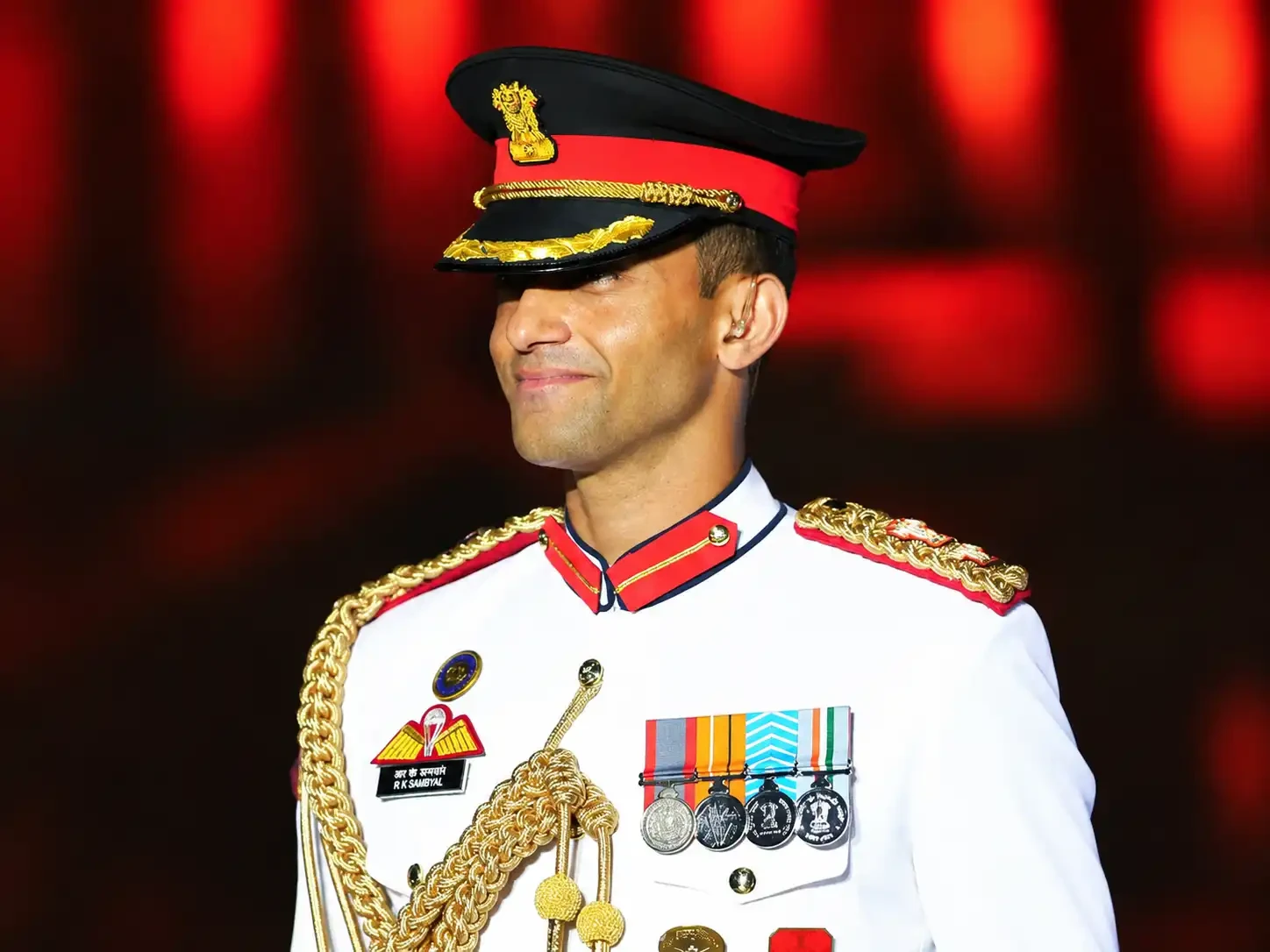
The attention surrounding Sambyal presented only one side of his life.
Military service had required him to spend long periods away from home. He has spoken about not living with his mother since around 2014 because of his military career, often returning home only briefly before leaving again for extended periods.
The responsibilities associated with the presidential ADC appointment added another layer of personal sacrifice.
Sambyal has explained that the role demands continuous availability and strict adherence to protocol. He also discussed the personal restrictions associated with serving as a presidential ADC, including limitations around marriage during the tenure.
For someone in his early thirties, these sacrifices carried significant personal consequences.
The photographs showed an officer at prestigious national events.
They did not show the years spent away from family.
During his tenure as ADC, Sambyal also developed a close professional relationship with President Droupadi Murmu.
He has spoken about the guidance and support he received during his time at Rashtrapati Bhavan. He also described an emotional connection with the President that reminded him of his own mother.
That aspect of his experience appears to have made the presidential assignment particularly meaningful.
After years of military service and extended periods away from home, Sambyal found himself working closely with a leader whom he respected and who, in some ways, evoked a sense of family.
His time as ADC therefore became more than another posting.
It became one of the defining chapters of his military career.
Which is precisely why his next decision surprised so many people.
When news emerged that Sambyal had decided to take premature retirement, speculation quickly followed.
Why would an officer leave after reaching such a prestigious position?
Was it marriage?
Was he moving abroad?
Was there a problem with his career?
Sambyal has addressed those questions himself.
His decision, he explained, was primarily connected to family, personal priorities and his desire to explore life beyond the Army.
It was not the result of career stagnation.
In fact, his professional record suggested the opposite.
He had served in the Jat Regiment, led a Republic Day contingent, joined the Para Special Forces and served as an ADC to the President.
The decision was therefore not about having nowhere else to go.
It was about deciding where he wanted to go next.
Leaving the Army was not a decision Sambyal made overnight.
He has said that he spent nearly four months considering whether he should continue his military career or seek premature retirement.
That period of uncertainty is significant.
The Army had been more than a profession for him. It had shaped his education, identity and adult life.
Walking away meant giving up a career that many would consider the pinnacle of professional achievement.
But the longer he reflected on his circumstances, the more important another consideration became: time.
Years of military service had come with a cost — particularly in terms of family life and personal choices.
At some point, Sambyal had to decide whether continuing on the same path was worth postponing those priorities further.
He chose to step away.
Sambyal's retirement does not appear to mark a retreat from public service.
Instead, he has indicated that he wants to explore opportunities outside the Army and work on initiatives that can inspire young people and contribute to national development.
The experience he carries with him is considerable.
The Army gave him discipline.
The Para Special Forces tested his resilience.
The Republic Day Parade gave him experience in leadership under national attention.
And Rashtrapati Bhavan exposed him to the highest levels of India's constitutional and administrative establishment.
Those experiences will remain relevant even after the uniform is no longer part of his daily life.
In August 2026, Sambyal met President Murmu at Rashtrapati Bhavan and expressed his gratitude.
It was a fitting moment for an officer whose career had taken him from a military school in Punjab to the highest ceremonial office in the country.
For years, his professional role had required him to remain beside the President.
Now, he was preparing to move forward independently.
There is something significant about that transition.
The young officer who once entered military training with a clear idea of service was now leaving the institution after experiencing some of its most demanding and prestigious assignments.
Major Rishabh Singh Sambyal's journey is easy to summarise through a list of achievements:
Sainik School.
NDA.
Indian Military Academy.
Jat Regiment.
Republic Day Parade.
Best Marching Contingent.
4 Para Special Forces.
Balidaan Badge.
President's ADC.
But a career cannot always be understood through milestones alone.
Behind those achievements was a young officer who spent years accepting the demands of military life — including long periods away from his family and restrictions on his personal life.
His decision to retire at 30 therefore offers a different perspective on ambition.
Professional success does not always mean continuing along the same path indefinitely.
Sometimes, it means recognising when priorities have changed.
For Sambyal, the next chapter will be outside the Army.
The uniform that made him recognisable to millions may no longer define his daily life, but the discipline and experience accumulated during his military career will inevitably remain part of who he is.
From a young cadet at NDA to a Special Forces officer, from the Republic Day parade ground to Rashtrapati Bhavan, Major Rishabh Singh Sambyal's journey has been anything but ordinary.
And perhaps the most important chapter is the one that has just begun.
After years of serving the country in uniform, he is now preparing to discover what he can build beyond it.