•
•
•
•
•
•
•

Kashmiri-inspired ghungroo watches are becoming a festive fashion favourite, combining the functionality of a watch with the colourful charm of traditional Indian jewellery.
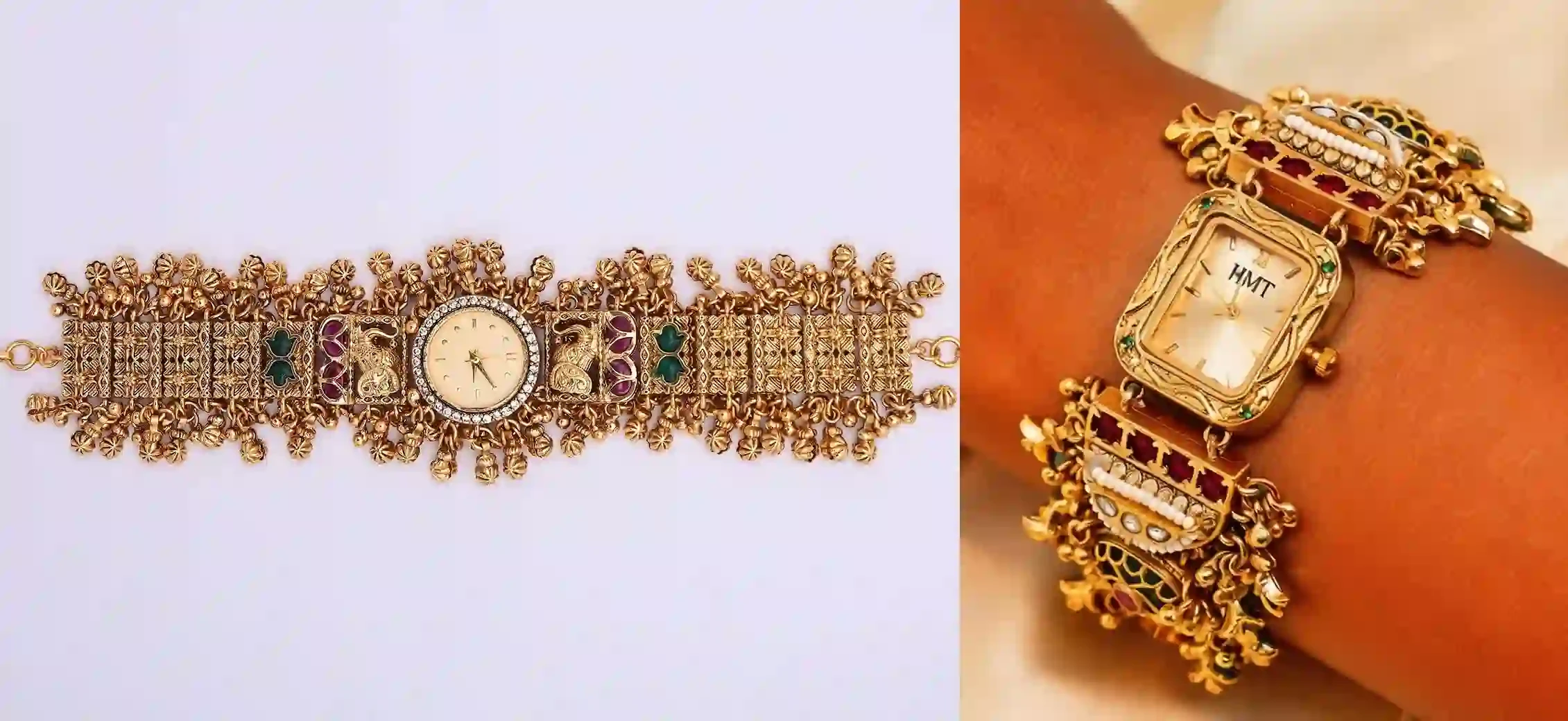
Festive dressing is often about finding the right accessories to complete an outfit. While bangles, jhumkas, rings and traditional bracelets remain popular, a new accessory is increasingly attracting attention: the Kashmiri-inspired ghungroo watch.
The trend combines two familiar fashion elements — a wristwatch and traditional jewellery — into one statement accessory.
Unlike conventional watches featuring leather, metal or silicone straps, these designs often resemble bracelets or bangles. They may include tiny ghungroo, beads, pearls, stones, chains, floral details or decorative metalwork around a small watch dial.
This jewellery-meets-timepiece concept makes the accessory particularly suitable for festive wardrobes, where a watch does not necessarily have to look purely functional.
The popularity of Kashmiri-inspired accessories has grown alongside social-media fashion content. Reports from Indian lifestyle publications note increasing interest in colourful Kashmiri-style bangles and, more recently, watches that borrow similar visual elements.
The appeal lies largely in their traditional appearance combined with modern functionality.
A conventional watch can sometimes look too casual with an elaborate ethnic outfit. A jewellery-style watch, however, can work as part of the overall styling. It adds the practical function of a timepiece while contributing colour, shine and texture to the wrist.
The trend also fits the wider movement toward accessories that can serve multiple purposes. Instead of wearing several bangles and a separate watch, a bracelet-style watch can provide both effects in a single piece.
One of the defining details is the use of ghungroo.
Tiny bells can add movement and visual interest whenever the wearer moves their hand. Combined with beads, pearls or metallic elements, they give the watch a more festive character than an ordinary wristwatch.
Some designs also feature colourful stones and decorative motifs, while others take a comparatively understated approach with pearls or metallic detailing. This means the trend is not restricted to one particular aesthetic.
For someone who prefers bold ethnic styling, a colourful, heavily embellished design can become the centrepiece of the look. Those who prefer minimal fashion can choose a smaller dial with subtle bracelet detailing.
The biggest advantage of this trend is its versatility.
A jewellery-style watch can complement both heavily embroidered sarees and simpler drapes.
For a traditional saree, a gold-tone or embellished watch can coordinate with earrings and other metallic jewellery. If the saree already has heavy embroidery, choosing a relatively restrained watch can prevent the accessories from competing with each other.
For wedding celebrations and festive parties, a statement ghungroo watch can work particularly well with a lehenga.
A colourful design can pick up shades from the lehenga, while gold or silver detailing can coordinate with the embroidery.
The key is balance: if the watch is heavily decorated, there is little need to overload the same wrist with multiple bangles.
The trend is not limited to wedding wear.
A bracelet-style watch can also elevate a simple kurta-set, salwar suit or Anarkali. A relatively colourful watch can add an accessory-focused element to an otherwise understated outfit.
For an Indo-western appearance, a watch featuring beads, chains or subtle metallic detailing can bridge the gap between traditional and contemporary styling.
This makes it suitable for festive lunches, family gatherings and cultural celebrations where the outfit is ethnic but not necessarily heavily embellished.
One of the easiest ways to wear this trend is to let the watch act as the main wrist accessory.
If the watch already contains ghungroo, pearls, stones or elaborate metal details, adding several bangles on the same wrist may make the look unnecessarily busy.
Instead, fashion styling around the watch can be kept relatively simple. Small earrings, a delicate ring and a bindi can complement the accessory without competing with it. Amar Ujala similarly recommends balancing a heavier festive watch with minimal jewellery.
This approach is particularly useful when the outfit itself already contains embroidery, sequins or elaborate prints.
The choice largely depends on the outfit.
Gold-tone watches can pair naturally with warm-toned ethnic outfits and traditional gold jewellery. They can be especially useful with red, maroon, green, mustard and similar festive shades.
Silver-tone designs can work well with cooler colours and outfits featuring silver or crystal embellishments.
Meanwhile, colourful bead and stone watches can introduce contrast to a relatively simple outfit. They can also echo the colourful character associated with the current Kashmiri-inspired accessory trend.
Rather than matching every accessory exactly, the watch can also be used as a small colour accent.
The visual appeal of a jewellery-style watch is important, but it should not be the only consideration.
Before buying one, check:
For everyday use, a lightweight design may be more practical, while a heavily embellished watch can be reserved for weddings and festive occasions.
The popularity of Kashmiri-inspired watches reflects a broader shift in festive fashion: traditional visual elements are increasingly being incorporated into modern accessories.
The concept is not simply about replacing bangles with watches. Instead, it gives shoppers another way to combine ethnic aesthetics, jewellery detailing and contemporary functionality.
Social media has also played a role in bringing these styles into the spotlight. The Economic Times reported that Kashmiri-inspired bangles and bracelet-style watches have been gaining attention through Instagram and festive fashion content.
At the same time, the phrase “Kashmiri watch” should be understood carefully. The reports describe these products primarily as Kashmiri-inspired or associated with a particular fashion trend; that does not establish that every product carrying the label is traditionally manufactured in Kashmir.
It is too early to say whether the trend will become a long-term jewellery category, but its combination of functionality and decorative styling gives it flexibility beyond festivals.
A subtle bracelet-style watch can work with everyday ethnic clothing, while more elaborate ghungroo and stone-encrusted versions can remain occasion-specific.
For consumers who enjoy experimenting with accessories, that versatility may be one of the trend's biggest attractions.
Ultimately, the Kashmiri-inspired ghungroo watch trend represents a simple fashion idea: take something practical, give it the visual language of jewellery, and make it work with the traditional wardrobe.
As festive fashion continues to mix heritage-inspired details with contemporary styling, these watches offer another way to make the wrist an important part of the overall look.