•
•
•
•
•
•
•

Solar installations hit record highs in 2026 as India crosses 291 GW of renewable capacity — here's the data behind the country's clean-energy sprint
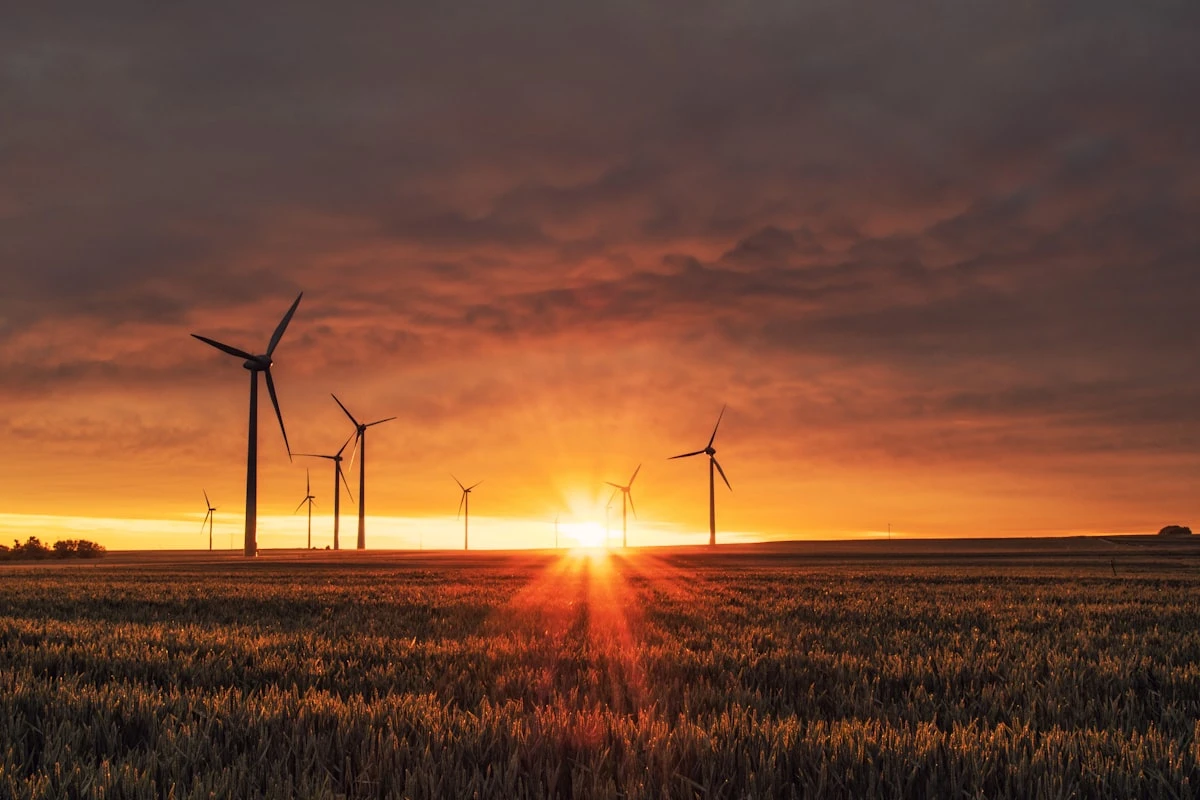
India's renewable energy sector has crossed a significant threshold in 2026. As of July 31, 2026, the country's installed renewable energy capacity reached 291.73 GW, and total non-fossil power capacity (which also includes large hydro and nuclear) stood at 300.51 GW. That places India roughly 58% of the way toward its target of 500 GW of non-fossil electricity generation capacity by 2030 — one of the most ambitious clean-energy commitments made by any major economy.
This is not a story of slow, incremental growth. Between April and July 2026 alone, India added 17.04 GW of new renewable capacity. Solar power has been the primary engine of this expansion.
| Source | Installed Capacity (as of mid-2026) | Share of Renewables |
|---|---|---|
| Solar | 164.59 GW | ~56% |
| Wind | 58.14 GW | ~20% |
| Other renewables (small hydro, biomass, waste-to-energy) | Remaining balance | ~24% |
Solar has firmly established itself as India's dominant clean-energy source, more than doubling its lead over wind power.
India installed a record 27 GW of solar capacity in the first half of 2026 — a 49% increase compared to the 18 GW installed in the same period of 2025. This acceleration has been driven by falling module costs, expanded manufacturing under India's production-linked incentive (PLI) schemes, and an aggressive utility-scale solar park pipeline across states such as Rajasthan, Gujarat and Karnataka.
Perhaps the most striking trend is the growth of rooftop solar, which reached 6.6 GW of new installations in H1 2026 — a 131% year-over-year increase. This surge has been fueled in large part by the central government's rooftop solar subsidy programs for households, alongside falling equipment costs and growing awareness of electricity bill savings. Rooftop solar's rapid growth matters strategically because it decentralizes power generation, reduces transmission losses, and gives households and small businesses direct control over their electricity costs.
Renewable energy is intermittent — solar panels don't generate power at night, and wind speeds vary. That is why battery energy storage systems (BESS) have become central to India's clean-energy strategy. As of March 2026, India had approximately 5.9 GWh of installed battery storage capacity, with a further 69 GWh in the development pipeline. Scaling storage is now widely seen as the critical enabler for India to keep adding solar and wind capacity without running into grid-stability problems.
India is the world's third-largest electricity consumer, and its energy choices carry global significance for climate goals, energy security and economic development.
India's renewable energy ambitions accelerated significantly after 2015, when the country set an initial target of 175 GW of renewable capacity by 2022. That target was later expanded to 450 GW of renewable capacity (and separately, 500 GW of total non-fossil capacity) by 2030, announced at international climate forums. Large-scale solar parks, competitive reverse-auction bidding for power purchase agreements, and sustained policy support — including the PLI scheme for solar manufacturing — have been the main levers used to bring down costs and accelerate deployment through the 2020s.
To stay on track for the 500 GW target by 2030, India will need to sustain — and likely accelerate — its current pace of roughly 25-30 GW of new solar and wind capacity per year. Key developments to watch through the rest of 2026 and beyond include:
Is India on track to meet its 500 GW renewable energy target by 2030?
India has reached roughly 58% of its 500 GW non-fossil capacity target as of mid-2026, and the current pace of solar additions — a record 27 GW in the first half of 2026 alone — suggests strong momentum. Sustaining this rate, particularly by scaling battery storage and grid infrastructure, will be key to reaching the target on schedule.
Why has solar grown faster than wind in India?
Solar technology has benefited from steep global cost declines, simpler and faster project execution, abundant land and sunlight across much of India, and strong policy support including manufacturing incentives. Wind projects typically require more specific site conditions and longer development timelines, which has kept its growth pace comparatively slower, though still significant.
What is rooftop solar, and why is its growth significant?
Rooftop solar refers to small-scale solar panel installations on homes, offices and commercial buildings, as opposed to large utility-scale solar farms. Its rapid growth — 131% year-on-year in H1 2026 — matters because it decentralizes power generation, reduces strain on transmission infrastructure, and gives households and businesses direct savings on electricity bills.
Why does battery storage matter for renewable energy?
Solar and wind power generation varies by time of day and weather conditions. Battery storage systems store excess renewable electricity generated during peak production periods for use when generation is low, helping keep the power grid stable and allowing a higher share of renewable energy without blackouts or reliability issues.
How does India's renewable energy growth compare globally?
India has been adding renewable capacity at one of the fastest rates among major economies, with some 2026 reports noting its solar installation rate has, in certain periods, surpassed that of the United States. India is now among the top few countries globally by total installed renewable energy capacity.
India's renewable energy sector has moved from ambitious target-setting to measurable, large-scale execution. With capacity crossing 291 GW, solar installations at record highs, and battery storage finally beginning to scale, the country is demonstrating that rapid clean-energy deployment is achievable even at its scale of population and energy demand. The remaining path to 500 GW by 2030 will depend heavily on grid modernization and storage buildout — but the trajectory so far suggests India is positioning itself as one of the defining renewable energy growth stories of this decade.