•
•
•
•
•
•
•

With António Guterres's term ending on 31 December 2026, here is how the selection process works — and why it is more transparent than ever before.
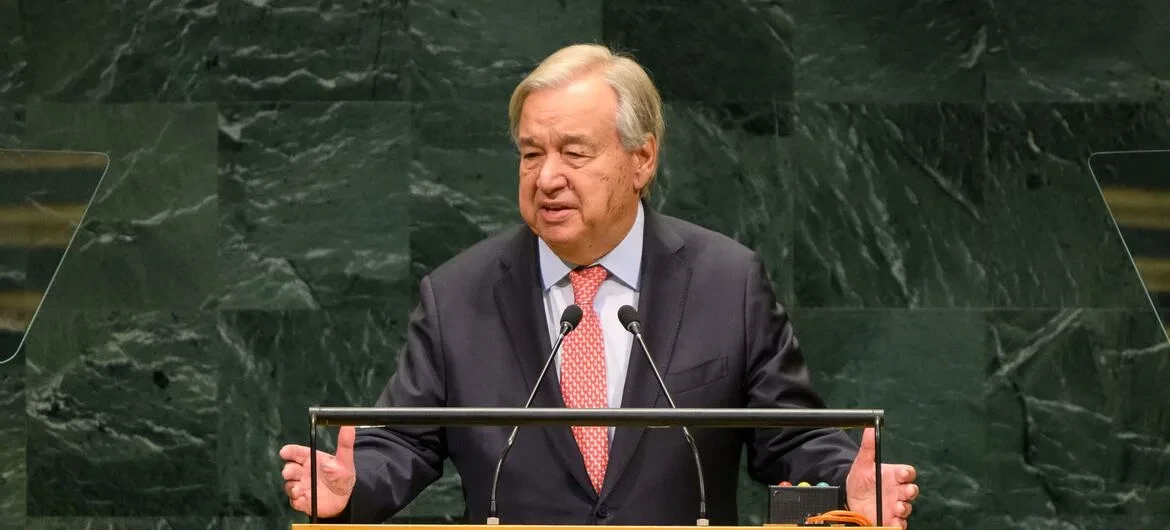
The UN Secretary-General is often called the world's top diplomat. Yet for decades, the way that person was chosen was one of the least transparent processes in international politics — negotiated largely behind closed doors by five powerful countries.
With António Guterres's second term ending on 31 December 2026, the 2026 race is under way. Here is how the process works, step by step.
Article 97 of the UN Charter states that the Secretary-General "shall be appointed by the General Assembly upon the recommendation of the Security Council."
That single sentence creates a two-stage process:
In practice, the Security Council stage is where the real decision is made.
Candidates are nominated by UN member states. Since a 2015 General Assembly resolution (69/321), the process has become more open:
The Security Council holds a series of informal, confidential straw polls. For each candidate, the 15 members indicate:
To succeed, a candidate needs at least nine votes in favour and no veto from the five permanent members — the United States, United Kingdom, France, China and Russia.
Later polls typically use colour-coded ballots so candidates can see whether a permanent member is discouraging them — effectively revealing a potential veto.
Once a candidate emerges with enough support and no P5 objection, the Council adopts a resolution recommending them to the General Assembly.
The General Assembly then appoints the Secretary-General, usually by acclamation. Terms are five years, and by convention a Secretary-General serves no more than two terms.
According to reporting by PassBlue on the third straw poll (18 September 2026):
| Candidate | Country | Encourage | Discourage | No opinion |
|---|---|---|---|---|
| Rebeca Grynspan | Costa Rica | 9 | 5 | 1 |
| Carolyn Rodrigues-Birkett | Guyana | 8 | 3 | 4 |
| Rafael Grossi | Argentina | 5 | 8 | 2 |
| Olara Otunnu | Uganda | 5 | 7 | 3 |
| Macky Sall | Senegal | 5 | 9 | 1 |
| María Fernanda Espinosa | Ecuador | 3 | 6 | 6 |
Michelle Bachelet of Chile withdrew from the race on 19 September after a weak showing. A fourth straw poll may follow after the General Assembly's High-Level Week.
There is an informal expectation that the post rotates between regions. Many member states argue it is Latin America and the Caribbean's turn, which is reflected in the 2026 field.
In 80 years, all nine Secretaries-General have been men. Campaigns such as 1 for 8 Billion and many member states have pressed for a woman to be selected this time.
The Secretary-General leads the UN Secretariat, can bring threats to peace to the Security Council's attention under Article 99, and acts as a global mediator. The person chosen will lead the UN through debates on reform, funding cuts, conflicts and climate change.
At least nine of the 15 Security Council votes, with no veto from a permanent member.
In theory it appoints the candidate; in practice it has always accepted the Council's recommendation.
On 1 January 2027.
No. All nine Secretaries-General have been men.
The race to succeed António Guterres shows how far the selection process has moved toward transparency — and how much power still rests with five permanent members. The coming straw polls will reveal whether consensus forms around a front-runner, and whether 2026 finally produces the UN's first woman leader.
Sources: UN Charter; UN selection and appointment page; PassBlue and Security Council Report coverage of 2026 straw polls.