•
•
•
•
•
•
•

Nobel Prize week begins on 5 October. Here is how laureates are actually selected — from invitations to nominate, to shortlists, to the final vote.
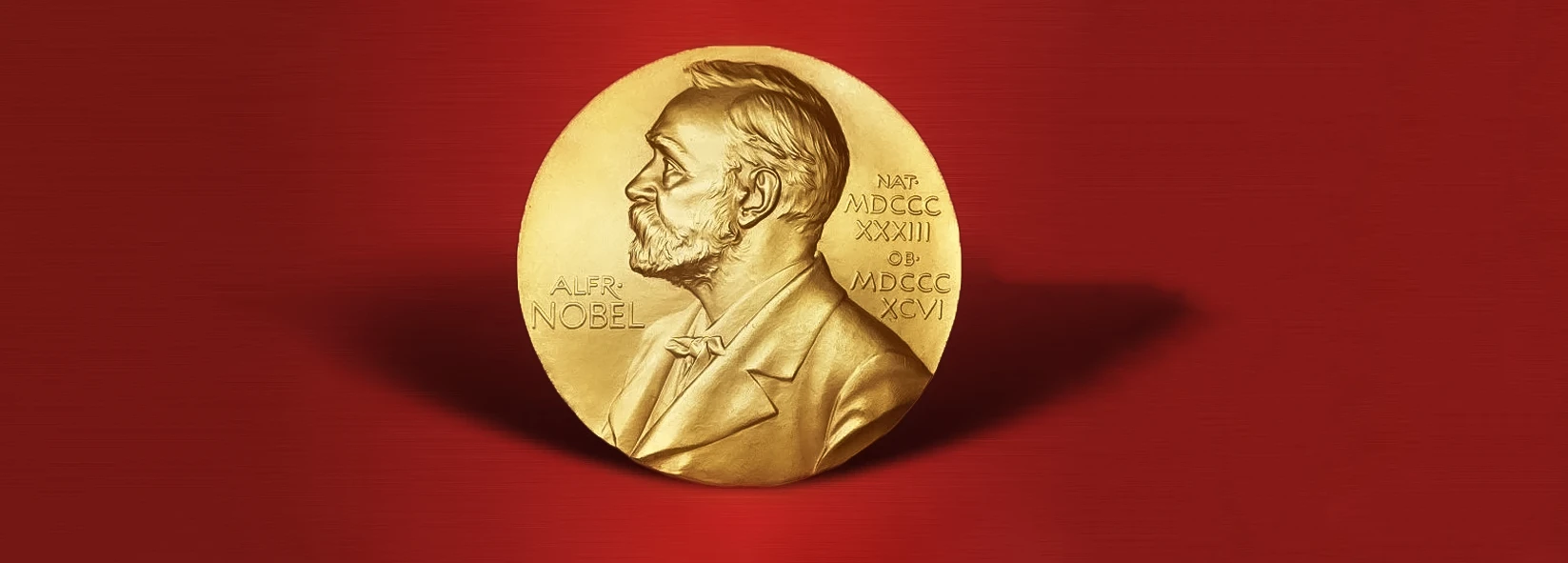
Every October, the world waits for a phone call from Stockholm or Oslo. The 2026 Nobel Prize announcements begin on Monday, 5 October, with Physiology or Medicine, and end on 12 October with Economic Sciences.
But how are the winners actually chosen? The process is long, careful and famously secretive.
Alfred Nobel (1833–1896), the Swedish chemist and inventor of dynamite, left most of his fortune to fund prizes for those who, during the preceding year, "conferred the greatest benefit to humankind." His 1895 will created prizes in:
The first prizes were awarded in 1901. The Sveriges Riksbank Prize in Economic Sciences in Memory of Alfred Nobel was established in 1968 and first awarded in 1969.
| Prize | Awarding body | Location |
|---|---|---|
| Physics | Royal Swedish Academy of Sciences | Stockholm |
| Chemistry | Royal Swedish Academy of Sciences | Stockholm |
| Economic Sciences | Royal Swedish Academy of Sciences | Stockholm |
| Physiology or Medicine | Nobel Assembly at Karolinska Institutet | Solna/Stockholm |
| Literature | Swedish Academy | Stockholm |
| Peace | Norwegian Nobel Committee | Oslo |
The Peace Prize is decided in Norway because of Nobel's will; the five-member Norwegian Nobel Committee is appointed by Norway's parliament, the Storting.
Committees send confidential invitations to qualified nominators.
Nominations close. Self-nominations are not allowed.
Committees screen nominations and consult experts to assess candidates' work.
Committees write detailed reports and recommendations.
The awarding institutions vote. Winners are announced shortly afterwards.
Prizes are presented on the anniversary of Nobel's death — in Stockholm and, for the Peace Prize, in Oslo.
Nominators vary by prize but typically include:
Nomination and deliberation records are sealed for 50 years. That is why rumours and betting lists about "nominees" are usually speculation. Historians can study nominations only half a century later.
Each prize carries a gold medal, a diploma and a cash award, which in recent years has been 11 million Swedish kronor per full prize, shared if there are multiple laureates.
| Year | Laureate | Prize |
|---|---|---|
| 1913 | Rabindranath Tagore | Literature |
| 1930 | C.V. Raman | Physics |
| 1979 | Mother Teresa | Peace |
| 1998 | Amartya Sen | Economic Sciences |
| 2014 | Kailash Satyarthi | Peace (shared) |
Several laureates of Indian origin or birth include Har Gobind Khorana (Medicine, 1968), Subrahmanyan Chandrasekhar (Physics, 1983), Venkatraman Ramakrishnan (Chemistry, 2009) and Abhijit Banerjee (Economic Sciences, 2019).
No. Self-nominations are not accepted.
Nobel's will did not include mathematics. Mathematics has other major awards, such as the Fields Medal and the Abel Prize.
It is administered by the Nobel Foundation and awarded alongside the others, but it was established by Sweden's central bank in 1968, not by Nobel's will.
Yes. Jean-Paul Sartre declined the Literature prize in 1964, and Le Duc Tho declined the Peace Prize in 1973.
Behind every Nobel announcement lies nearly a year of confidential nominations, expert reviews and debate. Understanding the process helps explain why the prizes remain among the most respected honours in the world.
Sources: NobelPrize.org; The Nobel Foundation.