•
•
•
•
•
•
•

World champions, Olympiad golds and a flood of teenage grandmasters — the story behind India's chess revolution.
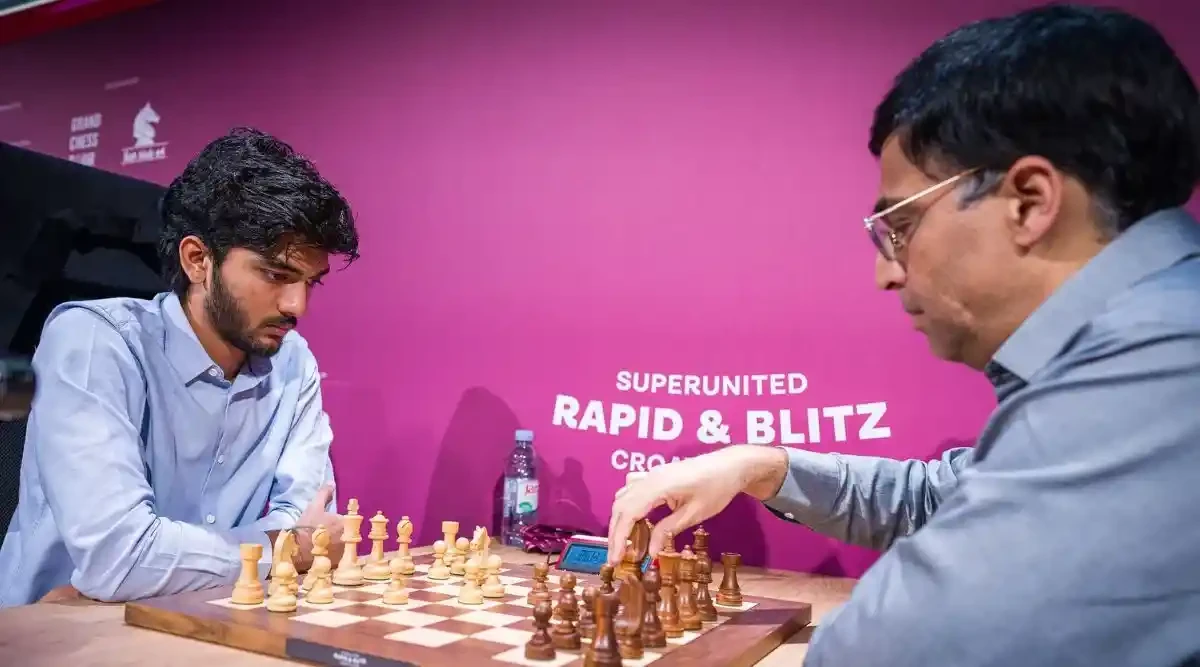
In 1988, India had exactly one grandmaster. Today it has a world champion, defending Olympiad titles and one of the deepest pools of young talent in the game. As India's teams compete at the 2026 Chess Olympiad in Samarkand, here is how the country that gave the world chess's ancestor, chaturanga, reclaimed its place at the top.
Chess is widely believed to have evolved from chaturanga, a game played in India around the 6th century CE. Its four divisions — infantry, cavalry, elephants and chariots — became the pawns, knights, bishops and rooks of the modern game. The game spread to Persia as shatranj and later to Europe.
Viswanathan Anand became India's first grandmaster in 1988. Over the following decades he:
Anand's influence did not end with his playing career. Through mentoring and academies, he helped develop many of today's stars.
In December 2024, Gukesh Dommaraju defeated Ding Liren in Singapore to become, at 18, the youngest undisputed world champion in history.
A prodigy who became a grandmaster at 12, Praggnanandhaa reached the 2023 World Cup final and has become a fixture in elite events.
One of India's highest-rated players, known for his aggressive style and consistency.
Indian women's chess reached new heights when Divya Deshmukh won the 2025 FIDE Women's World Cup, beating fellow Indian Koneru Humpy in the final and earning the grandmaster title. Humpy, a former world rapid champion, remains one of the world's strongest players.
Chennai has produced a remarkable number of grandmasters, supported by clubs, coaches and school programmes.
Platforms and Indian chess streamers brought huge audiences to the game, especially during the pandemic.
Structured training, engine preparation and experienced coaches have raised the standard of junior players.
Sponsors and state governments have increasingly backed tournaments and players.
Anand showed it was possible; Gukesh and Praggnanandhaa showed it could happen young.
India now has more than 80 grandmasters, one of the highest totals in the world, and the number continues to grow.
Viswanathan Anand, in 1988.
Most historians trace chess to chaturanga, played in India around the 6th century CE.
Joining a local club, playing rated tournaments and using structured online training are common starting points.
India's chess story combines ancient heritage with modern ambition. With a world champion, Olympiad titles and a pipeline of young players, the country is no longer chasing chess's elite — it is part of it.
Sources: FIDE; official Olympiad records; tournament reports.