•
•
•
•
•
•
•

Understanding how multi-party negotiations produce governing coalitions in parliamentary systems around the world
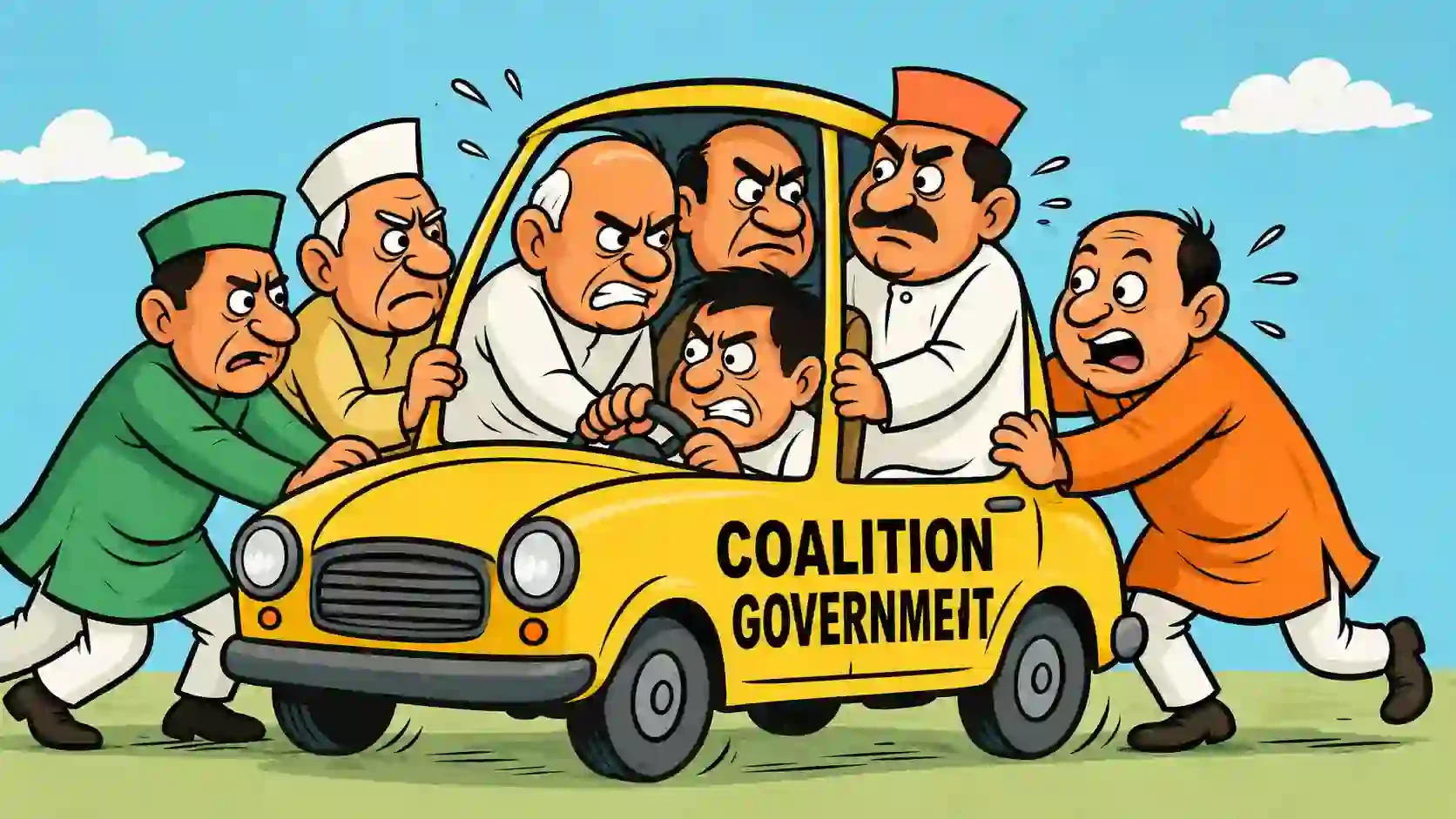
In many parliamentary democracies, particularly those using proportional representation electoral systems, it is common for no single political party to win enough seats to govern alone. When this happens, parties must negotiate with one another to form a coalition, a group of parties that agree to govern together, usually by combining their seats to create a working majority in the legislature.
This is fundamentally different from electoral systems that tend to produce single-party majorities more often, where coalition negotiations are rarer and typically only occur during unusually close or fragmented election results.
After an election produces no outright majority, party leaders typically enter negotiations to determine which parties will join together to form a government. These negotiations usually cover two main areas: a policy agreement outlining the legislative priorities the coalition will pursue, and a distribution of cabinet positions and other government roles among the participating parties. Negotiations can take anywhere from days to, in some notable historical cases, several months, particularly when ideologically distant parties are needed to reach a majority.
Coalition governments vary significantly in how long they last and how smoothly they function. Several factors tend to influence stability:
| Factor | Coalition Government | Single-Party Majority |
|---|---|---|
| Formation process | Requires multi-party negotiation | Formed directly by the winning party |
| Policy flexibility | Requires ongoing compromise between partners | Can generally pursue its platform without internal negotiation |
| Representation | Often reflects a broader range of voter preferences | Reflects the platform of a single winning party |
| Stability | Varies significantly based on partner alignment | Generally more predictable, barring internal party splits |
As electoral outcomes in many democracies continue to produce fragmented results across multiple parties, coalition negotiations are likely to remain a routine feature of government formation in a significant number of countries. Political scientists continue to study which negotiation structures and agreement formats produce the most durable governing coalitions.
Why do some countries have coalition governments more often than others?
Electoral system design plays a major role. Proportional representation systems tend to produce more parties with meaningful seat shares, making an outright majority for one party less likely compared to certain other electoral systems.
How long do coalition negotiations usually take?
This varies widely, from a matter of days in straightforward cases to several months when more parties are needed to reach a majority or when ideological differences are significant.
Can a coalition government collapse before an election is due?
Yes. If a coalition partner withdraws support, a government can lose its majority, potentially leading to a new government formation attempt or an early election, depending on the country's specific rules.
Is a coalition government less effective than a single-party government?
Effectiveness depends heavily on the specific coalition and country. Coalition governments require more negotiation to pass legislation but can also represent a broader range of voter interests than single-party rule.
Coalition governments are a routine and often necessary feature of many parliamentary democracies rather than an unusual exception. Understanding how these negotiations work helps explain both the policy compromises and periodic instability that can characterize government formation in multi-party political systems.