•
•
•
•
•
•
•

How politicians and multilateral bodies are reshaping the rules of international cooperation
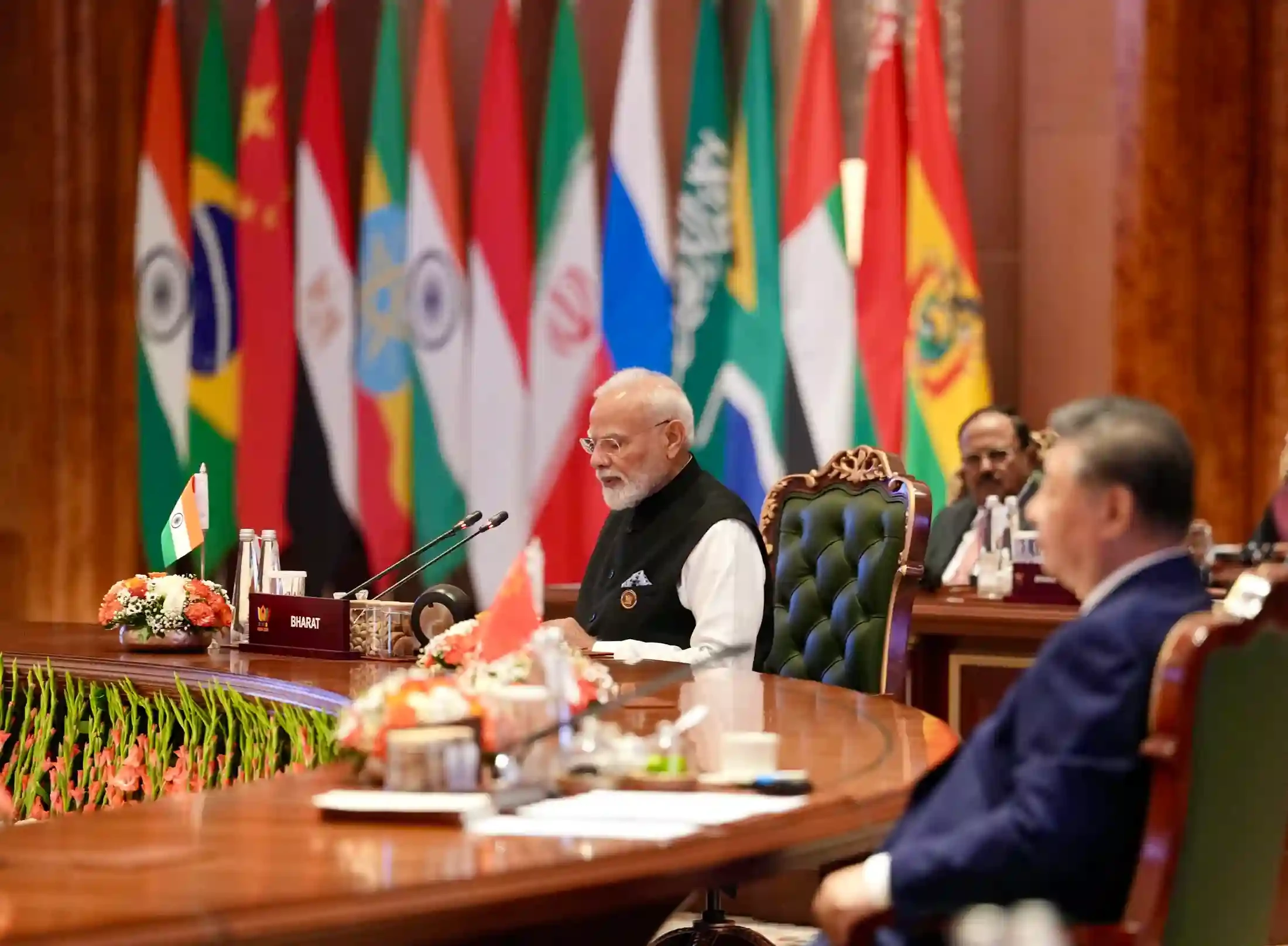
Global governance describes the collective mechanisms — treaties, institutions, informal norms, and diplomatic forums — through which countries manage problems that no single state can solve alone. It spans the United Nations system, international financial institutions such as the International Monetary Fund and World Bank, regional blocs, and newer issue-specific arrangements covering areas like artificial intelligence, public health, and climate finance.
Unlike a world government, global governance has no central enforcement authority. It relies instead on negotiated agreement, reciprocity, and the willingness of member states to abide by shared rules.
Many of the core institutions of global governance were built in the aftermath of the Second World War, when a small group of victorious powers shaped structures such as the UN Security Council's permanent membership. Analysts and politicians increasingly argue that this architecture no longer matches a world of diffused economic and strategic power, where emerging economies account for a much larger share of global output and population than they did in 1945.
The BRICS grouping — originally Brazil, Russia, India, China and South Africa, since expanded to 11 members — has positioned itself as a platform for emerging and developing economies to press reform. At the 18th BRICS Summit, held in New Delhi on September 12–13, 2026, under India's chairship, leaders adopted the New Delhi Declaration, a roughly 140-point document addressing trade, technology, and governance reform. The declaration reaffirmed principles of sovereign equality and consensus-based decision-making and devoted a dedicated session to "Inclusive Global Governance and Strengthening Multilateralism," examining ways to reform the Security Council, international financial architecture, and the multilateral trading system.
Notably, the summit illustrated both the appeal and the limits of the bloc's approach: members reached consensus on a shared text while avoiding direct condemnation of individual states over contested issues such as the war in Ukraine and tensions in the Middle East, instead calling generically for dialogue and restraint.
Separately, China's Global Governance Initiative (GGI), put forward at the 2025 Shanghai Cooperation Organisation summit in Tianjin, promotes multilateralism, sovereign equality, and a "fair" redistribution of institutional influence, and continues to be cited by Chinese officials as a framework for structural change.
Reform is not limited to the international stage. National governments have pursued their own governance overhauls — for instance, Malaysia's Madani Accountability Framework, presented at the 2026 Commonwealth Law Ministers Meeting, focuses on institutional accountability and democratic resilience, while jurisdictions such as Tasmania in Australia have advanced legislative packages, including a 2026 Government Business Governance Reforms Bill, aimed at strengthening oversight of public-sector entities.
A newer front in the governance debate concerns artificial intelligence. National regulators, standards bodies, and multilateral forums have all accelerated efforts to define oversight frameworks for AI systems in 2026, including guidance on cybersecurity risk analysis and transparency reporting from major technology firms. This reflects a broader trend: as new technologies outpace existing regulatory structures, politicians and institutions are being pushed to build governance mechanisms in real time rather than retrofitting decades-old frameworks.
Despite widespread rhetorical support for a "more representative" global order, structural reform remains difficult to achieve because:
Most 2026 governance reform initiatives — whether through BRICS, the UN's own review processes ahead of 2028, or national accountability frameworks — have so far produced incremental mechanisms (expanded dialogue channels, new financing tools, non-binding declarations) rather than wholesale institutional restructuring. Observers generally characterize the current period as one of gradual, contested adaptation rather than a decisive break from the post-1945 governance order.