•
•
•
•
•
•
•

How to build a channel-agnostic marketing strategy in the age of AI search and automation
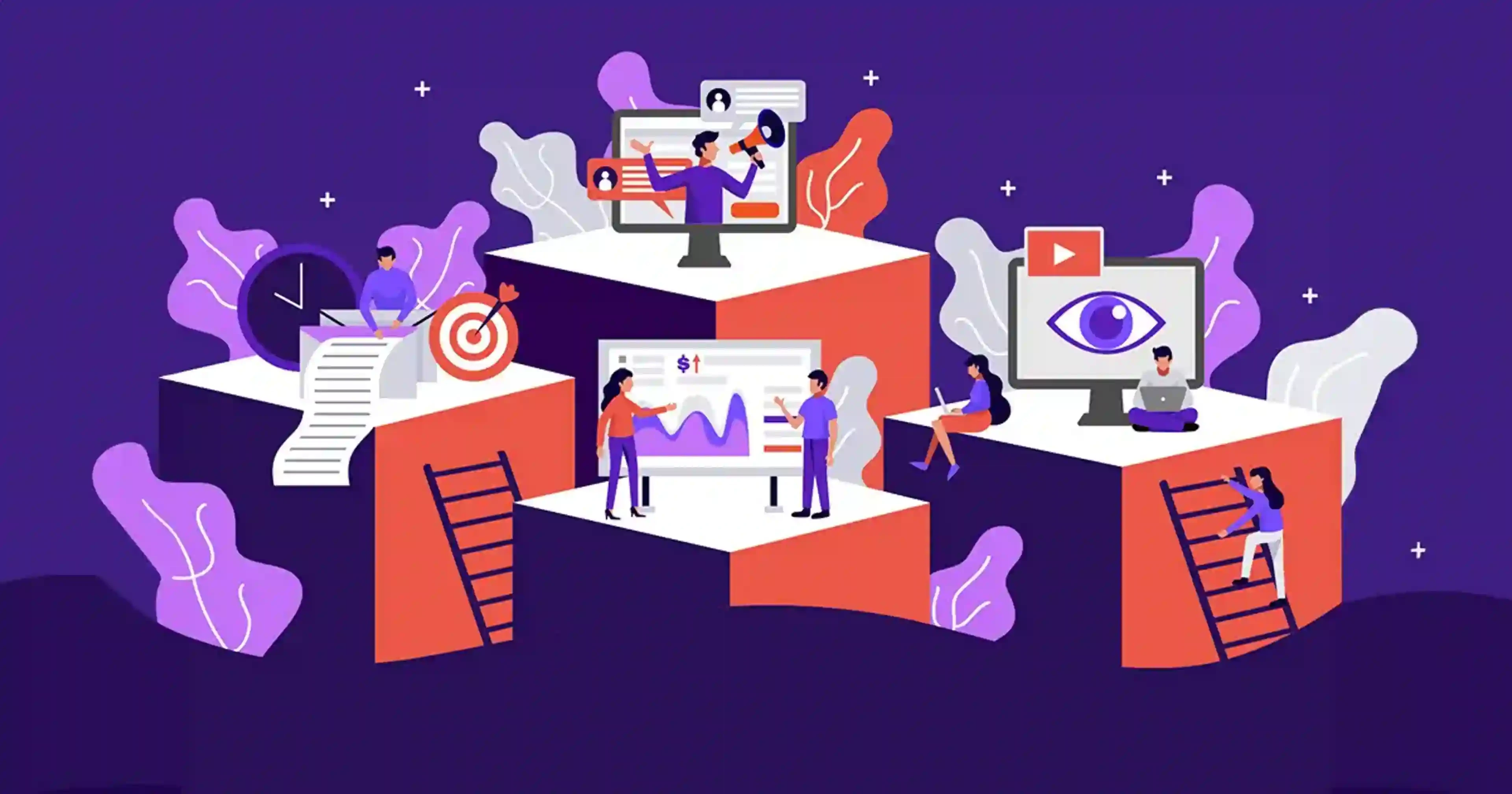
A digital marketing strategy is a documented plan that aligns business goals with the channels, content, and budget needed to reach and convert an audience online. In 2026, that plan increasingly has to account for AI-mediated discovery — chatbots, AI Overviews, and generative search — alongside traditional search engines and social platforms.
Before selecting channels, teams need a clear picture of who they're targeting and what problem they're solving for that audience at each stage of the funnel.
No single channel dominates anymore. A balanced mix typically includes:
| Channel | Primary Goal | Typical Funnel Stage |
|---|---|---|
| Organic Search (SEO) | Long-term visibility | Awareness / Consideration |
| Paid Search | Fast, measurable demand capture | Consideration / Conversion |
| Social Media | Brand building, community | Awareness |
| Email/Lifecycle | Retention, repeat conversion | Consideration / Retention |
| AI Search / GEO | Emerging discovery surface | Awareness / Consideration |
Content needs to serve both human readers and machine readers (search crawlers and AI models). Clear structure, direct answers, and credible sourcing help content perform across both.
Multi-touch attribution remains difficult, but marketers should track at minimum:
A strong 2026 digital marketing strategy treats channels as an interconnected system rather than separate line items, with content built to perform across both traditional search and emerging AI-driven discovery surfaces.