•
•
•
•
•
•
•

Copper has surged from around $2.09 to $6.76 per pound, gaining nearly 223%. Here's why AI, electrification, supply constraints and tariffs are driving copper prices.
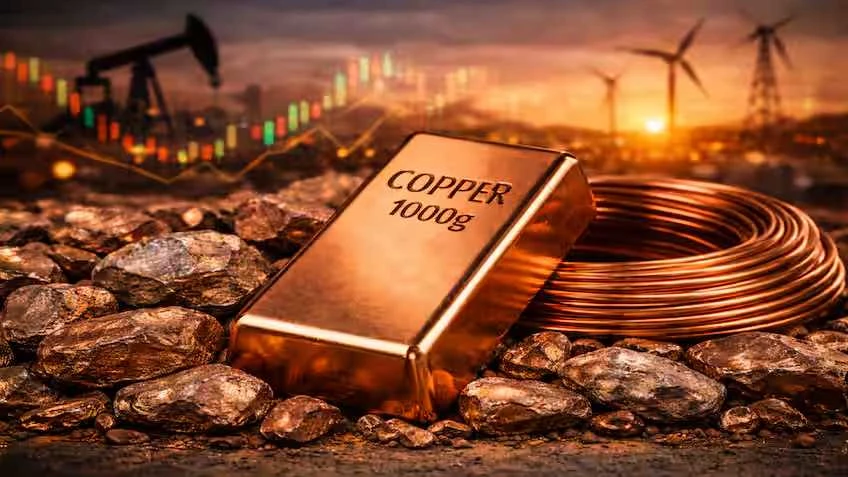
Copper has transformed from an ordinary industrial metal into one of the most closely watched commodities in the global market. From around $2.096 per pound on the long-term price chart to a recent quoted level near $6.7628, copper has gained roughly 223%, or more than three times its earlier value.
Copper is having a moment that few industrial commodities can match.
The metal, often called “Dr. Copper” because of its reputation as a barometer for global economic activity, has climbed sharply in recent years. A long-term copper futures chart shows the price moving from around $2.096 per pound to approximately $6.7628 per pound — an increase of about $4.67 per pound.
That means the quoted price has risen by roughly 222.7%, or about 3.23 times its earlier level.
The latest move is not simply another commodity-price spike. Copper is increasingly becoming a critical material for the technologies and infrastructure expected to drive the global economy over the next decade.
The numbers tell the story.
The figures refer to the copper futures/CFD price shown on the long-term chart, rather than a single physical spot-copper series.
The scale of the move becomes clearer when viewed over several years. Copper has moved from being primarily associated with construction, manufacturing and traditional industrial activity to becoming a key component of the global push toward electrification and digital infrastructure.
There is no single reason behind copper's rally. Instead, several long-term trends are coming together at the same time.
Artificial intelligence is usually associated with chips, servers and advanced computing hardware. But behind every AI data centre is a huge physical infrastructure network.
Data centres require electricity, cooling systems, transformers, wiring and connections to power grids. All of this requires significant quantities of copper.
As companies and governments invest in new data centres to support AI workloads, demand for electricity infrastructure is also increasing.
Recent market analysis has identified AI infrastructure and data-centre construction as important long-term drivers of copper demand.
This creates an interesting connection between two seemingly different industries: artificial intelligence and copper mining.
The more computing infrastructure the world builds, the more physical electrical infrastructure it needs — and copper sits at the centre of that network.
The global transition toward electric vehicles, renewable energy and larger electricity networks is another major factor.
Electric vehicles generally require more copper than conventional internal-combustion vehicles because copper is used extensively in motors, wiring, batteries and charging infrastructure.
At the same time, solar and wind projects require electrical connections, transmission systems and grid infrastructure.
Power grids themselves are also undergoing major upgrades as electricity demand rises and renewable generation becomes a larger part of the energy mix.
This combination is creating structural demand for copper across multiple industries at once.
Strong demand alone does not necessarily produce a major commodity rally. The bigger issue is what happens when supply struggles to keep pace.
Global copper mine production fell by 1.1% during the first half of 2026, according to preliminary figures from the International Copper Study Group. Concentrate production, which is an important input for copper smelters, declined even more sharply.
Some major copper-producing countries, including Chile, Indonesia and the Democratic Republic of Congo, have experienced production challenges.
For the copper market, this creates a difficult equation:
Growing demand + constrained mine supply = tighter market conditions.
And when markets begin to believe that future supply may not be sufficient, prices can rise well before an actual shortage appears.
Another major factor behind the latest copper rally is trade policy.
Concerns about possible U.S. tariffs on refined copper have encouraged buyers to move supplies into the United States ahead of potential future duties. That shift in global trade flows can tighten availability in other markets and contribute to higher prices.
Recent reports said copper prices reached record levels in both London and New York amid a combination of supply concerns and tariff fears.
The potential for future tariffs has therefore created an unusual situation: companies may have an incentive to purchase copper earlier than they otherwise would, further increasing short-term demand.
The recent rally has pushed benchmark copper prices to record territory.
Three-month copper on the London Metal Exchange recently reached around $14,728 per metric ton, while U.S. copper futures also touched record levels around $6.74 per pound.
Other market reports have placed the U.S. copper futures price even higher, around $6.78 per pound during the latest trading session.
This helps put the long-term chart into perspective.
What once looked like a cyclical commodity recovery is increasingly being interpreted by markets as a broader structural story.
Copper has another unique characteristic: economists and traders often call it “Dr. Copper” because its price is considered a useful indicator of economic health.
The reasoning is straightforward.
Copper is used in construction, manufacturing, electronics, transportation, power generation and infrastructure. When economic activity accelerates, demand for copper tends to increase.
When industrial activity weakens, copper demand can fall.
But today's copper market is becoming more complicated.
Copper is no longer dependent only on traditional economic growth. Demand is also being driven by structural themes such as artificial intelligence, electrification, renewable energy and grid modernization.
That could make copper an increasingly important commodity even if the global economy moves through periods of uneven growth.
The biggest question for investors and businesses is whether copper can continue its extraordinary run.
The long-term fundamentals remain supportive. Data centres are expanding, electricity consumption is increasing, electric vehicles continue to require large amounts of copper, and governments are investing in power infrastructure and renewable energy.
At the same time, developing new copper mines is a slow process. Mining projects can require years of exploration, permitting, construction and investment before they begin producing at scale.
That creates a potential mismatch between how quickly demand can grow and how quickly new supply can arrive.
However, copper's rapid rise also creates risks.
Higher prices can encourage mining companies to increase production, manufacturers to use copper more efficiently and consumers to look for substitutes. A stronger U.S. dollar, weaker global economic growth or a reduction in tariff-related buying could also trigger periods of correction.
In other words, the long-term story may remain bullish while the short-term journey remains volatile.
The move from $2.096 to around $6.7628 per pound is more than a remarkable number on a price chart.
It reflects a changing global economy.
The world is building more data centres, electrifying transportation, expanding renewable energy capacity and upgrading electricity grids. All of these trends require one thing in common: more electrical infrastructure.
And electrical infrastructure requires copper.
At the same time, copper miners are facing aging assets, declining ore grades and operational challenges, making it difficult for supply to respond immediately to rising demand.
That is why copper has moved from being simply an industrial raw material to becoming a strategic commodity tied to some of the world's biggest economic and technological trends.
The red metal's journey from roughly $2.09 to $6.76 shows just how dramatically the market's perception of copper has changed.
And if the global push toward AI, electrification and infrastructure continues at its current pace, copper could remain one of the most important commodities to watch in the years ahead.