A complete guide to climate finance: the old $100 billion goal, the New Collective Quantified Goal of $300 billion a year by 2035 agreed at COP29, the Baku-to-Belém roadmap to $1.3 trillion, loss and damage, adaptation finance and India's position ahead of COP31 in Antalya.
Climate Finance Explained: The $300 Billion Goal, the $1.3 Trillion Roadmap and What's at Stake Before COP31
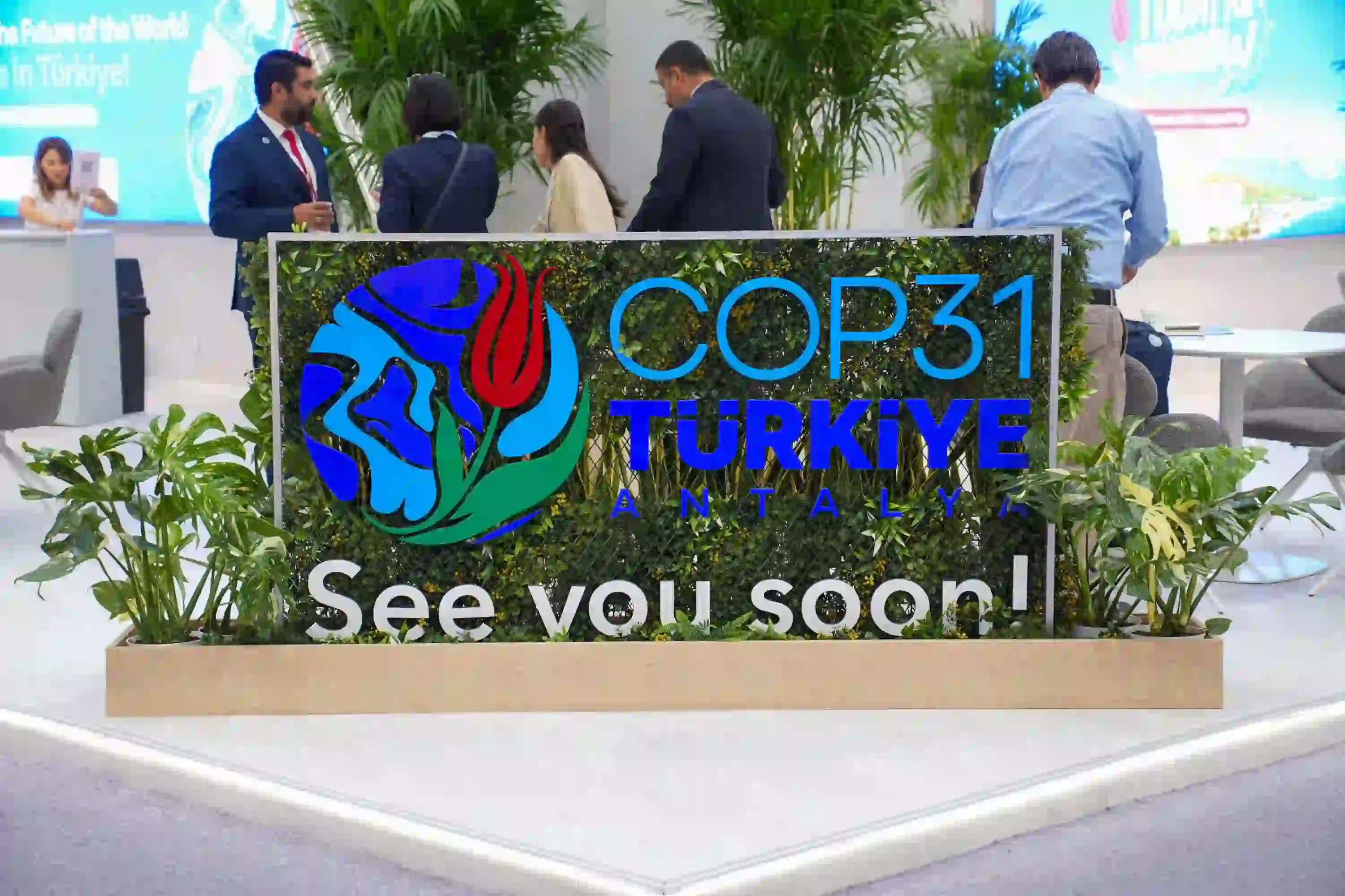
Every UN climate summit eventually comes down to one question: who pays? With COP31 set for Antalya, Türkiye, from 9 to 20 November 2026, climate finance is again at the centre of negotiations.
This guide explains the key numbers, the arguments and why the issue matters for countries like India.
What Is Climate Finance?
Climate finance is money used to:
- Mitigation: cut greenhouse gas emissions (for example, renewable energy, efficient transport)
- Adaptation: cope with climate impacts (for example, flood defences, drought-resistant agriculture)
- Loss and damage: respond to impacts that cannot be avoided (for example, rebuilding after extreme disasters)
It can come from public budgets, development banks, private investment and other sources.
The Principle Behind It
The UN climate framework recognises "common but differentiated responsibilities and respective capabilities." Developed countries, which emitted most historical greenhouse gases, are expected to lead in providing finance to developing countries.
The Old Goal: $100 Billion a Year
- In 2009, developed countries pledged to mobilise $100 billion a year by 2020
- The goal was missed in 2020; the OECD reported it was first met in 2022
- Developing countries criticised the heavy reliance on loans rather than grants
The New Goal: NCQG at COP29
At COP29 in Baku (November 2024), countries agreed a New Collective Quantified Goal (NCQG):
- Developed countries to take the lead in mobilising at least $300 billion a year by 2035 for developing countries
- A broader call for all actors to scale up finance to at least $1.3 trillion a year by 2035 from public and private sources
India's delegation strongly objected at the time, describing the amount as far too low relative to needs.
The Baku-to-Belém Roadmap
Countries also launched the "Baku to Belém Roadmap to 1.3T" to set out how finance could be scaled toward $1.3 trillion, presented ahead of COP30 in Belém, Brazil (2025). Implementation remains a central topic for COP31.
How Much Is Actually Needed?
Estimates vary, but many analyses suggest developing countries (excluding China) need trillions of dollars a year in climate investment by the 2030s. The gap between needs and current flows is large, especially for adaptation.
Loss and Damage
A loss and damage fund was agreed at COP27 (2022) and operationalised at COP28 (2023) to help vulnerable countries respond to climate disasters. Pledges so far have been small compared with estimated needs.
Key Debates Ahead of COP31
- Grants vs loans: Loans add to debt burdens in poorer countries
- Who contributes: Should wealthy emerging economies contribute?
- Transparency: How to count and verify finance
- Adaptation: Doubling adaptation finance and making it accessible
- Private capital: How to attract investment without shifting responsibility away from governments
India's Position
- India emphasises historical responsibility and equity
- It argues finance should be new, additional and predominantly grant-based or concessional
- India has major domestic targets, including 500 GW of non-fossil electricity capacity by 2030 and net zero by 2070
- Access to affordable finance is crucial for India's energy transition and adaptation needs
The Road to COP31
- Pre-COP: Fiji is hosting the pre-COP meeting from 5 to 8 October 2026, with a leaders' event in Tuvalu
- COP31: Antalya, 9–20 November 2026, with Türkiye as host and COP President, and Australia leading negotiations under a special arrangement
- World Leaders' Summit: 11–12 November 2026
Key Facts
- Old goal: $100 billion/year by 2020 (met in 2022, according to the OECD)
- NCQG: at least $300 billion/year by 2035
- Broader ambition: $1.3 trillion/year by 2035
- COP31: Antalya, Türkiye, 9–20 November 2026
Frequently Asked Questions
Is China required to provide climate finance?
Under the current framework, contributions from developing countries such as China are voluntary, though this remains contested.
Why is adaptation finance important?
Climate impacts are already happening. Adaptation protects lives, crops, cities and infrastructure, especially in vulnerable countries.
Does climate finance only come from governments?
No. It includes public funds, development banks and private investment, though public, concessional finance is especially important for poorer countries.
What will COP31 decide on finance?
Negotiators are expected to focus on implementing the NCQG and roadmap, adaptation finance and loss and damage.
Conclusion
Climate targets mean little without the money to reach them. The gap between promised and needed finance is one of the biggest tests of global cooperation — and COP31 will show whether that gap is narrowing.
Sources: UNFCCC; COP29 decisions; OECD climate finance reports; COP31 host information.