•
•
•
•
•
•
•

How enduring brands are built through clarity, consistency and trust
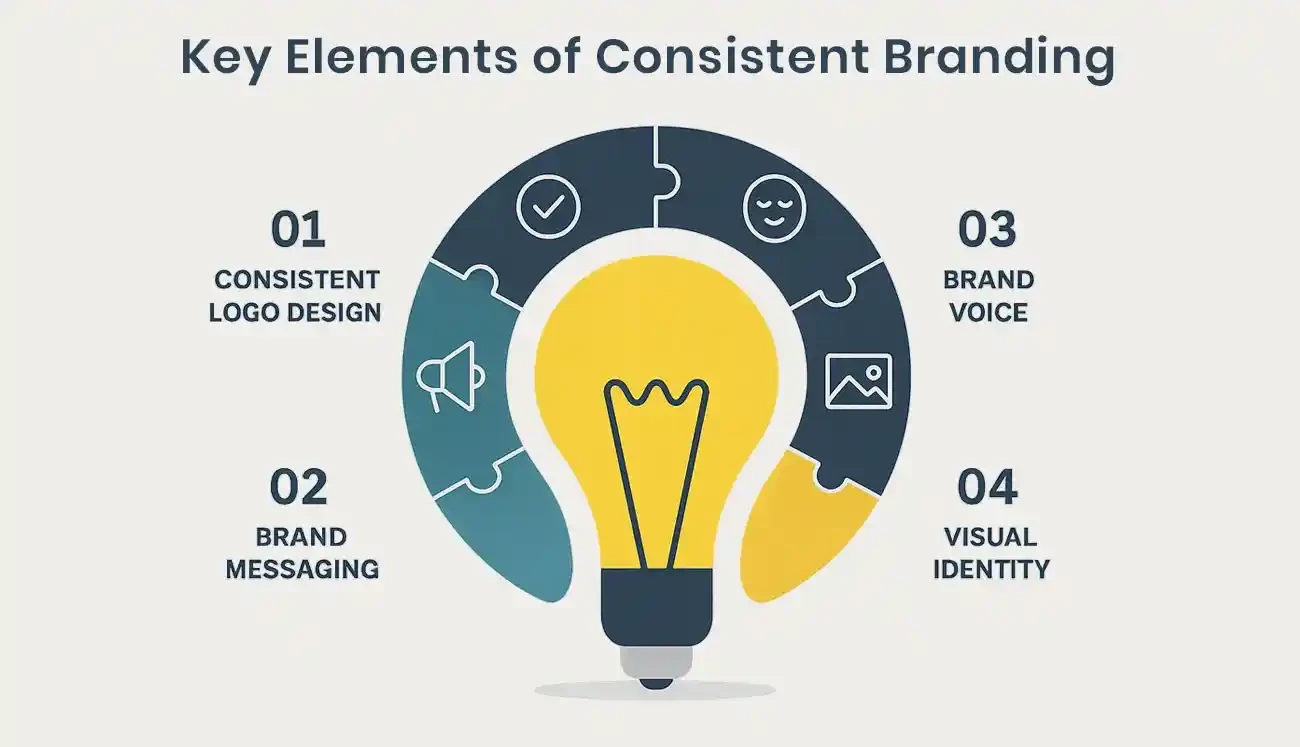
Brand identity encompasses the visible and felt elements that make a company recognizable and memorable — its logo, color palette, typography, tone of voice, and the values it consistently communicates. While often confused with branding as a whole, brand identity specifically refers to the deliberate set of elements a company controls to shape how it is perceived.
Logos, color schemes, typography and imagery style form the most immediately recognizable layer of a brand, creating instant visual association in a customer's mind.
How a brand communicates — whether formal, playful, authoritative or conversational — shapes customer perception just as much as visual elements, and should remain consistent across advertising, social media, customer service and packaging.
Modern consumers increasingly favor brands whose stated values align with their own, making authentic, clearly communicated purpose an important driver of loyalty, particularly among younger demographics.
Brand positioning defines how a company differentiates itself from competitors in the minds of its target audience — whether through price, quality, innovation, sustainability or a distinctive brand personality.
Inconsistent branding — where messaging, visuals or tone shift dramatically across different channels — confuses customers and dilutes brand recognition. Research consistently shows that reliable, consistent brand presentation builds trust over time, while erratic branding can undermine credibility even when individual campaigns are well executed.
Consumers tend to trust what feels familiar. Consistent exposure to a brand's visual and verbal identity across multiple touchpoints reinforces recognition and, over time, builds the kind of trust that influences purchasing decisions.
A brand's identity should feel unified whether a customer encounters it on a website, social media, physical packaging or customer support interaction — fragmentation across channels weakens overall brand equity.
How is brand identity different from branding?
Brand identity refers to the tangible elements a company controls — visuals, voice, messaging — while branding is the broader strategic process of shaping how a company is perceived overall.
How often should a brand refresh its identity?
There is no fixed timeline; refreshes should be driven by genuine business or market shifts rather than following design trends, and should generally build on existing brand equity rather than discarding it.
Does brand identity matter for small businesses?
Yes — consistent, well-defined brand identity helps small businesses build recognition and trust even with limited marketing budgets, often serving as a key differentiator against larger competitors.
A lasting brand identity is built through clarity of purpose and unwavering consistency across every customer interaction. Businesses that invest in defining their visual identity, voice and values — and apply them consistently over time — build the kind of recognition and trust that drives sustainable growth, well beyond the reach of any single marketing campaign.