•
•
•
•
•
•
•

Learn what the ASCI influencer advertising guidelines require from creators and brands, including disclosure rules, material connections, #Ad labels, virtual influencers and sponsored social media content.
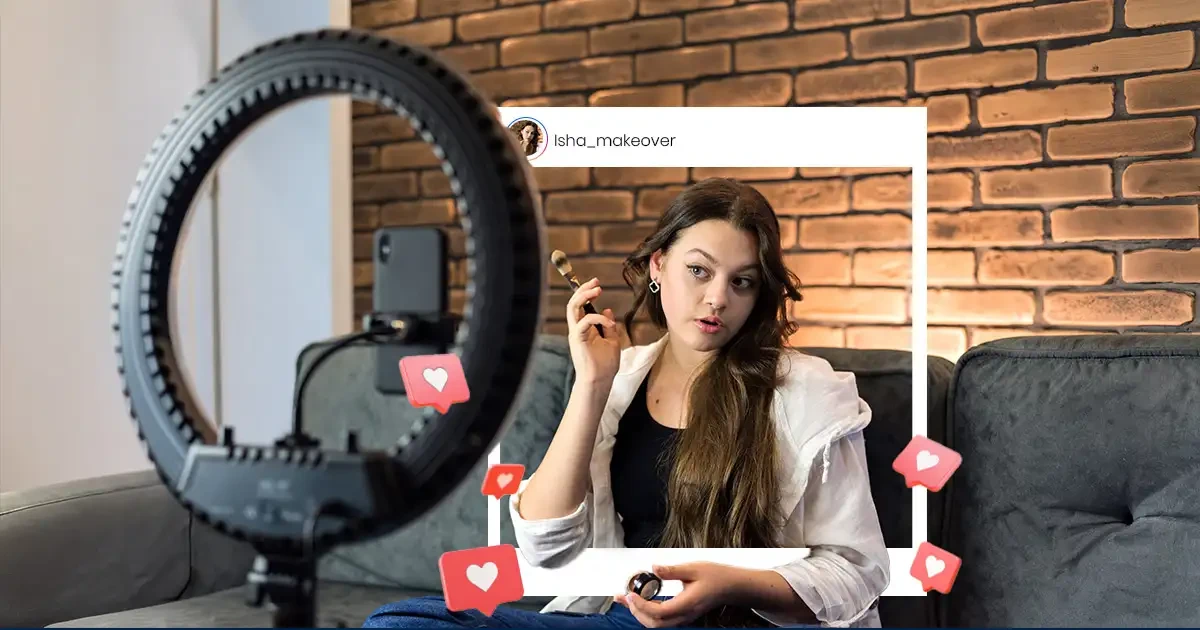
The ASCI Guidelines for Influencer Advertising in Digital Media were introduced to address a growing problem in social media marketing: the line between ordinary content and advertising can be difficult for consumers to identify.
When an influencer promotes a product or service because of a commercial relationship or another material connection with an advertiser, the promotional nature of the content should be made clear to the audience. According to ASCI, consumers should not have to guess whether an influencer's recommendation is advertising.
The guidelines apply to influencer advertising across digital media, including social media, websites, blogs, apps, video platforms and other digital formats.
For brands and creators, this makes influencer disclosure, sponsored content transparency and advertising compliance important parts of any digital marketing campaign.
ASCI defines an influencer broadly as someone who:
This means influencer advertising isn't limited to celebrities with millions of followers.
A creator with a smaller but highly engaged audience can also fall within the scope of influencer advertising when they promote products or services in connection with an advertiser.
One of the most important concepts in the ASCI influencer marketing guidelines is the term material connection.
A material connection is a relationship between an advertiser and influencer that could affect the credibility or weight consumers give to the influencer's representation.
Importantly, money is not the only form of compensation.
ASCI specifically identifies examples that can include:
Suppose a brand sends a creator a free smartphone without explicitly asking the creator to publish anything. If the creator subsequently talks about that product, the existence of the free product can constitute a material connection, meaning disclosure may be required.
So, "I wasn't paid" does not automatically mean "I don't need #Ad."
The basic principle is straightforward:
If there is a material connection between the advertiser and influencer, the promotional content needs an appropriate disclosure.
This applies even when the influencer's opinion is genuinely their own.
For example, if a creator receives a free product and subsequently gives an honest, positive review, the review can still require disclosure because the material connection exists. ASCI specifically states that disclosure is required even when the evaluation is unbiased or entirely originated by the influencer, provided there is a material connection.
If an influencer independently purchases a product or service with no material connection to the advertiser and simply recommends it because they like it, the ASCI guideline says that communication is not considered an advertisement requiring disclosure under these guidelines.
The disclosure must be upfront, prominent and easy for an average consumer to notice.
Simply mentioning a sponsorship somewhere difficult to find may not satisfy the intended transparency requirement.
ASCI says disclosures should not be:
The platform's own branded-content disclosure tools can also be used, but ASCI recommends considering them in addition to the influencer's own disclosure.
ASCI provides several disclosure options, including:
Advertisement, Ad, Sponsored, Collaboration, Partnership, Employee, Free gift, Affiliate, as well as certain platform-specific disclosure mechanisms such as Instagram's Paid Partnership tag and YouTube's Includes Paid Promotion tag.
The disclosure should be understandable to the average consumer and can be in English or the language used in the advertisement, provided it is clear to the audience.
Instead of hiding a disclosure at the end of a caption:
"Great new skincare product! ... #fashion #beauty #lifestyle #ad"
the commercial relationship should be made clear and prominent.
For a collaboration, a clear disclosure such as "Ad", "Sponsored" or "Collaboration" can help consumers immediately understand the nature of the content.
Special rules apply when an advertisement consists only of an image or video without accompanying text.
For formats such as Instagram Stories or Snapchat Stories, ASCI says the disclosure should be superimposed on the image or video and remain clearly visible to the average consumer.
For video advertisements, the guideline specifies minimum display durations:
| Video length | Disclosure duration |
|---|---|
| 15 seconds or less | At least 3 seconds |
| More than 15 seconds but less than 2 minutes | At least one-third of the video |
| 2 minutes or longer | Throughout the portion where the promoted brand/product/features are discussed |
These requirements are intended to ensure that viewers have a reasonable opportunity to recognize the content as advertising.
Influencer advertising doesn't stop being advertising simply because it happens during a livestream.
For live-stream advertisements, the disclosure should be announced at the beginning and end of the broadcast.
If the livestream remains available afterward, an appropriate disclosure should also be included in the accompanying text or caption.
This is particularly relevant for creators conducting:
The guidelines also address audio advertising.
For advertisements delivered through audio media, the disclosure should be clearly announced:
This ensures that listeners can identify the commercial nature of the recommendation even when there is no visual disclosure.
The rise of AI-generated and computer-generated personalities has created another interesting issue.
ASCI's guidelines specifically recognize virtual influencers as fictional computer-generated people or avatars designed with realistic human characteristics, features or personalities.
A virtual influencer must additionally disclose that consumers are not interacting with a real human being.
That disclosure must also be upfront and prominent.
This requirement is increasingly relevant as AI influencers, virtual avatars and synthetic media become more common in digital marketing.
Yes, the guidelines place an important responsibility on influencers.
ASCI advises influencers to review the claims being made in an advertisement and satisfy themselves that the advertiser is in a position to substantiate those claims.
For example, creators should be cautious when promoting claims involving:
An influencer's large audience does not remove the importance of ensuring that advertising claims can be supported.
Both have responsibilities.
ASCI states that responsibility for the disclosure of a material connection and compliance of the advertisement rests with both the advertiser and influencer.
The advertiser is responsible for ensuring that the influencer advertisement complies with the ASCI Code and applicable guidelines, while the influencer is responsible for making the required disclosures. Where necessary, the advertiser may ask the influencer to edit or delete an advertisement or disclosure to bring it into compliance.
This means brands should not treat influencer compliance as something that can simply be left to individual creators.
The ASCI guidelines also address situations where an influencer or advertiser argues that a particular communication is not an advertisement because there is no material connection.
The guidelines state that evidence may be requested, including a declaration from the advertiser confirming that no material connection existed at the relevant time.
Where an advertiser is difficult to trace or multiple brands are involved, proof of purchase of featured products may be considered relevant evidence from the influencer.
The growth of influencer marketing in India has created a powerful advertising ecosystem. Consumers increasingly discover products through Instagram creators, YouTubers, bloggers, podcasters and other digital personalities.
The challenge is that influencer content can look like an ordinary personal recommendation even when there is a commercial relationship behind it.
The ASCI guidelines are designed to make that distinction clearer.
For consumers, disclosure provides greater transparency.
For influencers, following the rules can make sponsored-content relationships clearer.
For advertisers, proper disclosure is an important part of responsible digital advertising compliance.
Not necessarily. The key question is whether the content is an advertisement involving a material connection with the advertiser. If there is no material connection and the influencer independently recommends something they purchased, the ASCI guidelines say disclosure is not required on that basis.
Yes, if the free product creates a material connection and the influencer subsequently promotes or talks about the advertiser's product or service. The guidelines specifically state that free or discounted products can trigger the disclosure requirement.
No. ASCI lists several acceptable disclosure labels, including Advertisement, Ad, Sponsored, Collaboration, Partnership, Employee, Free gift and Affiliate, along with certain platform-specific disclosure tools.
The guidelines emphasize that disclosure should be upfront and prominent and should not be buried at the end of posts, behind "More," or among hashtags and links.
Yes. A virtual influencer must additionally make it clear, upfront and prominently, that consumers are not interacting with a real human being.
Yes. ASCI places responsibilities on both the advertiser and influencer. Advertisers are expected to ensure that influencer advertisements comply with the ASCI Code and guidelines, while influencers are responsible for making the required disclosures.
No. The concept of digital media under the guidelines is broad and encompasses various digital platforms and formats rather than being limited to one social network.
ASCI is a self-regulatory advertising body, and its guidelines operate within the broader Indian advertising and consumer-protection framework. The A&P Partners explainer also notes that other legal provisions, including consumer-protection law, can be relevant to misleading advertising. ([A&P Partners][1])
For a specific campaign, legal or compliance advice should be obtained from a qualified professional rather than relying solely on a general article.
The central principle behind India's ASCI influencer advertising guidelines is simple: consumers should be able to recognize when influencer content has a commercial connection.
That means influencers and brands need to look beyond traditional paid sponsorships. Free products, discounts, gifts, trips and other benefits can create a material connection, while disclosures should be clear, prominent and easy to notice.
As influencer marketing, AI influencers and creator-led advertising continue to grow, transparent disclosure is becoming an increasingly important part of responsible digital marketing in India.