•
•
•
•
•
•
•

States, districts, and universities move from ad hoc bans to formal AI governance frameworks
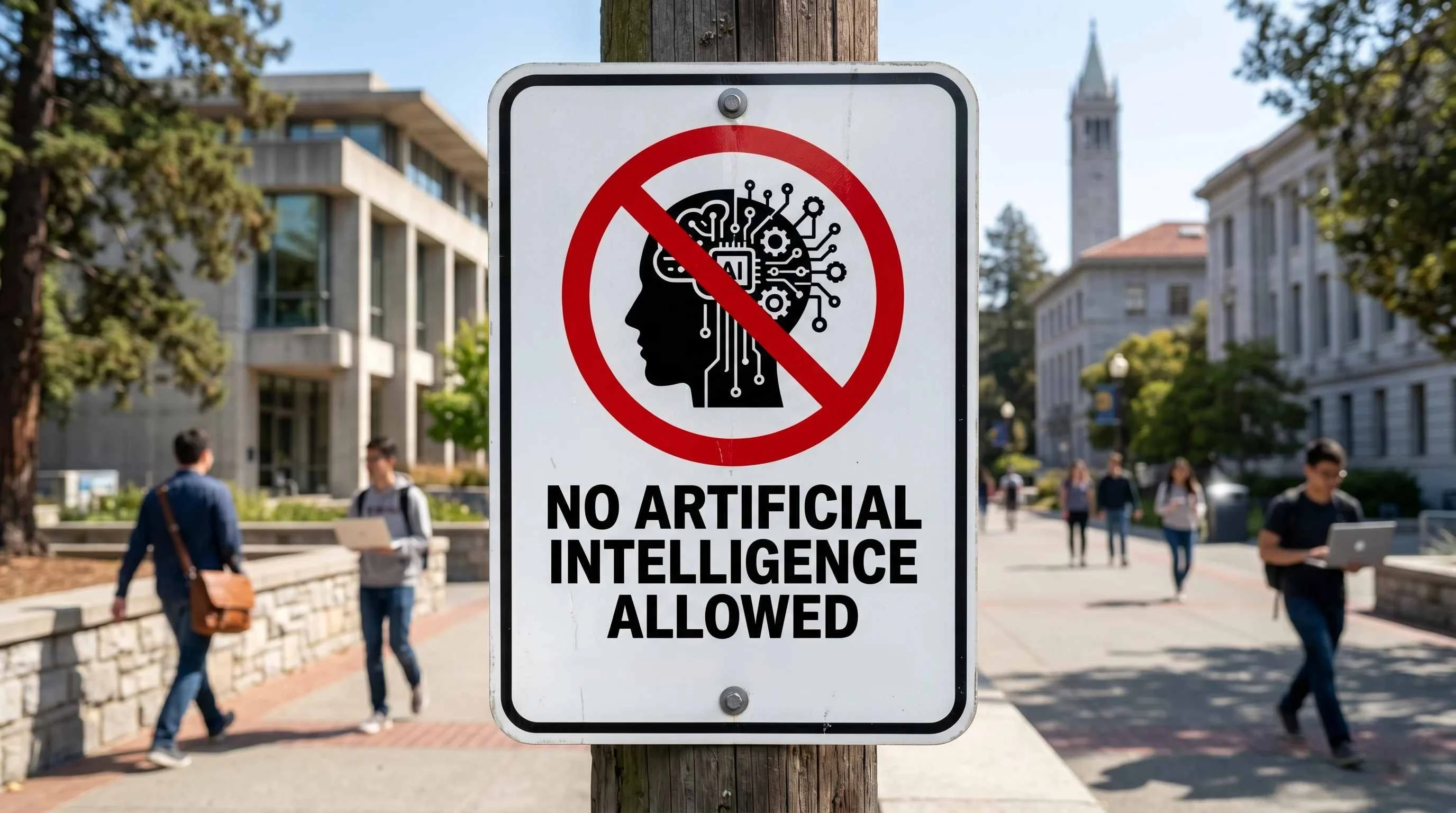
Generative AI tools such as ChatGPT and Claude entered classrooms rapidly after 2023, initially triggering bans and plagiarism panic in many school districts. By 2026, that reactive phase has given way to a period of formal policymaking: state legislatures, school boards, and universities are writing structured rules rather than issuing blanket prohibitions.
AI-in-education legislation has become one of the most active areas of state policymaking in 2026. Tracking groups have counted well over 100 related bills introduced across dozens of states during the year's legislative sessions. Ohio and Tennessee now require every school district to adopt a formal AI policy. Oklahoma's SB 1734 mandates educator supervision of classroom AI use along with parental disclosure requirements. New York's proposed A 9190 would restrict classroom AI use to grade nine and above, with exceptions for diagnostic testing and special education interventions, while still permitting staff to use AI tools for administrative and lesson-planning purposes.
Common legislative themes across states include:
Large school districts have taken varied approaches rather than converging on a single model. New York City's public school system, the nation's largest, has left AI tool decisions largely to individual teachers rather than imposing a district-wide mandate or ban. Los Angeles Unified has moved toward structured integration, building AI literacy into grades six through twelve while emphasizing instruction over policing. Chicago Public Schools has taken a more detection-focused approach, deploying AI-detection software district-wide alongside mandatory teacher training. Some districts, including Montgomery County Public Schools in Maryland, are only now drafting formal policy after earlier outright bans.
Universities have moved further and faster than K-12 systems in some respects. Several institutions — including Curtin University, UCLA, Vanderbilt, UC San Diego, Yale, Johns Hopkins, and Northwestern — have disabled AI-detection features in plagiarism-checking software such as Turnitin, citing concerns that the tools produce false positives that disproportionately flag non-native English speakers. At the same time, universities have signed campus-wide licensing agreements for AI platforms, extending access to tens of thousands of students and faculty at a time.
Early research on AI tutoring tools has begun to show measurable effects. Independent studies have reported meaningful learning gains for students using AI tutoring platforms compared with some traditional instructional methods, though researchers caution that results vary by subject, tool design, and how the technology is integrated into existing teaching practice.
Teachers' unions have staked out positions emphasizing professional discretion. The National Education Association has argued that classroom AI tool decisions should remain with teachers and that AI should not be used to evaluate educator performance. The American Federation of Teachers has focused on embedding AI literacy into K-12 curricula, strengthening student data privacy protections, and ensuring AI policy changes go through collective bargaining.
With many 2026 legislative sessions concluded or concluding, observers expect an even larger wave of AI-in-education legislation in 2027 as more states move from guidance documents to binding statutory requirements, and as school districts that have so far taken a wait-and-see approach face pressure to formalize policy ahead of future school years.