•
•
•
•
•
•
•

Price, specs, Siri AI features, wall mounts and release date for Apple's first smart home hub
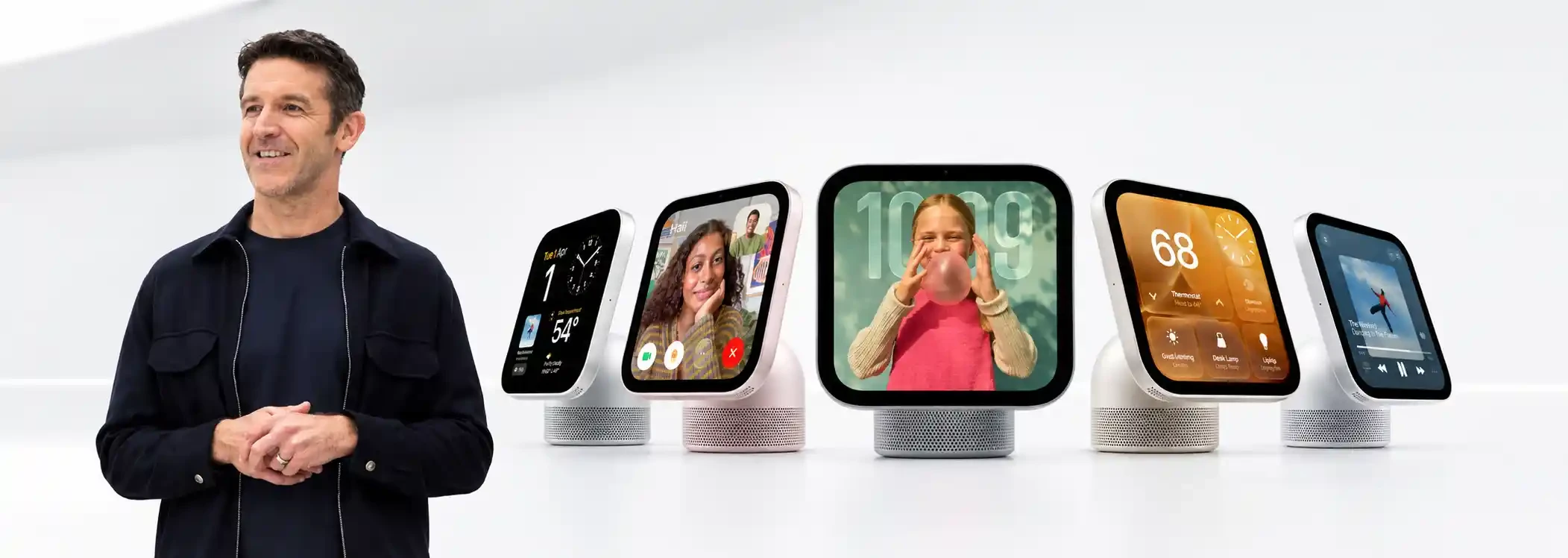
Apple has spent years circling the smart home, and now it has a product to anchor it. Apple HomeView is a $299 touchscreen hub that pairs Siri AI with a built-in speaker, FaceTime and control of your connected home. This guide explains what HomeView is, what it can do, how much it costs and who should consider buying it, based on Apple's announcement and early coverage.
HomeView is a smart display designed for kitchen counters, nightstands and side tables, or for mounting on a wall. Apple describes it as shared by everyone in the home yet completely personal to each user. It is the first non-iPhone launch under CEO John Ternus, who took over from Tim Cook at the start of September, according to CNBC. Apple also positions it as a rival to Amazon's Echo Show and Google's Nest Hub.
The speaker-base model is built from aluminum, with the display attached to a domed base by a stainless steel tilting hinge. The 7-inch Liquid Retina display adapts to light with True Tone and can dim as low as 0.3 nits, which Apple says makes it suitable for dark bedrooms.
| Spec | Details |
|---|---|
| Display | 7-inch Liquid Retina, True Tone, 0.3 to 500 nits |
| Chip | A18 (reported) |
| Audio (speaker model) | Two full-range drivers, down-firing woofer, two passive radiators, Spatial Audio |
| Audio (wall model) | Two custom drivers with computational audio tuned for wall placement |
| Colors (tabletop) | Silver, starlight, rose pink, space gray |
| Colors (wall) | Silver and space gray |
| Connectivity | Matter and Thread support |
| Communication | FaceTime with Center Stage, Intercom |
Apple says the speaker base delivers room-filling sound, and users can continue music from an iPhone with Handoff by holding the phone near HomeView. It also supports multiroom audio. Independent reviews will show how the speaker version compares with the wall model, which has less speaker hardware.
The standout idea is personalisation. HomeView recognises up to six people by their faces and switches to that person's Home Screen, apps and widgets. Personal content stays private, while shared photo albums and music are available to everyone, including guests.
The interface also changes with distance, showing larger, simpler information from across the room and more detail as you step closer. Display "faces" include a Photos face, a Flow face that responds to movement, a Snoopy face tied to time and weather, a Home Modular face for quick accessory access, and a Home Camera face that can show up to nine live feeds.
HomeView runs Siri AI, part of Apple Intelligence. When used with a compatible iPhone or iPad, it can take actions across apps and surface information from Messages, Calendar and Apple Music playlists. Users can customise the pace and expressiveness of Siri's voice, and Siri AI conversations sync across devices. Some AI features need a nearby iPhone or iPad.
In the kitchen, Apple says HomeView can turn recipes from the web into step-by-step instructions with hands-free timers and ingredient tracking.
HomeView acts as the control center for Apple Home. Because it supports Matter and Thread, it should work with a wide range of existing smart home devices. Apple is also launching an Apple Home Collection designed with LG Electronics and Schneider Electric, including a smart doorbell, deadbolt lock, indoor and outdoor cameras and a thermostat.
With Apple Intelligence, the hub can generate descriptions of video from supported cameras. Doorbell alerts appear across Apple devices, and chimes can play through HomeView, HomePod and HomePod mini. ADT will offer in-home installation for HomeView and related products.
| Option | Price |
|---|---|
| HomeView, speaker base | $299 |
| HomeView, wall-mounted version | $299 |
| Schneider Home Power Mount, USB-C | $59.95 |
| Schneider Home Power Mount, AC wired | $79.95 |
| Schneider Home Power Mount, PoE wired | $129.95 (not yet available) |
The wall model costs the same as the speaker model, but most buyers will need a separate mount starting at about $60, which MacRumors noted makes wall mounting the more expensive option for less speaker hardware.
Pre-orders are open in Australia, Canada, India, New Zealand, the UK and the US, and HomeView ships on Friday, November 13. Apple has said it will not be available in the European Union. India pricing was not covered in the sources I reviewed, so check Apple India for local pricing.
Apple also announced the $149 HomePod mini 2, shipping October 30, which will not support Siri AI right away, and a new Apple TV 4K with an A19 chip, with the 128GB model priced at $299.
HomeView enters a market where Amazon's Echo Show and Google's Nest Hub are already established. Apple's pitch is privacy, face-based personalisation and tight integration with iPhone, Mac and HomePod. The trade-offs are a higher entry price than many basic smart displays, a smaller app ecosystem and reliance on Apple devices. Hands-on reviews will show how it performs in practice.
It is likely best for households that already own several Apple devices and use Apple Home. Anyone invested in Alexa or Google Home, or who wants a large app library on the display, may prefer to wait for reviews.
How much does the Apple HomeView cost?
$299 for both versions.
When can I buy it?
Pre-orders are open, and it ships on November 13, 2026.
Does HomeView work in India?
Pre-orders are open in India, but check Apple India for pricing.
Does it have an App Store?
No. Third-party apps run through a paired iPhone or iPad.
HomeView is Apple's clearest attempt yet to win the living room and kitchen counter. Its face recognition, Siri AI and Matter support make it a serious first try, but reviews and real-world use will decide whether it earns a permanent spot in the home.
